


 Key Findings
Great copy in spam gets zero replies. Fix domains, list, and sequencing before you rewrite another subject line.
Dedicated domains per client, offer, and market isolate damage so one bad list cannot take down the whole sender pool.
Hard suppression rules and bounce thresholds keep weak lists from poisoning healthy domains. Cut volume the moment bounces cross 2%.
New domains start at 20 to 50 sends a day and ramp over 2 to 4 weeks. A slipping sender gets 7 days of rest, not more volume.
One reply queue with intent-based triage stops interested prospects from going cold in a mailbox nobody checks.
Route high-intent, fresh-signal accounts through your strongest senders, and keep SPF, DKIM, and DMARC clean on every domain.
Your cold emails are failing. It's not the copy.
You've tested intros, swapped offers, and probably spent too long rewriting calls to action. Meanwhile, your reply rates stay flat because the core problem sits underneath the message. Great copy in spam gets zero replies.
That's not a small edge case. Historical benchmarks entering 2026 put average cold email open rates at 27.7% and reply rates at 3.43%, while nearly one in five emails gets pushed to spam folders, according to Martal's 2026 cold email benchmarks and Woodpecker's sending data. If you're still treating deliverability like a settings page instead of infrastructure, you're playing the wrong game.
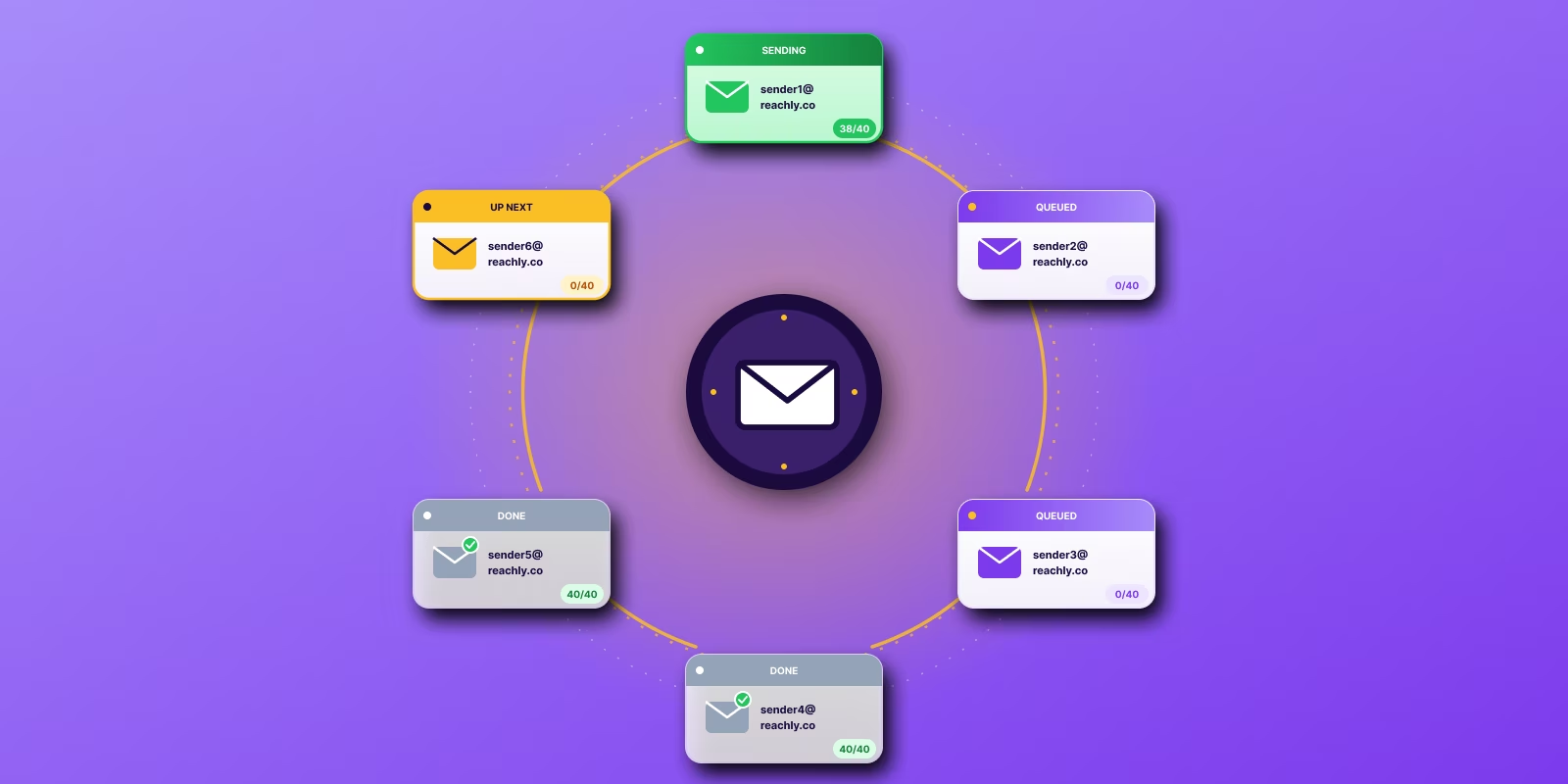
Inbox rotation cold email setups exist for one reason. Risk control. You distribute volume across multiple sender accounts so one inbox doesn't absorb all the pressure from your campaigns, but rotation only works when the rest of the system is disciplined. Bad list quality, sloppy DNS, or reckless ramping will still burn your domains.
Before you touch another subject line, fix the engine. Start with your infrastructure, then your list, then your sequencing, and only then obsess over messaging. If you need better ideas for hooks after that, effective sales email subject lines is a useful place to sharpen the top of the funnel.
Here are the seven strategies that matter.
1. Dedicated Sending Infrastructure & Domain Rotation
One sending domain is how good outbound programs get wrecked.
Dedicated infrastructure is the first control layer in a real inbox rotation cold email system. It protects your main brand, isolates damage, and gives you clean operational boundaries by campaign, client, market, and offer. Agencies that send at scale learn this fast. Shared infrastructure looks efficient right up until one bad list, one sloppy ramp, or one spike in complaints drags down everything attached to it.
Reachly uses dedicated domains per campaign for exactly that reason. If one client's setup takes a hit, the rest of the portfolio stays clean. That is the right model. Treat domains like isolated sending environments, not spare aliases you spin up after performance drops.
Authenticate first, then build the rotation pool
Rotation only works if the underlying infrastructure is clean. Buying extra domains and connecting inboxes in Smartlead or Instantly does not fix weak deliverability. It spreads weak deliverability across more assets.
Start with outbound-only domains. Keep your primary company domain away from cold email volume. Then set up SPF, DKIM, and DMARC correctly on every domain before a single campaign goes live. No partial setups. No “we'll fix DMARC later.” If authentication is incomplete, you are building on sand.
Here's the standard that holds up in agency operations.
- One purpose per domain: assign a domain to a client, offer, geography, or market segment. Do not mix unrelated traffic.
- Document every asset: track domain purpose, mailbox count, DNS status, warm-up stage, and current health in one sheet or system.
- Protect the root brand: use secondary domains for outbound so reputation issues do not touch your main website and core email accounts.
- Retire damaged assets fast: if a domain shows sustained placement issues, pause it and investigate. Do not keep pushing volume because the calendar says the campaign must ship.
-
Rotation is risk distribution, not volume theater
A lot of teams treat domain rotation like a way to send more. That is the wrong frame. The job is to distribute risk so one failure does not spread.
At scale, that changes how you provision everything. You do not just add more inboxes. You build separate pools with clear ownership and clear rules. Client A does not share sending infrastructure with Client B. US fintech outreach does not sit on the same setup as UK agency outreach. Enterprise and SMB campaigns do not need to live together either. Different audiences produce different complaint patterns, bounce rates, and engagement signals. Your infrastructure should reflect that reality.
Good rotation usually looks boring, which is exactly why it works.
- Separate campaign risk: isolate clients, campaigns, or major ICP buckets into distinct sending environments.
- Separate provider review: check Gmail and Microsoft performance independently so you can catch provider-specific problems early.
- Separate suppression paths: if a contact bounces, complains, or opts out, suppress them at the system level so they do not get recycled into another domain pool.
This section is about more than domains. It is about control. Domain rotation, mailbox rotation, warm-up, bounce handling, authentication, and reply management only work when they are designed as one operating system. Get the infrastructure layer right first. Everything built on top of it gets easier to trust, measure, and scale.
2. Mailbox Rotation & Engagement Sequencing
Mailbox rotation fails when it looks like software trying to fake a sales team.
The fix is straightforward. Rotate senders based on role, context, and inbox health. If the sequence would feel strange to a prospect in a real buying conversation, do not send it.
A founder opening the thread, an SDR handling the practical follow-up, and an account lead adding a final point can work. Five touches from five random mailboxes do not. Agencies that run outbound at scale learn this fast. Rotation is not a volume trick. It is an orchestration layer that spreads risk while keeping the conversation believable enough to earn replies and protect placement.
Rotate by sender purpose
Each mailbox in a sequence needs a job.
Use the highest-credibility sender for the first touch. That is usually the founder, sales leader, or market owner. Use a second sender only if the message changes from strategic to tactical, or from diagnosis to scheduling. Add a third sender only when that person can contribute something new, such as a customer example, implementation angle, or region-specific context.
If the only thing changing is the display name, mailbox providers and prospects both see through it.
This is the standard to hold:
- Sender changes need a reason: role, angle, and timing should all line up.
- Threads should progress: each touch should add a new objection handler, proof point, or CTA.
- Healthy inboxes should carry the load: move volume away from mailboxes showing weak opens, low replies, or rising complaints.
- One prospect should stay inside one logic path: do not let automation spray the same account from unrelated personas.
-
Sequence behavior matters as much as rotation
A clean sequence protects infrastructure. A sloppy one creates patterns filters can spot.
Keep spacing consistent. Keep copy distinct. Keep reply handling centralized so the prospect sees a coherent conversation even if multiple people appear in the thread. That operational piece matters more than teams admit. If replies get fragmented across inboxes, handoffs break, follow-ups duplicate, and positive engagement gets wasted instead of strengthening the sender pool.
At the agency level, this only works if mailbox rotation connects to the rest of the system. Health scoring, suppression logic, engagement tracking, and reply routing have to feed each other. Otherwise, rotation just spreads mistakes across more inboxes.
Use engagement sequencing to qualify infrastructure, not just prospects
Good outbound teams use sequences to test mailbox quality in production.
Start lighter on newer or recently recovered inboxes. Give stronger inboxes the first-touch load. Push lower-risk follow-ups through mailboxes that have already shown stable placement and normal reply patterns. If one sender starts getting weaker engagement, reduce sends and swap it out of the sequence before the problem spreads.
That is also why your data rules need to sit close to your sending rules. Poor addresses create bad engagement signals, and bad engagement signals corrupt rotation decisions. Tighten input quality with a cold email verification process that filters invalid and risky contacts, then monitor how each sender handles hard and soft email bounces inside the sequence.
The result is a system, not a tactic. Mailboxes rotate for a reason. Engagement patterns inform routing. Reply handling stays centralized. That is how you scale inbox rotation cold email without making your operation look manufactured.
3. Bounce Management & List Hygiene Protocols
Bad data breaks outbound faster than bad copy.
Inbox rotation cold email does not fix that. It distributes the same problem across more domains, more mailboxes, and more reputation assets. At agency scale, that gets expensive fast because one weak list can contaminate an otherwise healthy sender pool.
You see the pattern quickly. Invalid users. Catch-all domains with no buying signal. Role accounts that should never have entered production. Enrichment vendors pushing stale records. Once those addresses start failing, providers stop judging only the contact. They start judging the sender.
Treat bounce management as infrastructure control, not list cleanup.
Set enforcement rules before you send
Teams that run cold email seriously need fixed suppression logic. No exceptions, no rep discretion, no "one more test send."
If an inbox crosses a 2% daily bounce rate, cut volume in half the next day or pull that inbox from production until the list source is reviewed. If one campaign keeps generating failed deliveries, stop feeding that segment into rotation. Rotating more mailboxes into a bad audience only spreads the hit.
This is also where list hygiene connects back to reputation. A clean verification step protects domain health long before warm-up or scaling decisions matter. If your team needs a tighter process, use this guide to domain reputation for cold email alongside your list QA rules so data quality and sender quality are managed as one system. Rotation matters here because every extra step in a sequence multiplies the volume leaving each mailbox, so set the step count deliberately using our cold email follow up playbook.
Separate events by severity
Not every failure deserves the same response. Your suppression rules should reflect that.
If you need a clean breakdown, this guide to hard and soft email bounces is useful.
- Hard bounces: Suppress immediately across all future sends.
- Soft bounces: Watch for repeat failures, then suppress if the pattern persists.
- Spam complaints: Pause the inbox, review the segment, and inspect the copy plus the offer.
- Source-level failure clusters: Shut off the vendor, enrichment workflow, or scraper causing the issue.
The mistake is operational, not technical. Bounces are often treated like a reporting metric someone checks after launch. The right model is stricter. Bounce behavior decides who gets mailed, which inboxes stay active, which data sources stay approved, and how much volume your system can safely carry. That is how you keep inbox rotation from becoming a way to spread bad traffic at scale.
4. Warm-Up Sequences & IP Reputation Building
New domains don't earn trust because you bought them. They earn trust because they behave like normal senders for long enough that mailbox providers stop treating them like a threat.
That means your warm-up process needs discipline. Not fantasy metrics. Not “let's see what happens if we push it.”
For new domains, the starting range should be 20 to 50 emails per day, with gradual scaling over a 2-to-4-week period only if bounce rates stay below 2% and spam complaints stay near zero, based on Angela Yang's 2026 guidance on inbox rotation. Anything more aggressive is how teams burn fresh infrastructure before it has a chance to stabilize.
Warm with intent, not just activity
A warm-up sequence isn't just about sending emails. It's about sending emails that create a clean pattern.
Use real conversations where replies are likely. Internal team outreach, partner contacts, customer success follow-ups, or genuine back-and-forth threads are all more useful than fake activity loops. Then watch authentication, placement, and complaint signals while volume rises slowly.
If you're launching a new outbound setup, this primer on domain reputation for cold email is the right companion process. Warm-up and reputation management are the same conversation.
Don't ramp a damaged sender
A sender that starts slipping needs rest, not courage.
If primary placement drops below your target band for two consecutive tests, or Gmail spam complaints hit 0.3%, move that sender to resting status for at least 7 days. Those are operational thresholds, not suggestions, pulled from current cold email benchmark guidance. Teams that ignore them usually keep sending because the calendar says they need pipeline. Then they lose the inbox entirely.
- Start conservative: New or recovering senders belong in a ramping pool.
- Promote only on clean signals: Good placement and low complaints earn more volume.
- Rest fast when signals break: Recovery takes less time than rebuilding a dead domain.
Warm-up isn't busywork. It's the first proof your infrastructure can survive production.
5. Centralized Inbox Management & Reply Triage Systems
Rotation spreads risk. It also creates chaos if replies are scattered across ten mailboxes no one checks.
A lot of teams lose pipeline. The campaign generates interest, but the response lands in an inbox tied to one sender identity, nobody sees it in time, and the lead goes cold while the team congratulates itself on “good reply rates.”
One reply layer for many senders
You need one place where every reply lands, gets tagged, and gets routed. That can sit inside your sending platform, your shared support layer, or a CRM-connected mailbox workflow. The tool matters less than the rule. No reply should depend on one SDR remembering which inbox they used three days ago.
Reachly runs this way because multichannel outbound breaks if email replies, LinkedIn responses, and call outcomes live in separate silos. The sending layer can stay distributed, but the operating layer needs one source of truth.
Centralize replies even if you decentralize senders.
Triage by intent, not inbox owner
The person who sent the email doesn't always need to own the next step.
Build triage rules around buyer intent. Positive replies move fast to sales. Ambiguous responses get clarified. Referral replies get reassigned. Opt-outs and hard no's get suppressed immediately so the same contact doesn't re-enter another sequence from another mailbox later.
A simple triage model usually works best:
- Hot replies: Route to sales immediately and stop all active outreach.
- Maybe replies: Push to nurture or manual follow-up with context.
- Negative replies: Suppress cleanly and log the reason.
- Referral replies: Reassign the contact record and update the account map.
When inbox rotation cold email campaigns scale, response handling becomes part of deliverability too. Late, sloppy, or duplicated follow-up creates more negative signals than many operations realize.
6. Intent-Based Segmentation & Buying Signal Integration
Rotation protects your infrastructure. It doesn't fix bad targeting.
If the wrong list gets the right message from the right sender on the right domain, you still lose. The answer is not more volume. It's better account selection and better timing.
That's why serious outbound teams use buying signals before they write personalization. Clay workflows, CRM data, hiring trends, funding events, website changes, and category-fit signals all help you decide who should enter the sequence now and who should wait.
Send the best traffic through your best infrastructure
Not every list deserves your cleanest senders.
Your strongest domains should carry the accounts most likely to engage. High-fit accounts with fresh signals are safer traffic because relevant outreach tends to generate cleaner behavior. Stale scraped lists do the opposite. They create indifference, lower engagement, and a higher chance of complaint or silent filtering.
If you want a practical breakdown, Reachly's guide to buying signals in B2B sales with examples that book meetings gets into how to use those triggers in actual prospecting workflows. For enrichment support, Webclaw's guide to lead enrichment is also useful.
Match segmentation to rotation logic
At this point, the system comes together.
A mature sender pool can handle your high-priority accounts and more sensitive campaigns. Newer or recovering pools should get lighter traffic and cleaner segments. Don't push questionable data into fragile infrastructure and then blame the domain when things go sideways.
- Use recent signals first: Fresh hiring, active expansion, and visible change beat old firmographic filters.
- Pair signal strength with sender health: Better segments go through better infrastructure.
- Review reply quality by segment: If one signal source produces weak conversations, demote it or remove it.
Good targeting doesn't just get more replies. It keeps your sender environment healthier because the market sees more relevance and less noise.
7. Email Authentication Standards & ISP Compliance Monitoring
Broken authentication will sink the whole outbound system, no matter how disciplined your rotation, list hygiene, or warm-up process looks on paper.
SPF, DKIM, and DMARC are the control layer for your sending infrastructure. They tell Gmail, Outlook, and every filtering engine in between whether your domains, mailboxes, and vendors are allowed to send under your name. If alignment is off, providers do not treat the issue as a minor config mistake. They treat it as risk.
That matters even more in an agency setup. You are not managing one sender. You are managing a fleet of domains, mailboxes, forwarding rules, warm-up tools, sequencers, and client-side systems that change without warning. One bad DNS update or one unauthorized tool can contaminate an otherwise healthy pool.
Monitor by provider and by domain group
Do not rely on one blended deliverability dashboard.
Gmail Postmaster Tools should be checked for Gmail-facing traffic. Microsoft SNDS should be checked for Outlook and Microsoft-hosted traffic. Review signals at the domain-group level so you can isolate where trust is rising, holding, or slipping. A clean aggregate view can hide a provider-specific failure for days, and by then reply volume is already down.
A campaign was not healthy because it sent at full volume. It was healthy because providers accepted the traffic, placed it in the inbox, and kept trusting the sender on the next send.
Treat compliance as an operating process
Authentication breaks in ordinary ways. A client adds HubSpot or another outbound tool without proper DKIM alignment. Someone edits SPF and pushes it over the lookup limit. DMARC reports start showing unauthorized sources. Reply rates soften first. Spam folder placement follows. Then the team wastes a week blaming copy, targeting, or send times.
Run a recurring review across every active sending environment:
- SPF: Keep it tight. Only approved senders belong in the record. Remove old vendors.
- DKIM: Confirm signing still works after platform changes, domain updates, or mailbox moves.
- DMARC: Review aggregate reports for alignment failures, spoofing attempts, and unknown sources.
- Provider consoles: Check reputation warnings, complaint trends, and authentication errors before they turn into placement loss.
- Change control: Log every DNS edit, vendor addition, and mailbox configuration change by date and owner.
This is what separates a tactic stack from a real outbound system. Domain rotation, mailbox rotation, warm-up, bounce control, and segmentation only hold up when the trust layer stays intact. If you run outbound at scale, authentication and ISP monitoring belong on a weekly ops checklist, not a setup doc nobody opens after launch.
Inbox Rotation Cold Email, 7-Point Feature Comparison
| Strategy | Core features | Performance and deliverability ★ | Value / ROI 💰 | Target audience 👥 | Unique selling points ✨🏆 |
|---|---|---|---|---|---|
| Dedicated sending infrastructure and domain rotation | Multiple authenticated domains, SPF/DKIM/DMARC, IP rotation, warm-up, per-domain monitoring | ★★★★★, 95%+ inbox placement; scales cleanly | 💰 Moderate to high setup; protects revenue at volume | 👥 Agencies, high-volume B2B SaaS, enterprises | ✨ Isolates campaigns; 🏆 preserves sender reputation and allows parallel A/B |
| Mailbox rotation and engagement sequencing | Rotate 3 to 5 mailboxes, persona senders, timezone and delay logic, personalized follow-ups | ★★★★☆, +15 to 25% replies; lower spam complaints | 💰 Low to medium setup; lifts reply rate per sequence | 👥 SDR teams, agencies, multi-touch outreach teams | ✨ Feels humanized outreach; 🏆 improves sequence performance |
| Bounce management and list hygiene protocols | Real-time bounce categorization, suppression lists, feedback loops, unsubscribe handling | ★★★★★, prevents IP damage; maintains long-term deliverability | 💰 Low ongoing cost; high ROI via sustained inbox rates | 👥 All senders, critical for agencies with many clients | ✨ Automated suppression and compliance; 🏆 prevents reputation collapse |
| Warm-up sequences and IP reputation building | Gradual volume ramp, targeted high-engagement sends, monitoring and automated progression | ★★★★☆, 90 to 95%+ inbox within 7 to 14 days if executed | 💰 Low to medium time cost; shortens time-to-revenue for new domains | 👥 New domains, market launches, agencies onboarding clients | ✨ Fast trust building for new infra; 🏆 reduces cold-launch risk |
| Centralized inbox management and reply triage systems | Unified inbox, auto-scoring, workflow routing, CRM sync, metadata enrichment | ★★★★★, faster SLAs, fewer missed leads | 💰 Medium investment; high efficiency and conversion uplift | 👥 Small sales teams, agencies, client-facing ops | ✨ Prevents lead leakage; 🏆 automates qualification and routing |
| Intent-based segmentation and buying signal integration | 10+ data sources, real-time signals, dynamic scoring, personalized tokens | ★★★★★, +30 to 50% replies; higher lead quality | 💰 Higher data cost; high ROI via focused outreach | 👥 B2B SaaS, growth teams, revenue-focused sellers | ✨ Hyper-relevant timing and messaging; 🏆 shortens sales cycles |
| Email authentication standards and ISP compliance monitoring | SPF/DKIM/DMARC/BIMI setup, postmaster monitoring, ongoing compliance checks | ★★★★★, +10 to 15% inbox placement; prevents spoofing | 💰 Low to medium setup; essential for sustainable delivery | 👥 All senders, compliance-focused enterprises and agencies | ✨ Prevents spoofing and phishing; 🏆 foundational for inbox trust |
Build an Unbreakable Outbound Engine
These seven strategies are not separate tactics. They're one operating system.
Dedicated domains protect you from cross-campaign damage. Mailbox rotation keeps sender behavior natural. Bounce management stops bad data from poisoning good infrastructure. Warm-up builds trust slowly enough to keep it. Centralized reply handling makes sure interested prospects don't disappear into the cracks. Intent-based segmentation improves relevance, which protects engagement. Authentication and provider monitoring keep the whole machine credible in the eyes of Gmail and Microsoft.
That's the actual job. Not writing one good sequence and hoping for the best.
A lot of teams still think inbox rotation cold email means buying extra inboxes and cycling through them. That's the shallow version. Real rotation is risk management. You segment sender pools by age, provider, and health. You change sending behavior when bounce rates or complaints move. You rest inboxes before they die. You route your best accounts through your healthiest infrastructure. You treat reply handling as part of the sending system, not a separate sales problem.
That shift matters because the market got harder. Open and reply benchmarks have fallen, filters are stricter, and mailbox providers are quicker to punish sloppy behavior. If your outbound engine is fragile, every campaign starts with a handicap. Your copy has to fight through technical debt before a buyer even sees it.
Many teams don't need more tactics. They need tighter operations.
If you're running a handful of campaigns, you can build this in-house if someone owns the process and watches it daily. If you're running outbound across markets, clients, or multiple product lines, this becomes a real infrastructure function. Domains, DNS, ramp schedules, suppression logic, provider monitoring, list QA, reply triage, CRM routing, and multichannel coordination all need to stay aligned. Miss one piece and the whole thing gets weaker.
That's why agencies like Reachly exist. Not to write fluffier emails. To build and run the outbound engine properly, across email, LinkedIn, and phone, while protecting sender reputation and keeping replies moving to calendar-booked meetings.
Fix the system first. Then your messaging finally gets a fair shot.
Recommended service
Cold Email Agency
Reachly runs cold email end to end: dedicated infrastructure, signal-led copy, and replies handled until a meeting is booked.