 Key Findings
Distribution now follows topic relevance, not follower count. Independent analysis puts impressions down 63 to 66% since 2023, with engagement per post up 12 to 39%. Fewer people see your post, but the ones who do care more.
Posts are shown to roughly 2 to 5% of your network in the first 60 minutes. Strong early dwell time and real comments expand reach for 48 to 72 hours. Post when you can stay present and reply fast.
Documents and carousels lead at 6.6% engagement. Long-form posts (2,000+ characters) hit 2.56% versus 1.53% for posts under 200 characters. External links carry a distribution penalty because they send users off LinkedIn.
LinkedIn assigns a topic fingerprint from what you post, comment on, and save. Unclear signals hurt reach. Hashtags are a minor label, and posts without them can beat hashtagged posts by 5 to 10%. Pick fewer themes and stay consistent.
Count DMs and comment threads that turn into business discussions, positive replies after content engagement, meetings booked from in-ICP accounts, and sales feedback on lead quality. The real test: did this post create a conversation you would want your sales team to have?
Most LinkedIn advice about 2026 is stuck in the wrong debate. People are still arguing about carousels versus video, the best posting time, or whether to use three hashtags or five. That is surface-level stuff. It matters a little, and it misses the real shift.
The LinkedIn algorithm in 2026 is less about publishing tricks and more about whether the platform can clearly understand what you should be known for. If your posts are all over the place, your reach drops. If your content is tight, relevant, and tied to a clear topic, LinkedIn has a much easier job putting you in front of the right buyers. That is good news if you sell in a niche, and bad news if your strategy depends on broad, forgettable content that tries to talk to everyone.
Why your reach dropped, and why that is good news
If your reach fell, you are not imagining it. Independent commentary says LinkedIn's feed ranking has shifted from a social graph model to an interest graph model, so distribution is driven by topic relevance and user interest rather than follower count or direct connections. The same analysis says impressions have fallen by roughly 63 to 66% since 2023, while engagement per post has risen by 12 to 39%, per Meet Lea's LinkedIn algorithm breakdown. Fewer people may see your post, but the people who do are more likely to care.
The old game was simple. Build a network, post often, and hope your first-degree connections carried the post. That is weaker now. LinkedIn is trying to infer what each reader wants next, so broad content from broad creators gets filtered harder. Post about hiring one day, a product launch the next, then a hot take on AI because everyone else is doing it, and you send mixed signals. Mixed signals kill distribution. The flip side is a real opening for founders, operators, and sales leaders with a point of view. You no longer need the biggest audience. You need the clearest one. A smaller creator who consistently talks about outbound, RevOps, sales hiring, or APAC expansion can beat a larger account posting generic business advice.
Stop treating LinkedIn like a popularity contest and start treating it like a relevance engine. Vanity reach looks great in a screenshot, but it almost never turns into a qualified conversation. A tighter, more relevant audience does. Declining reach is not automatically a problem. Most of the time it is the platform clearing out noise and making room for content that actually fits a buyer.
So if you still judge content by impressions alone, you will make bad calls and keep chasing reach with broad posts that pull weak engagement and the wrong people. A better filter: pick fewer themes so your expertise is obvious, write for buyers rather than peers, and expect a smaller but more relevant audience. For serious B2B operators, that is a better system, not a worse one.
How the algorithm ranks your post in the first hours
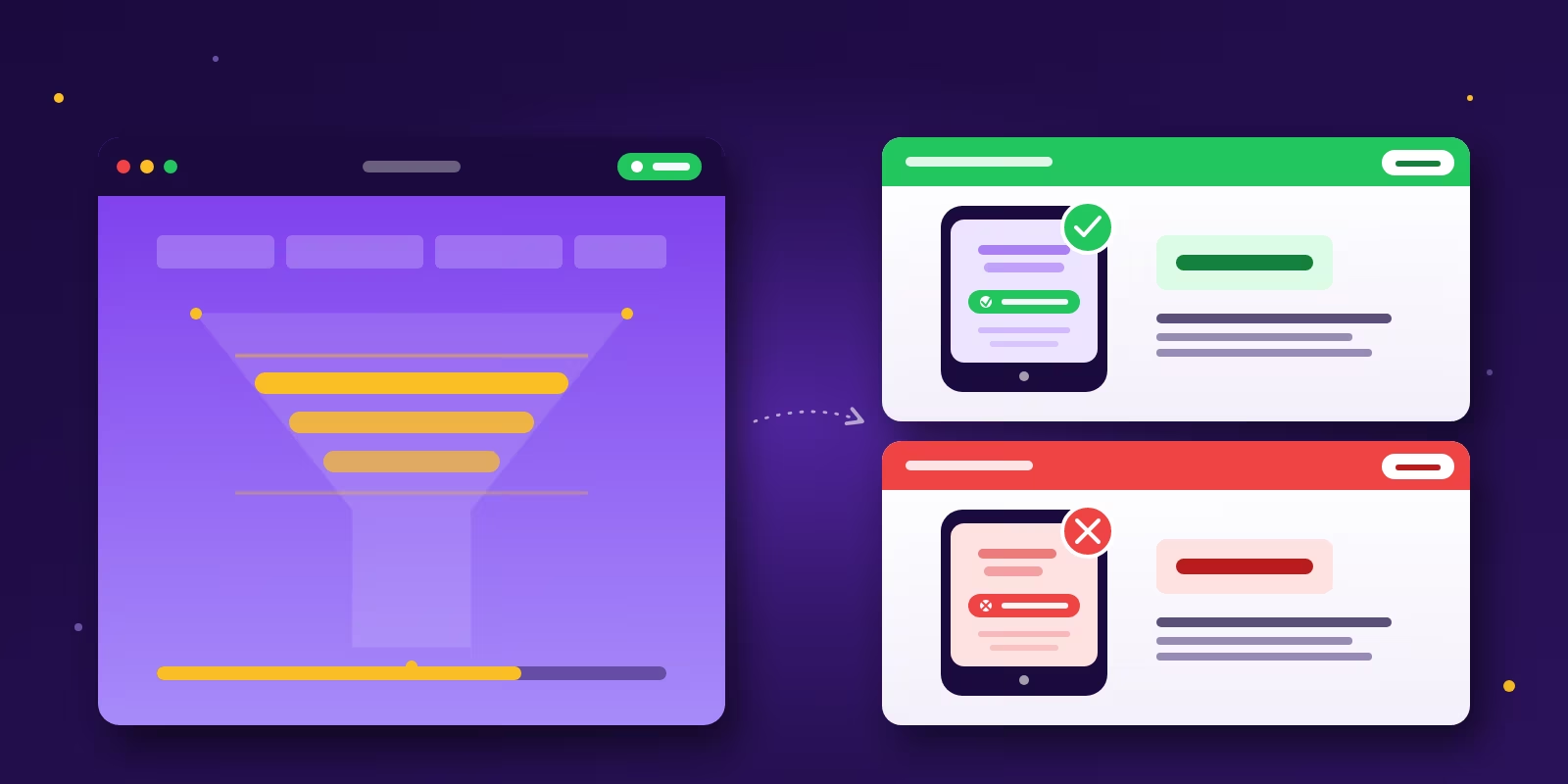
A LinkedIn post does not just go live and drift around the feed. It gets tested fast. Independent 2026 commentary describes a short-window, multi-signal scoring system where a post is first shown to about 2 to 5% of your network within the first 60 minutes, and distribution expands only if early engagement quality is strong. Posts with high dwell time can keep earning reach for 48 to 72 hours, according to Growleads' analysis of LinkedIn ranking behavior. Treat the first hour as a quality check, not a full launch.
How a post earns reach, first minutes to weeks
This is where most founders waste good posts. They publish, close the app, and come back hours later. If your content invites thoughtful comments but you are not there to reply while the post is being tested, you leave early engagement on the table. A simple workflow beats any hack: post when you can stay present, reply fast to real comments to keep the thread alive, and watch which hooks actually get people to read and respond. If you want to study this at a deeper level, the ScrapeCreators LinkedIn scraping guide is useful for pulling post data and analyzing what your audience responds to, which beats copying random creators with a different market and positioning.
Content formats that win, and what gets ignored
Format still matters, just not the way people assume. The strongest 2026 benchmark data says documents and carousels outperform text-only posts, with one benchmark showing 6.6% average engagement for document posts. The same set says posts with 2,000 or more characters reach 2.56% engagement versus 1.53% for posts under 200 characters, and external links carry a distribution penalty because LinkedIn wants users to stay on-platform, per Taplio's LinkedIn algorithm benchmark summary. The pattern is clear: content that keeps people reading beats content that sends them away.
| Content format | Avg engagement | Why it works or does not |
|---|---|---|
| Documents and carousels | 6.6% | They keep people swiping and reading on-platform |
| Long-form text, 2,000+ characters | 2.56% | More dwell time when the hook is strong and the writing holds |
| Very short posts, under 200 characters | 1.53% | Easy to skim past, rarely hold attention long enough |
| Posts with external links | Penalized | They ask users to leave, which works against the platform |
Documents win because they create a sequence: one page leads to the next, and each swipe tells LinkedIn the reader stayed. Long text posts work for the same reason when the opening lines are sharp and the structure is easy to scan. Short throwaway posts can still land, but most are vague, recycled, or built on fake punchlines that impress other creators instead of buyers. The move to stop is posting a link with one line of context and expecting reach. That tells the platform to send users elsewhere, which is the opposite of what it rewards. For founder-led or sales-led content, keep the mix practical: documents for frameworks, teardowns, and objection breakdowns, longer text for stories and strong opinions, and external links kept rare or dropped into the comments. If your team cannot hold that standard consistently, Reachly's LinkedIn ghostwriting support fits when the problem is not ideas but turning expertise into posts people finish reading.
The real advantage is topic authority, not format hacks
Most format advice ages badly. The durable edge in 2026 is topic authority. Independent analysis says the platform assigns creators a kind of topic fingerprint based on what they post, engage with, and save, and that unclear signals hurt distribution. The same analysis says posts without hashtags can outperform hashtagged posts by 5 to 10%, per Melanie Goodman's 2026 topic authority analysis. So the job is not to look active. It is to become easy for LinkedIn to classify. Your topic signal comes from more than your own posts. It comes from what you comment on, what you react to, what you save, and which conversations you consistently join.
- Two or three tight themes tied to what you actually sell.
- Comments and saves that stay inside those same themes.
- A point of view repeated across months, not one viral post.
- Language that matches the objections your buyers raise on calls.
- Random hot takes on whatever is trending that week.
- Generic AI output that smooths out your sharp edges.
- Engagement across unrelated topics for reach alone.
- Leaning on hashtags as if they carry the post.
Format hacks spread fast because they are easy to copy. A carousel layout takes ten minutes. You cannot fake a consistent point of view across months of posts and comments without sounding thin, which is why hack-driven growth fades. For teams using AI to draft faster, this is where to be careful, because generic output weakens your topic signal by sanding off the specifics of your expertise. A better approach is an editorial method like this AI content optimization framework, then a hard rewrite in your own language, objections, and market context. Align content with real sales themes and your authority compounds instead of scattering. That is the logic behind solid LinkedIn sales strategies: the content supports pipeline rather than sitting in a brand silo.
Your playbook for turning LinkedIn into pipeline
If you want LinkedIn to create pipeline, you need an operating model, not random posting. The simplest version treats content as an outbound support channel: posts warm the market, comments reinforce relevance, and DMs turn attention into sales conversations. Start with buyer problems, not content ideas. A founder selling to sales leaders might pick outbound quality, SDR management, and pipeline creation in APAC. A RevOps consultant might pick forecasting, CRM hygiene, and marketing-to-sales handoff. Keep it tight, because broad pillars make fuzzy content that buyers cannot place.
That loop works because it stays close to actual buyer language. A post comment is not pipeline, but a DM can be, so continue the conversation privately when there is a clear reason and keep it light. For teams that want one workflow across content and outbound, some run it in-house with Clay, Smartlead, and HeyReach handling the adjacent prospecting, while others use a partner. Reachly's guide to B2B lead generation on LinkedIn covers the mechanics of turning profile activity into qualified conversations without treating every interaction as a closing attempt.
Measure conversations, not impressions
If you are still reporting on impressions, you are watching the wrong scoreboard. The point of founder-led content is sales movement, so the useful metrics sit closer to conversation quality than post vanity. Track conversations started from posts, real DMs and comment threads that turn into business discussions, positive replies in outreach after a prospect has seen your content, meetings booked from engaged in-ICP accounts, and direct sales feedback on whether LinkedIn-sourced conversations are easier to qualify. If you need a cleaner way to define that last piece, this guide on how to measure lead quality helps separate activity from real sales value.
What to stop celebrating: likes from peers, broad reach outside your market, and comment bait that pulls attention from people who will never buy. The better question is whether your content makes target accounts more likely to reply when your team reaches out, or more likely to start the conversation themselves. That is the upside of the 2026 algorithm. It is harder on generic content and better for operators with a clear niche, a clear message, and a real sales process behind the posts. Use it that way and LinkedIn stops being a posting habit and becomes part of a predictable demand system. If you want that system built and run for you, see the Reachly homepage or our LinkedIn ghostwriting support.
Recommended service
LinkedIn Ghostwriting
Reachly writes and runs your LinkedIn presence so your profile builds authority and brings in inbound B2B leads.