



Overview
Reachly helped Primal build a predictable outbound engine that scaled sales without scaling paid acquisition costs. Within six months, Primal generated 85+ sales qualified leads (SQLs), closed six new deals, reduced CAC by 35%, and achieved 4.57x ROI.
The Challenge
Primal had built a strong reputation and steady demand. But scaling growth was becoming expensive.
They faced three core challenges limiting sustainable scale.
1. Their pipeline relied heavily on ads
Most leads came through paid acquisition channels. While paid channels were effective, they created a predictable tradeoff: every new client required additional spend. Over time, CAC rose and margins tightened.
2. No predictable outbound motion
Primal’s team was prioritising client delivery. Outbound was not a core function, and there was limited bandwidth to design, test, and run outreach consistently.
3. Scaling meant spending more
The standard path to scale was clear but not sustainable: increase ad budgets to generate more leads. Primal wanted a channel that could grow without increasing costs at the same pace.
Building an internal SDR team was not the right alternative in the short term. Hiring, training, tools, and management overhead would take months before results became consistent.
Primal needed a scalable pipeline channel that reduced reliance on paid acquisition.
The Solution
Reachly built and managed Primal’s outbound engine end-to-end, allowing their team to stay focused on existing client delivery while outbound ran consistently in the background.
The strategy included two outbound motions.
Evergreen campaign
Reachly launched an always-on campaign targeting CMOs and CEOs in industries where Primal already had strong case studies and proof.
This ensured outreach was based on credibility, not cold positioning, and helped turn existing brand strength into qualified conversations.
Signal-based campaigns
Alongside evergreen outreach, Reachly built four additional campaigns based on buying signals. The goal was to reach prospects when timing made sense, rather than relying on broad targeting.
Each signal-based campaign targeted the marketing decision-maker at that company.
These weren't random filters. Each one points to a company that needs marketing help right now. Falling traffic or a slip off page one is a live pain point, while new marketing hires or fresh funding signal budget and intent. Reaching a decision-maker at that exact moment lands far better than generic agency outreach.
Implementation
Reachly executed the outbound workflow across targeting, list building, sequencing, and follow-up.
1. List building with Clay playbooks
Reachly used Clay enrichment workflows to identify companies that matched each signal and then mapped the correct decision-makers inside those organisations.
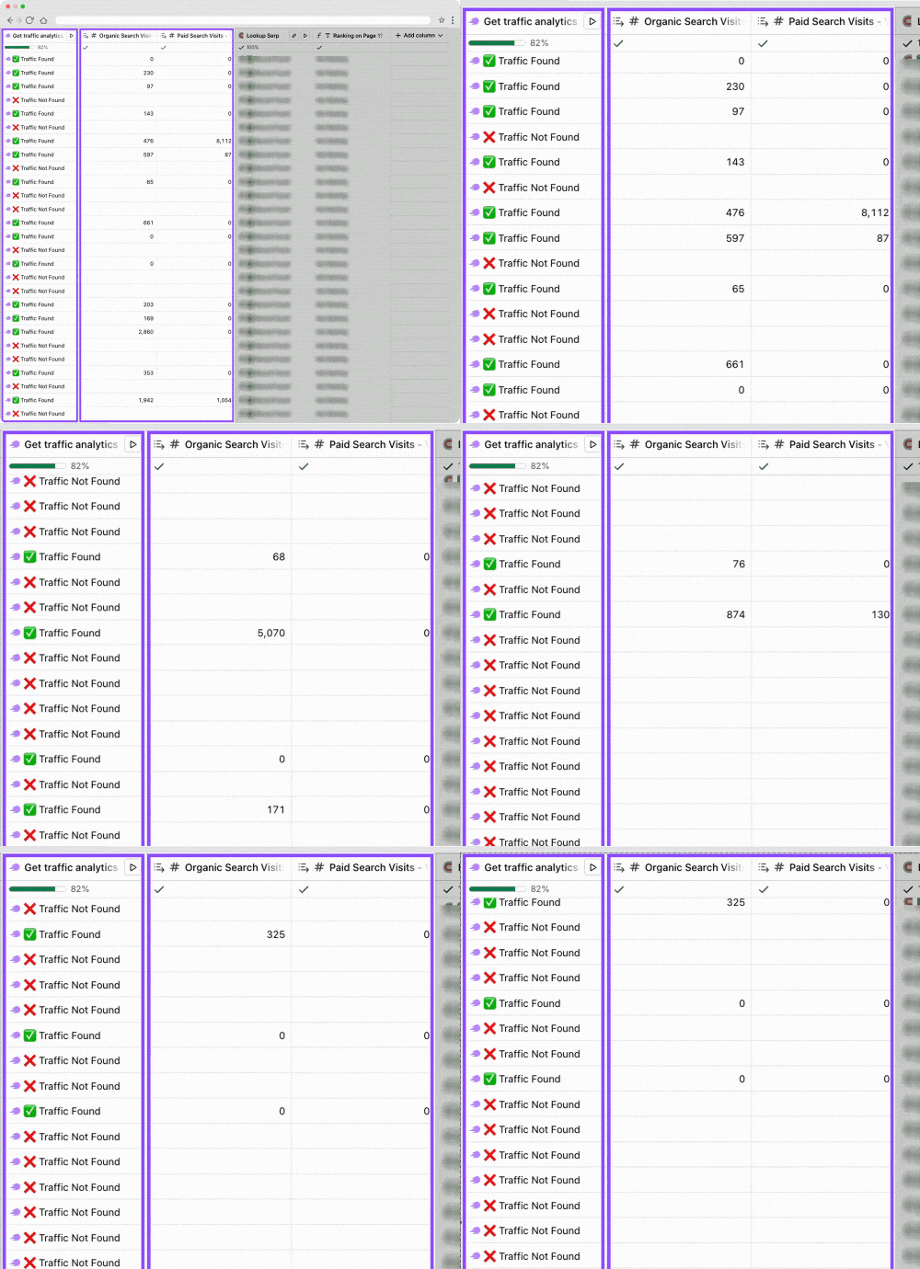
We leaned on Google rankings because for a performance agency it's the cleanest buying signal there is. A company sliding off page one for its core terms is losing traffic and revenue every day, and usually already feels it. Clay pulled each company's ranking position automatically, so we could sort the whole list by how much was at stake and reach the ones with the most to gain first.
2. LinkedIn + email outreach
Reachly ran structured multi-channel sequences using LinkedIn and email. Outreach leveraged Mark McDowell’s CEO profile to increase trust, improve engagement, and raise reply rates.
3. Messaging aligned to each signal
Messaging was customised per campaign based on the signal. Rather than sending generic agency outreach, each message connected to what the prospect was likely experiencing.
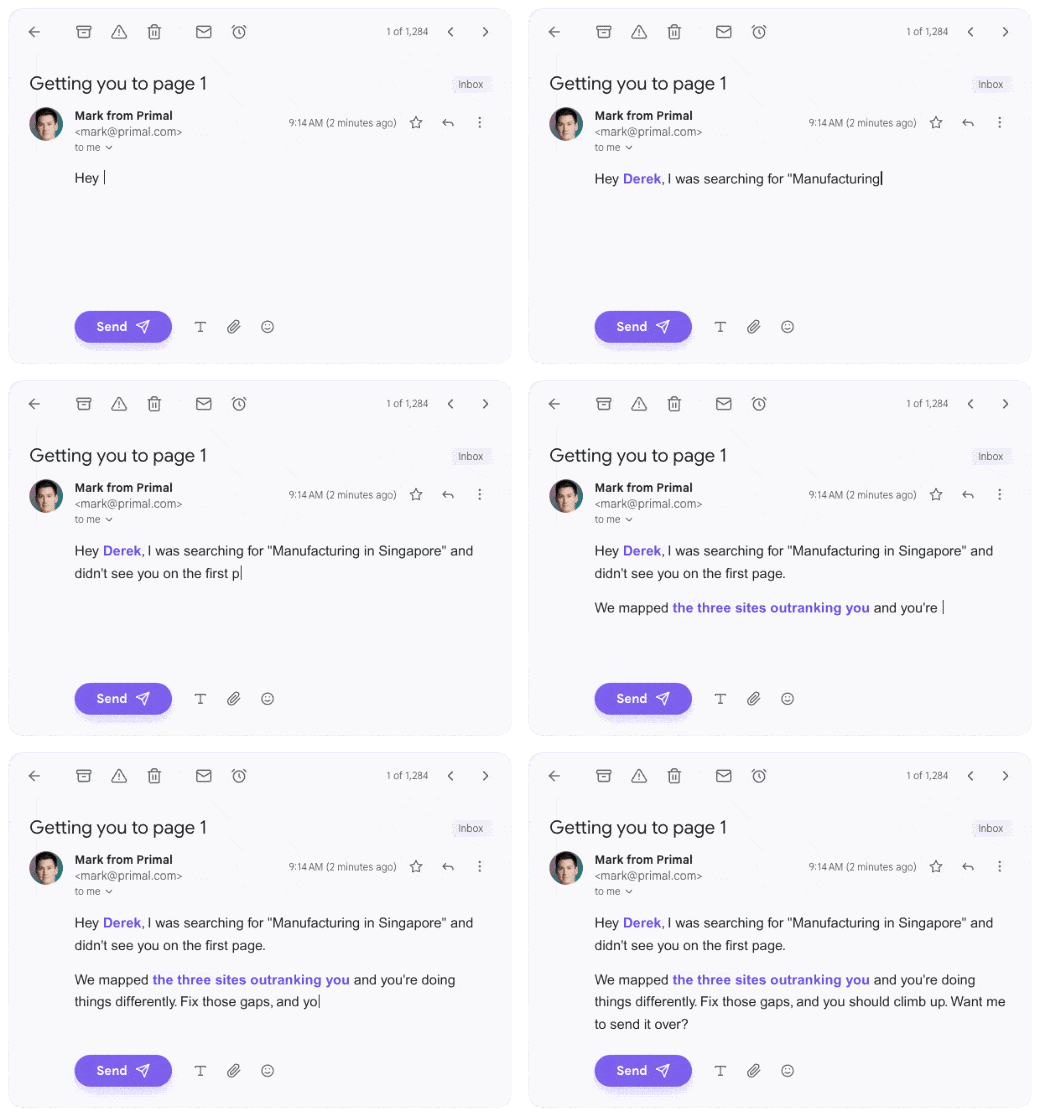
Because each list was built around a signal, the opening line could speak to it directly instead of leading with a generic agency pitch:
"Hi [name], noticed [company] isn't on page one for a few of your core terms, which is traffic going straight to competitors. We've won those positions back for Thai brands before. Worth a look at the gaps?"
Every line earns its place: the ranking reference proves it's researched, the line about competitors makes the cost real, and the proof point sets up the ask without pushing a call. That's what separates a reply from a delete.
4. Consistent follow-up
Reachly managed follow-ups across campaigns so conversations could be nurtured over time without requiring internal effort from the Primal team.
The Results
Over six months, the outbound system produced strong pipeline outcomes and reduced acquisition costs compared to paid channels.
Reply rate performance
Campaigns averaged an 8% positive reply rate. The evergreen campaign performed especially well, supported by Primal’s existing brand credibility in Thailand.
Pipeline impact
Closing Thoughts
Primal already had what most agencies work hard to build: strong reputation, credibility, and proof through client outcomes.
What they needed was a scalable acquisition channel that did not depend on increasing ad budgets.
By partnering with Reachly, Primal built a repeatable outbound engine that generated qualified opportunities at a lower cost than paid acquisition. Within six months, this resulted in a 35% reduction in CAC, 85+ SQLs, and six closed deals.
For agencies looking to scale without scaling costs, outbound becomes a long-term advantage when it is built with clear targeting, relevant timing, and consistent execution.

.avif)