


Overview
Reachly helped The Great Room build a predictable outbound engine that generated qualified private office conversations without relying on brokers or hiring extra headcount. Over ~18–20 months, Reachly consistently delivered pre-qualified meetings, improved funnel quality (≈30% drop-off vs ~50% from paid channels), and contributed to closed revenue, including a ~$250K contract.
| Client | The Great Room |
| Industry | Premium Co-working / Real Estate |
| Markets | Singapore + Australia |
| Website | https://thegreatroom.co/ |
| Partnership length | ~18–20 months |
The Challenge
The Great Room had built strong early momentum through referrals, founder networks, and community-driven growth. But as premium coworking became more competitive, relying on organic demand alone was no longer enough to keep pipeline healthy.
They faced three core challenges limiting sustainable growth.
1) Organic leads weren’t closing as easily
Word-of-mouth had been a major driver for years. But once competitors caught up in the premium segment, buyers had more choices and became harder to convert through organic channels alone. Even when demand existed, the path to signed deals became longer and less predictable.
2) Broker leads increased CAC
To compensate, the team leaned more heavily on brokers for introductions. Brokers helped bring opportunities, but at a cost. Fees increased acquisition costs quickly, and the team didn’t always see enough value in return. Over time, this created a clear tradeoff: pipeline stayed alive, but profitability took a hit.
3) Lean sales team couldn’t do outbound properly
The Great Room’s internal reps were “farmers” focused on converting warm inbound leads, not spending evenings doing cold outreach. Even when the team attempted outbound internally, the results were limited: ~2 face-to-face meetings per quarter, far below their internal expectation targets. Building an internal outbound motion wasn’t realistic either. One outbound hire would quickly cost close to $10,000/month when including salary, tools, CRM seats, and LinkedIn accounts.
When leads came through Reachly, prospects understood they weren’t comparing The Great Room to cheap coworking providers.

The Great Room needed a way to create new qualified conversations without adding headcount or distracting the sales team from inbound.
The Solution
Reachly built and ran The Great Room’s outbound engine end-to-end, allowing their internal team to stay focused on tours and qualified sales conversations while outbound ran consistently in the background.
The strategy included two outbound motions:
.gif)
Evergreen campaign
Reachly launched an always-on campaign targeting companies that match The Great Room’s ideal private office buyer profile. Rather than targeting “everyone in Singapore”, outreach focused on the organisations most likely to convert into tours, and most likely to value premium positioning. This ensured conversations started with the right expectations and avoided price misalignment.
Signal-based campaigns
Alongside evergreen outreach, Reachly built additional campaigns based on buying signals. The goal was to reach prospects when timing made sense, instead of relying on broad targeting.
| Signal | What it indicates |
|---|---|
| Headcount growth | Team outgrowing current space |
| Hiring People / Ops / Workplace roles | Company scaling headcount |
| Office/Workplace role creation | Company preparing for relocation |
| Opening Singapore or Australia presence | Expansion into target markets |
| Recently raised funding | Budget available for premium space |
| Team size thresholds | Entering private office stage |
| Proximity to a location | Close enough to convert into a tour |
We didn't track these signals at random. Each one marks the point where a company shifts from "not thinking about space" to "about to have a space problem," which is when outbound converts and price resistance is lowest.
Headcount growth was the strongest. When a team scales quickly, the office becomes the constraint: desks run out and meeting rooms stay full. These companies are usually three to six months from needing more space but haven't started looking. Reaching them in that window means getting in before competitors, and before the buyer has fixed a budget.
Hiring for People, Ops, or Workplace roles points the same direction. A company staffing up to manage its space is usually preparing to move.
Recent funding means the budget exists, and the timing is public.
Opening a Singapore or Australia presence is the clearest intent: a net-new space requirement, often with a deadline.
Team size thresholds told us when a company had crossed into private-office territory rather than hot-desking, where The Great Room's offer fits.
Distance worked differently. It isn't a timing signal, it's a fit filter. A fast-growing company a few minutes from a Great Room location is a far easier tour than the same company across the city, so proximity decided who got contacted first, not just who qualified.
Individually, each signal is a maybe. Stacked together, they identified companies that were a fit this quarter, not someday.
Implementation
Reachly executed the outbound workflow across targeting, list building, sequencing, and follow-up.
List building with ICP filters
Reachly dialled in targeting based on:
- decision-maker titles
- company size thresholds
- market focus (Singapore + Australia)
- company type filters aligned with private office buying intent
This ensured lists were clean, relevant, and aligned with The Great Room’s positioning.
LinkedIn + email outreach
Reachly launched structured multi-channel sequences using LinkedIn and email. Outreach and follow-ups were designed to start conversations naturally, without forcing tours too early.
Messaging aligned to premium positioning
Messaging was aligned to The Great Room’s premium positioning, ensuring leads understood they were not comparing The Great Room to budget coworking operators.
This reduced awkward pricing conversations later and improved overall lead quality.
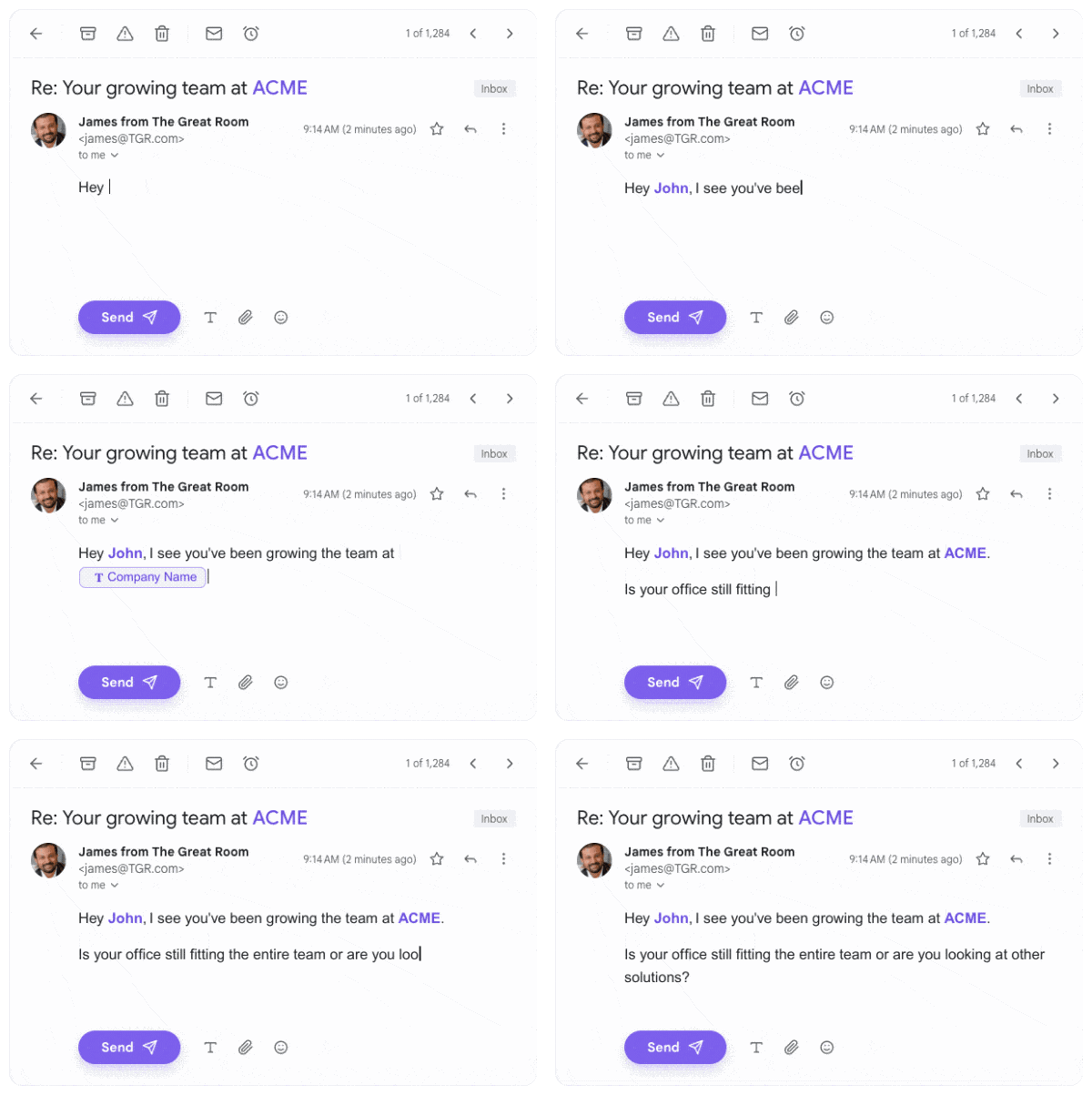
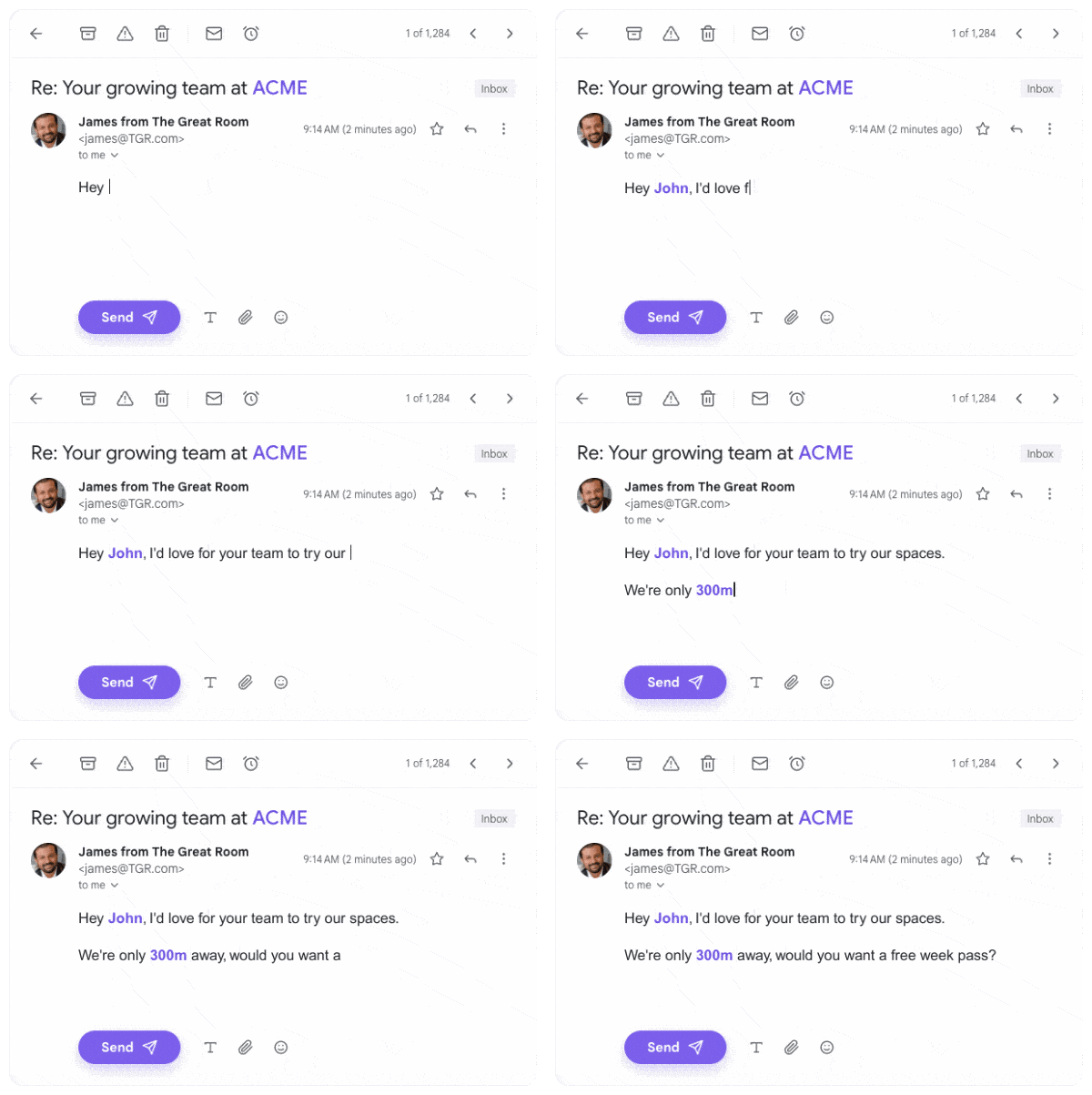
The signals also shaped the messaging. The opening line referenced the specific reason the company was on the list, so it read as research, not a blast:
"Hi Priya, saw Lumen Labs grew headcount around 40% last year. That's usually when the current office starts to feel tight. We run private offices a few minutes from you at Afro-Asia on Robinson Road, built for teams scaling past 30. Worth a look before your next renewal?"
Each line has a job: the growth stat establishes relevance, the location establishes proximity, and the framing sets premium positioning without pushing a tour. That's the difference between outreach that gets ignored and outreach that gets a reply from a serious buyer.
SDR-led nurturing before tours
Reachly acted as the SDR layer, nurturing conversations and sharing the right material, so leads were pre-qualified before reaching sales.
This was critical because:
- tours take time
- decision cycles are longer than SaaS
- price sensitivity is real
By setting expectations early, the sales team could focus on high-intent prospects, not “curious browsers”.
The Results
Over the partnership, the outbound system improved pipeline quality, increased meeting consistency, and delivered meaningful revenue outcomes.
The clearest signal of change was meeting volume. Before Reachly, internal outbound produced roughly two face-to-face meetings per quarter. Within the engagement, The Great Room was hitting that number every month, without pulling a single rep off inbound.
| Result | Evidence |
|---|---|
| Improved qualification rates |
Digital marketing (Google Ads / SEO): ~50% drop-off after qualification Reachly outbound leads: ~30% drop-off Reachly-generated leads were more aligned, more serious, and more likely to convert into tours. |
| More consistent face-to-face meetings |
Before Reachly: ~2 meetings per quarter With Reachly: reaching that output every month |
| Closed revenue impact |
✅ ~$250,000 total contract value (Closed roughly 9 months into the engagement.) |
Closing Thoughts
The Great Room already had what most coworking operators want: strong brand, premium positioning, and steady inbound demand.
But as the market became more competitive, relying on referrals and brokers made pipeline less predictable and acquisition more expensive.
Reachly helped The Great Room build a repeatable outbound motion that created qualified tours without increasing headcount or distracting the sales team from inbound.
For premium real estate offers, outbound only works when it is targeted, timed properly, and positioned correctly. This partnership proved that with the right system, outbound can become a sustainable growth channel, not a short-term experiment.
That single deal justified the full partnership.
Why Reachly?
The Great Room chose Reachly because it was the fastest and most cost-effective way to build a predictable outbound motion without hiring an SDR team. Reachly handled outbound end-to-end, aligned targeting and messaging with The Great Room’s premium positioning, and delivered a consistent flow of pre-qualified conversations that could convert into real tours.

.avif)