
 Key Findings
Founder-led outbound ships in three to four weeks and tells you whether your offer matches the market. Inbound takes six months to give the same signal.
The founder is the most credible sender and learns objections live. Prove a repeatable motion first, then hire a GTM engineer to scale it, not a rep with no playbook.
Cold email, LinkedIn, and cold calling coordinated per prospect beat any single channel run flat. By the third touch your name feels familiar, not cold.
Keep emails 70 to 80 words, send two then stop, and re-engage 1.5 to 2.5 months later. Warm the domain 30 days and match ESP to ESP or the copy lands in spam.
Once the motion is proven, a partner can scale it faster than you can alone. For Primal the approach drove 85+ qualified leads in six months and a 4.57x return.
You have a product people need and a pipeline that will not fill itself. So you do what every founder eventually does. You send a batch of cold emails between meetings, fire off a few LinkedIn connection requests, and wait. A week passes. Two replies, both "not right now." The conclusion feels obvious: outbound does not work for us. The conclusion is wrong.
Outbound for founders fails for a specific reason, and it is almost never the channel. It is that founders run outbound like a chore they squeeze into the gaps, with a weak offer, a generic list, and no follow-up plan. Done properly, founder-led outbound is the fastest way to find out whether your offer matches the market. It can ship in three to four weeks and tell you immediately what inbound takes six months to reveal.
This is the operator version of the playbook. What to run, in what order, with what offer, and the honest answer on when to do it yourself versus when to hand it off. By the end you will know how to turn cold outreach into booked meetings without hiring a sales team you cannot yet afford.
What outbound for founders actually means
Outbound is you starting the conversation instead of waiting for a buyer to find you. For a founder, that means reaching a defined list of people who fit your ideal customer, across cold email, LinkedIn, and cold calling, with a message tied to a real reason you are contacting them now. It is not spray and pray. It is a deliberate motion where every touch has a reason to exist.
The founder version is different from a rep running a script. You carry something no SDR has: you know the product cold, you can speak to the problem with authority, and your name on the email or the connection request means more coming from the person who built the thing. That credibility is the single biggest asset in founder-led outbound, and most founders waste it by outsourcing the message before they have found one that works.
There is a second job hiding in founder outbound. Every campaign you run teaches you how buyers react to your offer, your angle, and your language. That feedback is the raw material for everything downstream: your website copy, your sales deck, your first hire's playbook. Founders who run outbound themselves for a season sell better in every channel afterward, because they have heard the objections in real time and learned what makes a buyer lean in.
Why founders should run outbound before hiring a sales team
The instinct when pipeline is thin is to hire someone to fix it. For most early companies that is the expensive way to learn a lesson you could have learned yourself. An SDR with no proven message and no validated offer will burn six months and a salary discovering what you could have found in a month of running outbound with your own name on it. Here is why the founder is the right first outbound engine.

None of this means you run outbound forever. It means the founder proves the motion, and only then does headcount make sense. When you do hire, the first outbound hire is a GTM engineer, not a cold-calling body: someone who can orchestrate your data, build lists, write decent copy, and run the systems you validated. The sequence is founder first, system second, scale third. Skip the first step and you are paying someone to guess at the exact thing you were best placed to figure out. For the fuller version of this motion, see our guide to a modern outbound sales strategy that books meetings.
The founder outbound stack: cold email, LinkedIn, cold calling
Outbound is not one channel, it is three working together. A prospect who sees your name on a LinkedIn visit, then an email, then a call is not getting cold-contacted three times. They are getting a coordinated sequence that feels familiar by the third touch. Most founders pick one channel, run it flat, and miss the compounding that comes from stacking them. Here is what each channel does and where a founder should spend the effort.
| Channel | Best for | Founder playbook |
|---|---|---|
| Cold email | Volume and testing offers fast across a defined list | Keep emails 70 to 80 words. Send 2, six to seven days apart, then stop. Re-engage the same list 1.5 to 2.5 months later with a new angle. |
| Warming buyers who ignore email and building recognition | Empty connection note. Wait one to three days after they accept. Then a short, lowercase, question-based message. Four to five touches across two to four weeks. | |
| Cold calling | Breaking through to high-intent accounts already warmed | Use it strategically, not as a volume play. Call after email and LinkedIn, so the prospect has seen your name twice before you dial. |
| All three together | The actual founder motion that books meetings | Coordinate them per prospect. LinkedIn visit and connection, then email, then a call on the accounts that engage. One system, not three campaigns. |
The infrastructure matters as much as the message, and it is where founders quietly sink their own campaigns. Before you send a single email, get the technical setup right: SPF, DKIM, DMARC, and a custom tracking domain are all mandatory, none optional. Warm your domain for thirty days, because Google now flags any domain younger than that with a yellow banner that tanks performance. Match the sending platform to the recipient, Google to Google and Outlook to Outlook, and keep sends conservative at fifteen a day per Google mailbox and ten to twelve per Outlook mailbox. A tool like Smartlead handles the sending and the ESP matching at the campaign level, and ZapMail handles the domain setup. Get this wrong and the best copy in the world lands in spam. The full checklist lives in our email deliverability guide.
Whether the call is cold or warm changes the script, compared in cold calling vs warm calling.
The founder outbound sequence step by step
Channels are useless without a sequence to tie them together. The point of a sequence is that each touch has a reason and the whole thing coordinates around one prospect instead of blasting them from three directions at once. Here is the exact motion Reachly would run for a founder starting from a clean list, built to book meetings without becoming a second full-time job.
The founder outbound sequence in six moves
Two steps get skipped most, and they are the ones that decide the outcome. Founders rush the list, sending a generic message to a broad audience, then blame the channel when replies do not come. And they over-run the sequence, chasing the same prospects ten times until deliverability collapses. Keep the list tight and signal-driven, keep the sequence short, and re-engage rather than harass. The mechanics here mirror our cold email best practices and the framework in our guide to signal-based outbound.
When to run outbound yourself and when to outsource it
Founder-led outbound is the right starting point, but it is not meant to be your job forever. The trap on both sides is real. Some founders never let go and cap the company at whatever pipeline they can personally generate between everything else they do. Others hand outbound to an agency or a junior hire on day one, before there is a proven message to hand over, and get a polished machine pointed at the wrong target.
The rule is simple. Run it yourself until you have a repeatable motion: an offer that gets replies, a sequence that books meetings, and objections you can answer in your sleep. That is the moment to bring in a system, whether that is a GTM engineer in-house or an outbound partner who lives across many clients and sees what is working right now faster than any single team can. What you are outsourcing is the execution and the infrastructure, never the offer and never the taste for what to say.
Outbound can ship in three to four weeks and tell you immediately whether your offer matches the market. Inbound takes six months to compound. That is why founders should run it themselves first. You are not just booking meetings, you are learning what makes a buyer say yes. Once you have that, an agency lives in the weeds across many clients and can scale it faster than you can alone. But hand it off before you have found the offer and you are just paying someone to guess.
A budget note for founders doing it themselves. You can start a serious outbound motion for around five thousand dollars over ninety days: domains, sending infrastructure on a platform like Smartlead, verified leads, and strong copy you write yourself. There is no realistic path to scale on zero paid tools, so do not pretend otherwise. But you do not need a full sales org to prove the motion. You need a tight list, a real offer, and the discipline to run the sequence properly.
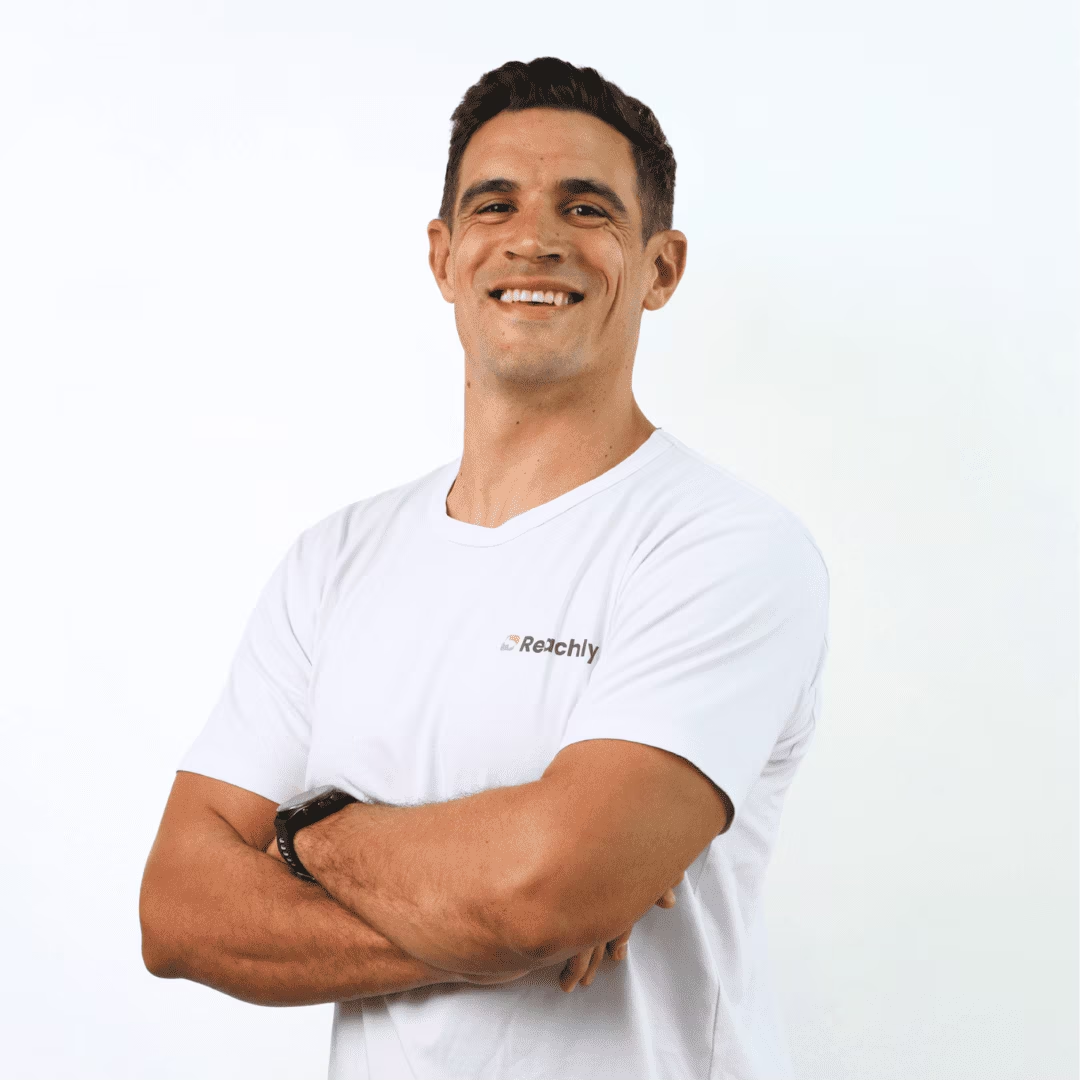
Thibault Garcia, Reachly's founder, has spent eleven years building outbound systems for B2B teams and writes most of what you read here.
Turn founder outbound into booked meetings
Outbound for founders works when the offer is sharp, the list is accurate, the infrastructure is clean, and the sequence is short and coordinated. That is a lot to run while you are also building the company, which is exactly why most founders stall after the first validation phase. You prove the motion, then you need a system to run it at volume without it eating your calendar.
That is what Reachly builds. We run done-for-you outbound across cold email, LinkedIn, and cold calling, on signal-based targeting, so the message stays yours and the execution stops being your problem. The proof shows up in the numbers. For Primal, the approach produced more than 85 qualified leads in six months, a 4.57x return, and an 8 percent average positive reply rate. Reachly clients run at bounce rates under 3 percent and deliverability above 97 percent. You stay the founder who owns the offer. We handle the machine that turns it into booked meetings. See how it works on the Reachly homepage, or hand the sending to our cold email agency and our LinkedIn outreach team.
Outbound for founders FAQ
Yes, at least at the start. The founder is the most credible sender, knows the product cold, and can reshape the offer in real time. Running outbound yourself is the fastest way to find out whether your offer matches the market, and it ships in three to four weeks against the six months inbound takes to compound. Hand it off only once you have a proven message.
Cold email for volume and fast offer testing, LinkedIn to warm buyers who ignore email, and cold calling as a strategic finisher on accounts that already engaged. The real answer is all three coordinated per prospect. A buyer who sees a LinkedIn visit, then an email, then a call feels familiarity by the third touch instead of three separate cold contacts.
70 to 80 words in 2026. Cold emails compete for attention span, not against other cold emails, so short and direct wins. Lead with a real signal, make one clear offer, and end with a question. The goal is a reply, not a meeting. Send two emails six to seven days apart, then stop and re-engage the list later with a new angle.
Once you have a repeatable motion: an offer that gets replies, a sequence that books meetings, and objections you can answer instantly. That is the signal to bring in a system. The first outbound hire is a GTM engineer who can orchestrate data and run workflows, not a junior rep with no playbook. Hiring before you have proven the message just pays someone to guess.
Around five thousand dollars over ninety days covers domains, sending infrastructure, verified leads, and the copy you write yourself. There is no realistic zero-paid-tool path to scale, so budget for the tools. What you do not need yet is a full sales team. A tight, accurate list, a strong offer, and a properly run short sequence will prove the motion first.
Recommended service
Outbound Lead Generation Services
Reachly builds and runs the whole outbound motion across email, LinkedIn, and phone, and books qualified meetings on your calendar.