

 Key Findings
The right Instantly alternative depends on how your team works, how much setup you can tolerate, and your tolerance for sender-reputation risk, not the longest feature list.
Smartlead wins on mailbox economics for agencies, lemlist on real multichannel, Apollo on data plus sequencing, Woodpecker on deliverability, Mailshake and Reply.io on simplicity and flexibility.
The cheap plan rarely stays cheap. Data finders, extra mailboxes, seats, and warm-up add-ons lift the real bill past tools that looked pricier upfront.
No platform fixes weak data, vague copy, or sloppy deliverability. Fix the inputs first: better lists, better timing, better offers, better channel mix.
If no one will own lists, copy, inboxes, and replies, a dashboard will not help. A done-for-you service like Reachly runs the motion so your team can focus on closing.
Your cold email tool matters less than people think. The wrong one still wrecks campaigns fast. Bad reply handling, weak data, messy pricing, and shaky deliverability kill pipeline long before a feature ever saves it.
Most lists of Instantly alternatives get this wrong. They line up features side by side, as if buying outreach software is like buying storage space. It is not. The right pick depends on how your team works, how much manual setup you can tolerate, and how much risk you are willing to take with sender reputation.
That is the real filter. If you run high-volume outbound, you need different things than a founder sending from a few domains. If you are an agency, mailbox economics decide your margin. If you are building a true multichannel motion, email alone will not carry the load. A cold outreach platform comparison helps with the surface view, but the decision comes from the trade-offs you live with day to day. If you want the wider field first, our roundup of the best B2B lead generation tools is a good starting map.
Here is the short version. Instantly is fine until your workflow gets more serious than load leads, launch sequence, hope for replies. After that, the cracks show up fast. Below are the seven alternatives worth your time in 2026, and exactly who each one is for.
1. Reachly, the done-for-you alternative
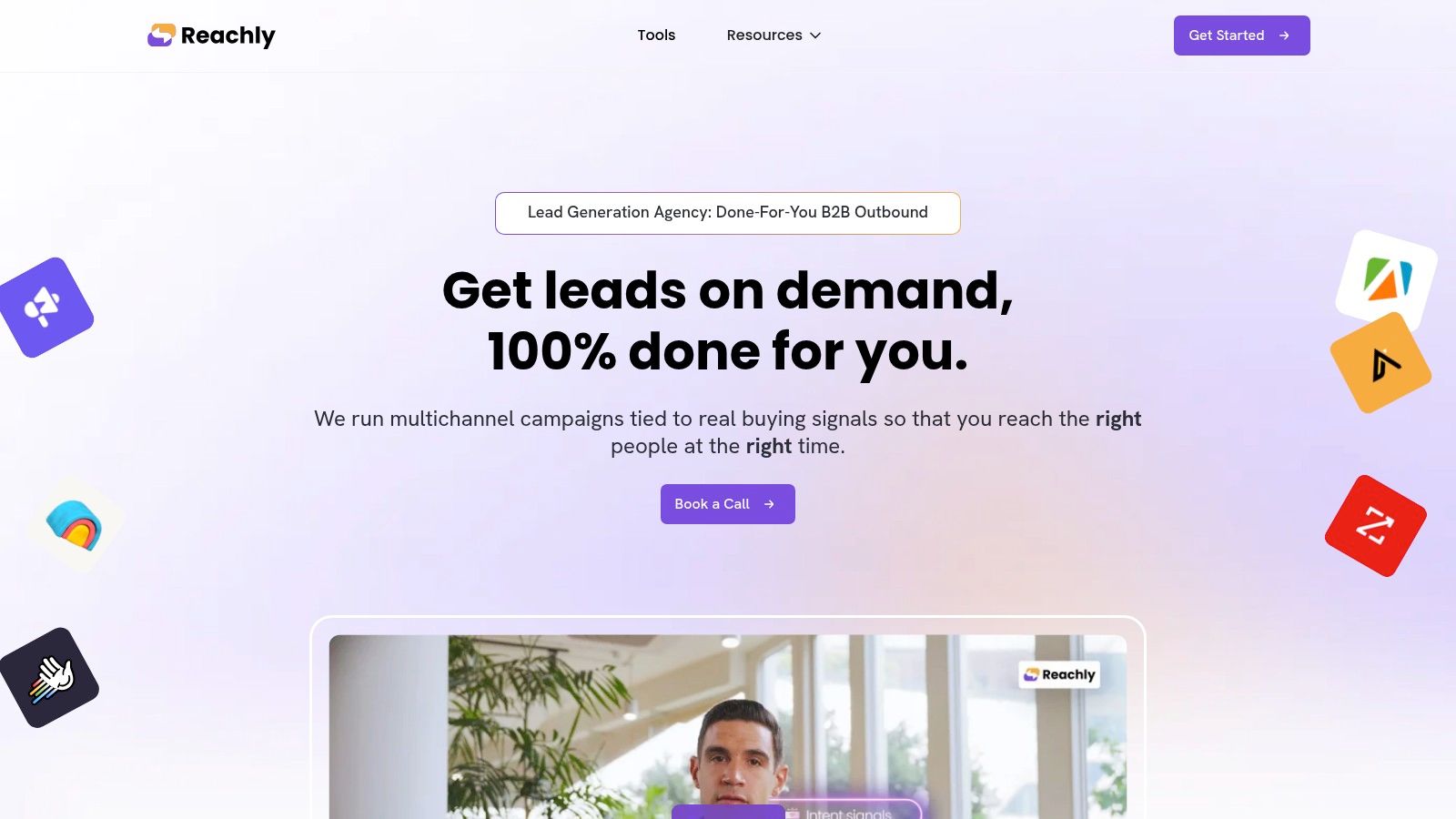
Reachly is the best alternative if you do not want another tool to manage. That is the whole point. Instead of handing your team a dashboard and hoping someone owns list quality, sequencing, inbox rotation, reply handling, and meeting booking, Reachly runs the outbound motion for you across cold email, LinkedIn, and cold calling.
That matters more than most founders admit. Tools do not fail because the send button is broken. They fail because nobody has time to build a clean TAM, verify contacts, segment by buying signals, write messages that sound human, and keep deliverability healthy at the same time.
Reachly maps your market using 10 plus data sources, enriches contacts with signals like hiring, funding, traffic shifts, and tech-stack changes, then prioritizes who gets contacted first. That is a better operating model than blasting a static list, and it fits where outbound is headed, because the gap in most Instantly alternatives is real-time, intent-based prospecting rather than just cheaper sending infrastructure, as noted in this analysis of intent-focused Instantly alternatives. If you want the full method, read how signal-based outbound actually runs.
The service also handles the ugly parts teams usually avoid. Data verification: every contact is checked before launch, which matters when B2B contact data decays somewhere between 22% and 70% a year, and old data turns decent copy into wasted volume. Deliverability protection: dedicated secondary domains and mailbox separation keep your primary brand safer, which is what stops future campaigns from getting buried. Reply management: positive replies do not sit in a rep's inbox for two days while everyone argues about ownership. If you are still debating who writes copy, who cleans lists, and who owns inboxes, you do not have a tool problem. You have an execution problem.
The trade-off is honest. You will not get a self-serve price page with fixed packaging. Reachly is retainer-based, scoped around channels and volume, so it takes an actual conversation. Cold email also needs setup discipline. Campaigns can launch in two to three weeks, but email-led volume needs proper warm-up first, so this is not the choice for reckless sending by next Tuesday. For teams that need pipeline without building an outbound machine internally, that is a good trade. Reachly is less a software replacement and more a way to hand off the operational burden.
2. Smartlead.ai
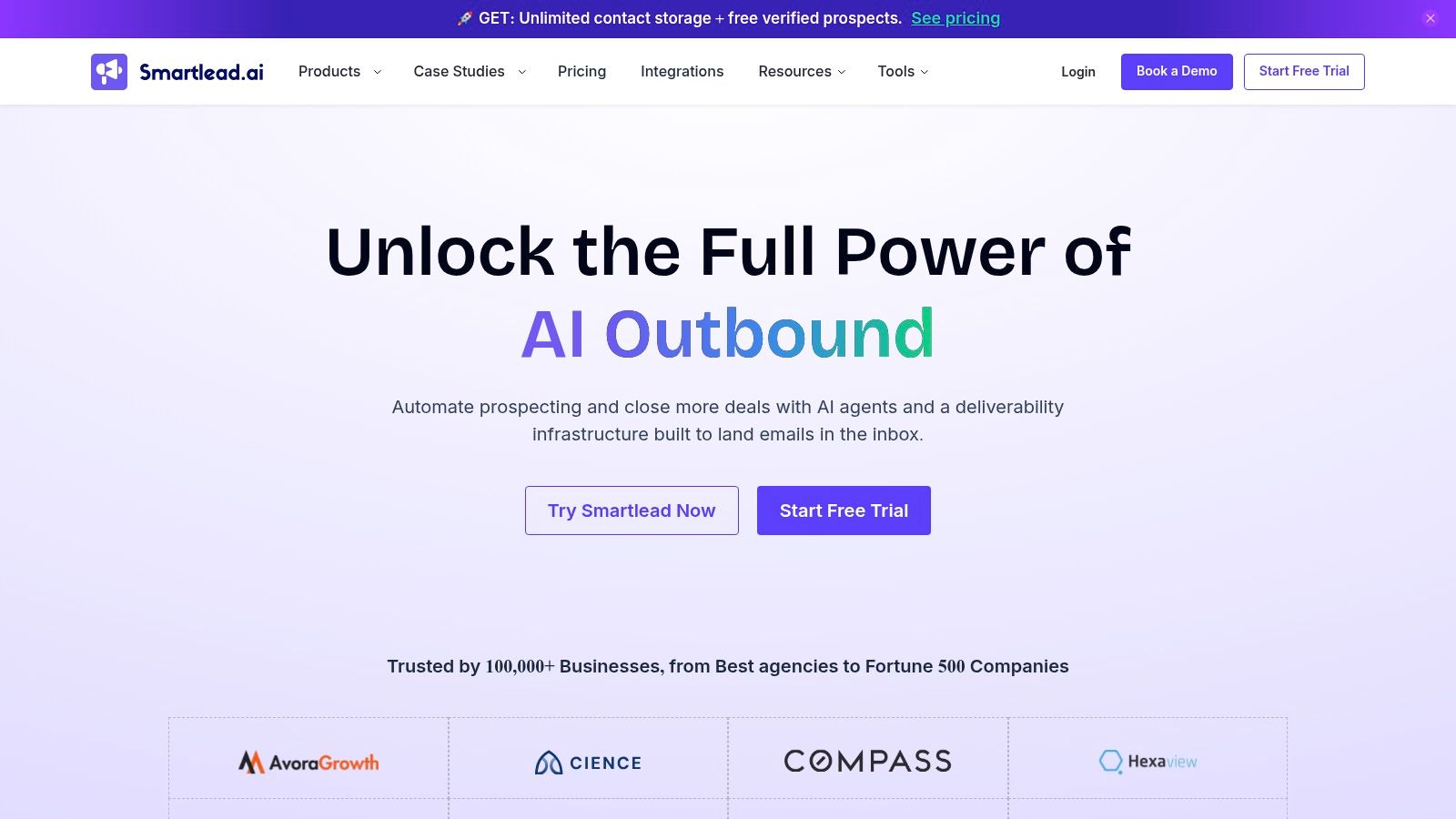
Smartlead is the operator's pick when mailbox count gets large enough to wreck your unit economics. Agencies feel this first. A few client accounts turn into dozens of domains, hundreds of inboxes, and constant pressure to keep sending costs flat while volume climbs.
That pricing model is a big reason Smartlead shows up in agency stacks so often. Its plans include unlimited mailboxes and built-in warmup, which changes the math for teams managing outreach across many clients on one platform, according to the Smartlead pricing page. There is also a deliverability reason teams keep it in the mix: its warmup network covers more than 600,000 real inboxes, which helps spread risk across multiple domains instead of concentrating volume in a small setup.
Smartlead works best for teams that already know how to source data, segment lists, and run inbox infrastructure with discipline. The platform handles the sending layer well, with sender rotation, shared inbox workflows, and client-facing reporting on higher plans. If your operation is built around volume, those details matter more than another AI copy button. If your use case is less agency-heavy and more multichannel, this Smartlead vs lemlist breakdown is a better decision guide than a feature checklist.
The trade-off: Smartlead does one job well, running cold email at high volume without getting punished on mailbox pricing. It does not solve the rest of outbound. You still need lead sourcing, verification, reply-handling rules, campaign strategy, and someone who knows when a domain should be cooled down or replaced. Founders without process usually create faster chaos. Agencies with process usually get a cost-efficient sending engine. It is a strong Instantly alternative for high-volume operators, and a weaker fit for teams that want one tool to run the whole GTM motion.
3. lemlist
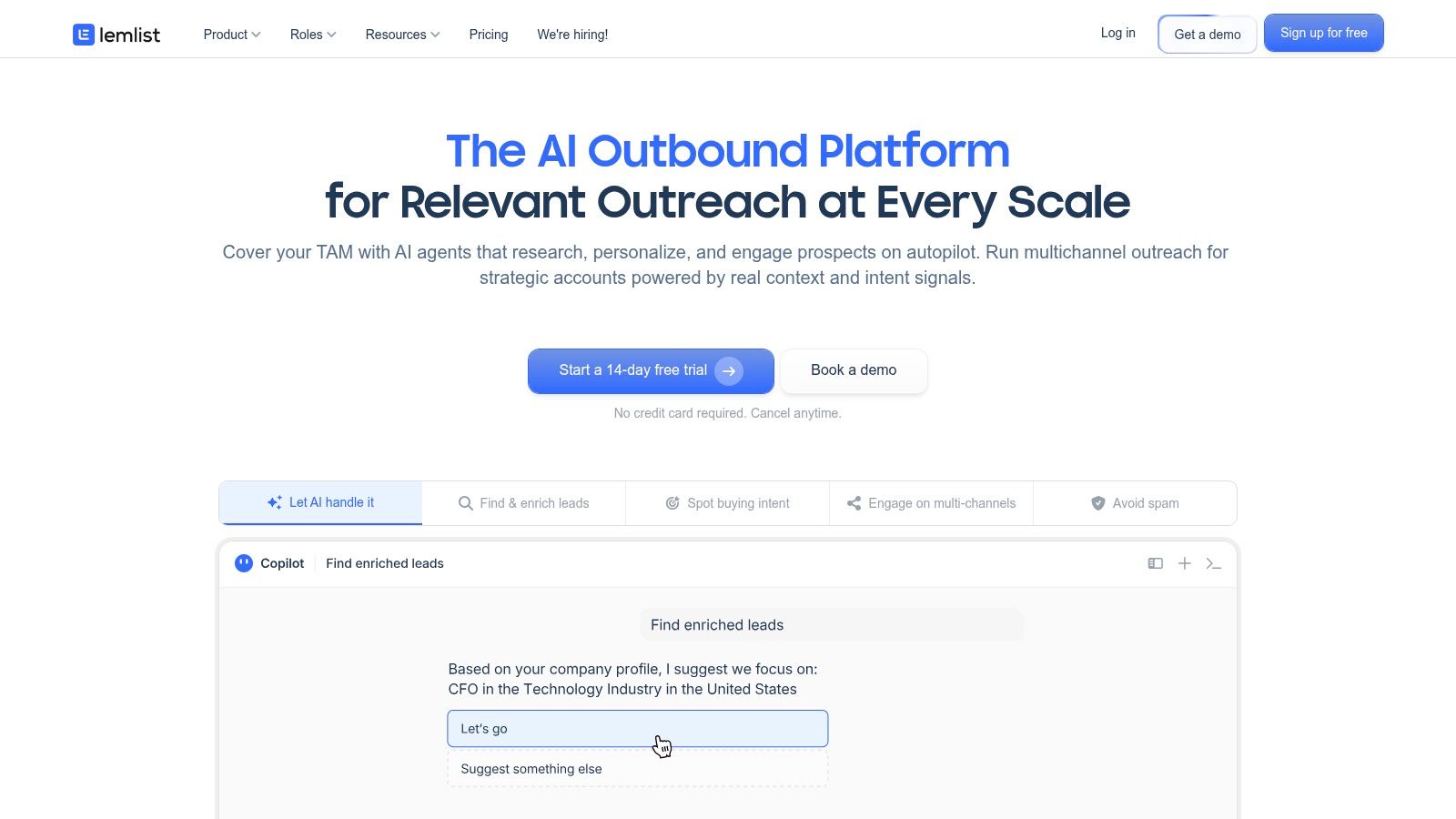
lemlist makes more sense than Instantly when email is not your whole play. A lot of teams say they want multichannel outreach, then run one email sequence and call it a day. That is not multichannel. That is email with ambition.
In campaigns that blend cold email with LinkedIn engagement, lemlist has reported reply rates of around 23%, well above the single-channel cold email benchmarks teams see when they rely on volume alone. The product brings email, LinkedIn, SMS, WhatsApp, and calling into one motion. Add its built-in data layer and deliverability tooling, and you get a setup that suits teams who do not want a stack held together with Zapier and duct tape.
There is a budgeting angle too. The credit system means you pay for the verified contact data you use instead of loading a giant plan upfront. For some teams that is cleaner. For others it becomes another usage meter to watch, since verified emails, phones, and intent data can push spend up fast without discipline. For a direct tool decision, this Smartlead vs lemlist comparison helps sort out whether you want volume economics or multichannel depth. Use lemlist if you want one system for data, outreach, and channel variety. Skip it if you mainly care about cheap inbox scaling and already run a separate data stack. The real trade-off: lemlist is stronger when your team actively works multichannel. If nobody is going to use LinkedIn steps, calling, or richer personalization, you are paying for a wider system than you need.
4. Apollo.io
Apollo is the default pick for teams that want data and sequencing in one place. Not because it is perfect, but because it is convenient, familiar, and usually good enough to become the center of an early GTM stack. You can find contacts, enrich accounts, push them into sequences, layer in LinkedIn tasks, use a dialer, and track activity without jumping across too many tools. For lean teams, that matters.
Apollo works best when your biggest pain is not sending volume, it is prospecting speed. Teams that do not want separate vendors for database access, enrichment, and sequencing often land here first. It also fits common RevOps setups, since Salesforce and HubSpot users find more existing knowledge and less implementation friction than they would with a niche sender. If you are comparing database-first tools, this Apollo alternatives guide gives a clearer sense of where it fits.
What operators trip over: Apollo can create false confidence. The database is large, the workflows are visible, and the stack feels complete. Then teams realize they still need tighter verification, cleaner segmentation, and better message control if they want replies worth having. It is a solid operating base. Just do not mistake convenience for precision. Strong fit for startup GTM teams that need one workspace for prospecting and outreach, weaker fit for agencies managing heavy mailbox fleets and white-label client operations, and watch the credit rules, because real cost is harder to predict than the homepage suggests.
5. Mailshake
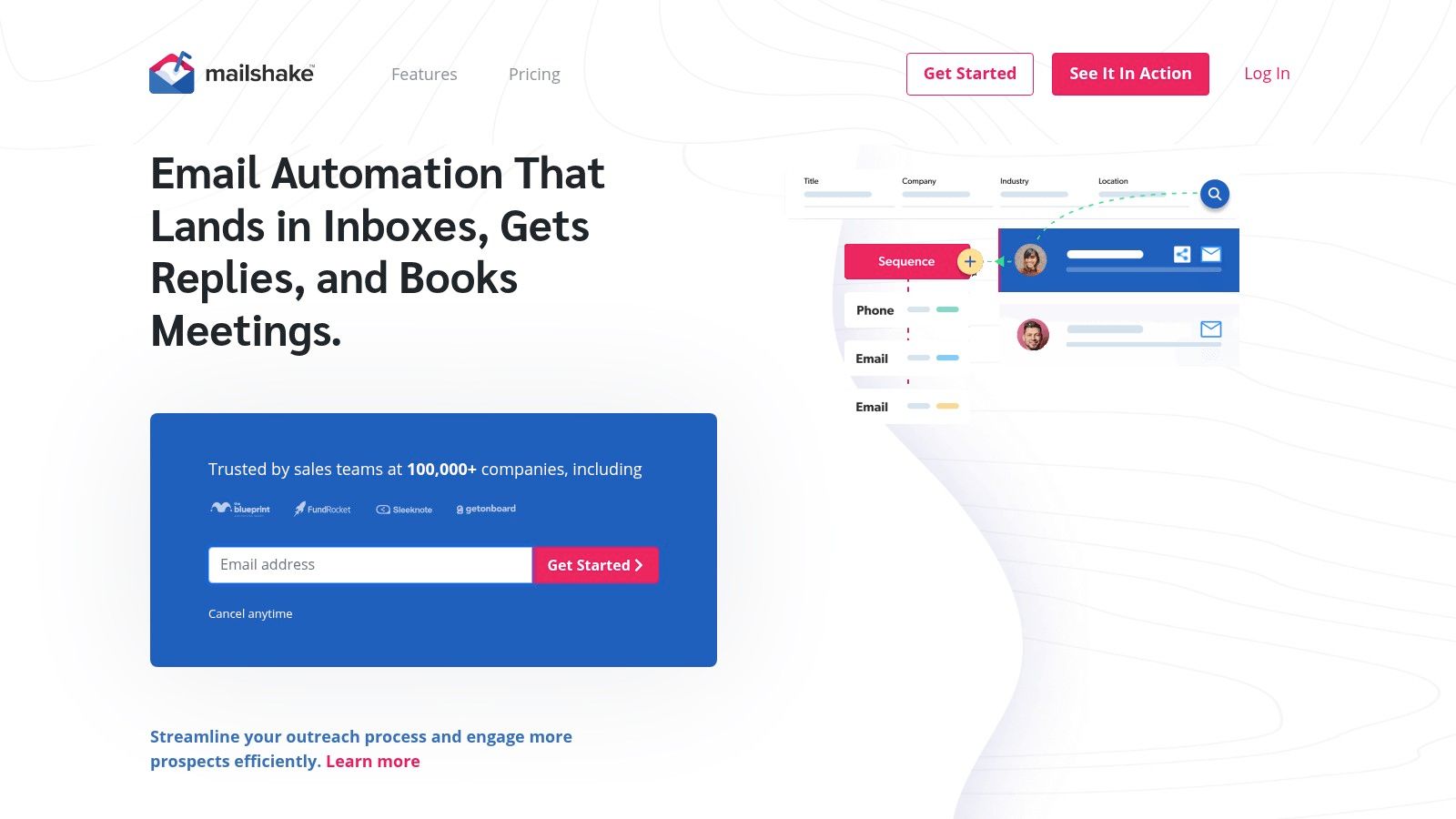
Mailshake works best for teams that want outbound to stay simple and rep-friendly. That matters more than feature depth in a lot of real setups. A tool reps actually use beats a more advanced platform that sits half-configured because nobody owns the plumbing. You get email sequencing, testing, a shared inbox, and a built-in dialer in one place, which cuts setup time for small teams running email plus phone.
The dialer is the main reason Mailshake makes this list. Cold calling still earns attention from senior buyers when targeting is tight, and outbound research shows 57% of C-level buyers prefer to be contacted by phone. Mailshake fits that motion well because reps can move from sequence to call without rebuilding the workflow somewhere else.
It is a good fit for operators who care more about execution speed than infrastructure flexibility. SDR teams, founder-led sales motions, and smaller agencies can get campaigns live quickly without assigning a full-time ops owner. That same simplicity creates limits. If you manage a large mailbox fleet, run white-labeled client accounts, or want deep deliverability controls, Mailshake starts to feel narrow. The pricing issue usually shows up later: the core product is straightforward, then teams add a data finder, buy mailboxes, expand seats, and the simple stack now costs more than tools that looked pricier upfront. That trade is fine if your goal is speed and low admin. It is a bad trade if you expect the platform to grow with a more technical program. For some teams the better answer is not another tool, it is a done-for-you service that handles inbox setup, deliverability, list building, and campaign management.
6. Woodpecker
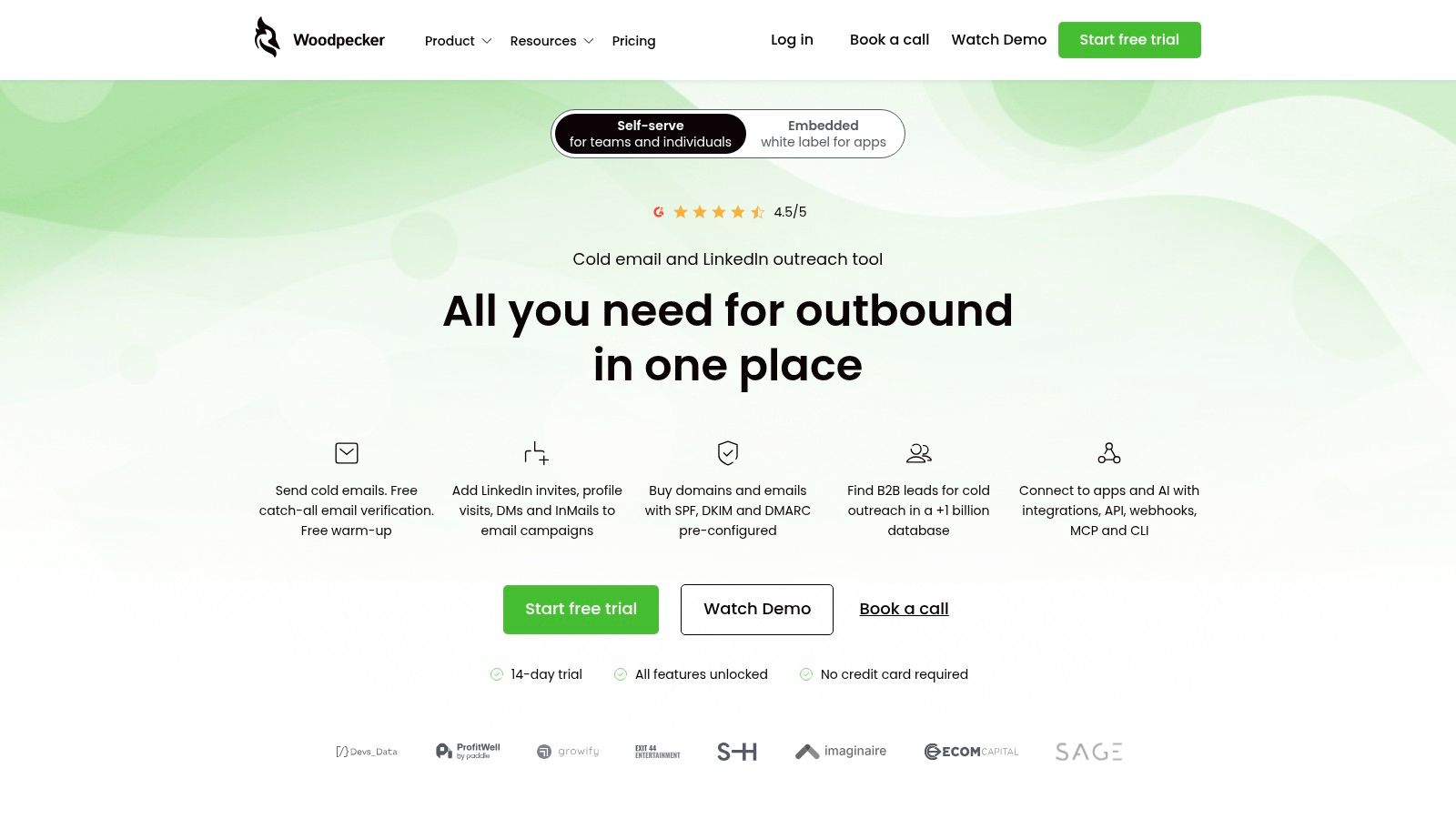
Woodpecker fits a specific type of team, the one that cares less about flashy sequencing and more about keeping domains healthy. That is not every sender. It matters a lot if you have already dealt with spam-folder drift, catch-all risk, or a launch that burned through inboxes faster than expected. Warmup, catch-all verification, inbox rotation, and domain checks are the controls operators start valuing after something breaks.
Woodpecker can look cheaper than Instantly at the starting line, with plans from $20 per month on its pricing page, which makes it reasonable for smaller teams that want to protect inboxes without buying a broader GTM stack on day one. The catch is packaging. It works well if your motion is still email-first and you are fine adding other pieces later. If you expect built-in prospect data, heavier multichannel coverage, or agency-grade client separation, the total stack gets more complicated, and admin overhead is the bigger issue, not just cost. If deliverability is your first concern, pair any sender with real email deliverability hygiene, because a big list sent badly just burns domains.
The trade-off: Woodpecker is strong for disciplined senders and weaker for teams trying to run outbound, data sourcing, LinkedIn, and client ops from one command center. Deliverability-first software feels slow right up until the week you need to replace domains, warm new inboxes, and explain the dip to leadership. If your team is tired of stitching tools together at all, a done-for-you service is a valid alternative.
7. Reply.io
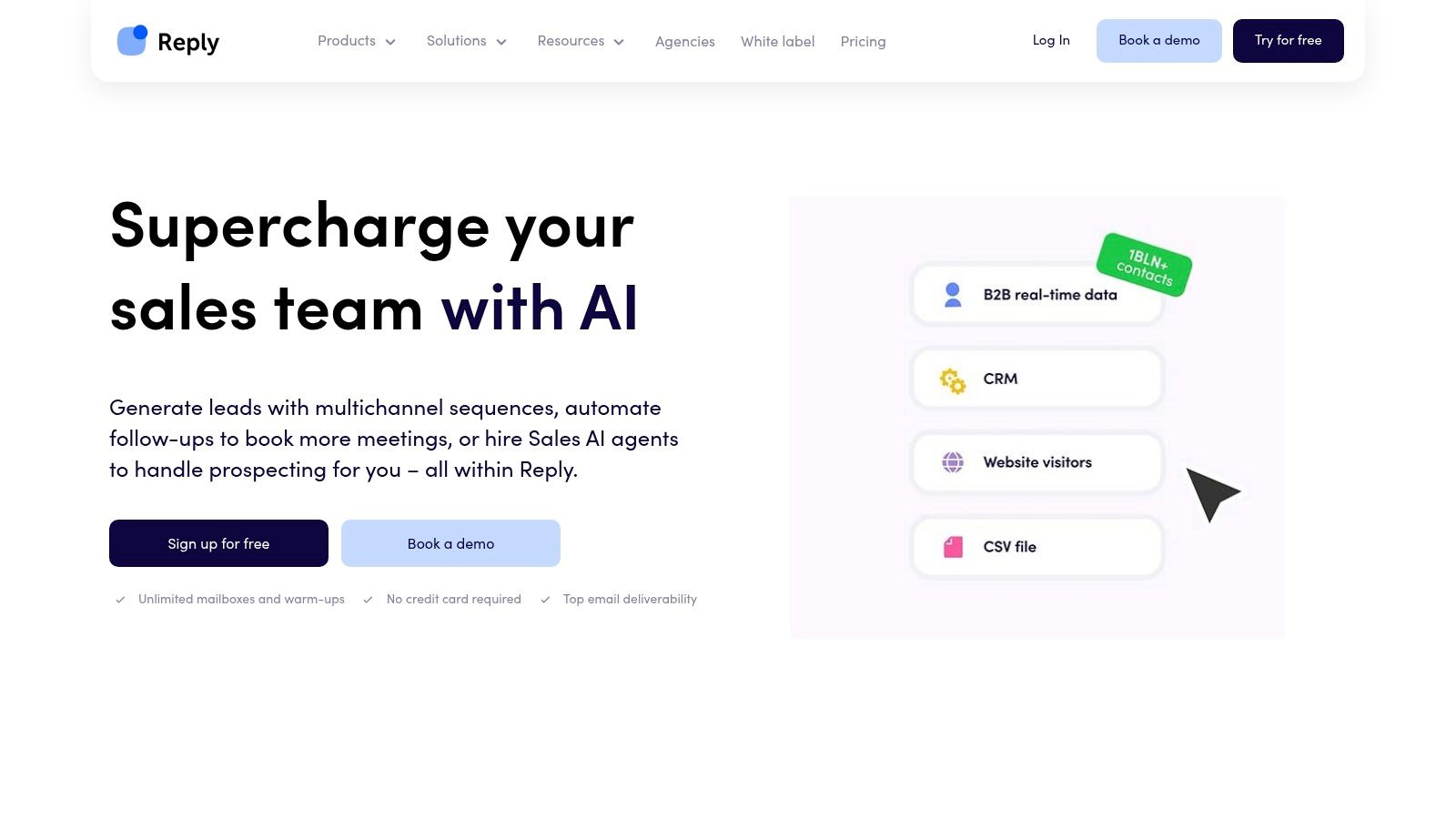
Reply.io sits in the middle, which is useful if your team has not fully decided whether it wants a high-volume email sender or a broader sales engagement platform. The packaging is the appeal. You can stay on an email-heavy setup priced around active contacts, or move into a wider multichannel plan with email, LinkedIn, calls, SMS, and WhatsApp under one vendor. For teams in transition, that flexibility helps.
It works best for teams that want optionality without rebuilding the stack later. Warmup is included, email automation is mature, and the multichannel path is there when the team is ready. It also suits teams that prefer one vendor relationship instead of a separate sender, LinkedIn tool, warmup tool, and AI assistant. Live data credits and website-visitor reveal add context without a separate prospecting motion. The drawback is the same as the strength: flexibility comes with packaging complexity. Mailbox counts, channel access, and limits vary by plan, so map your actual workflow before buying, or you will buy the plan that fits today and find the useful features sit one tier up.
Instantly alternatives at a glance
Here is the quick read across all seven, matched to the team each one serves best.
| Tool | Best for | Watch out for | Key advantage |
|---|---|---|---|
| Reachly | Teams that want pipeline without running outbound in-house | Retainer pricing, no self-serve page, warm-up takes time | Done-for-you, signal-based, deliverability-first across all channels |
| Smartlead.ai | Agencies and high-volume senders watching mailbox margin | Solves sending only, you still own data and strategy | Unlimited mailboxes, rotation, master inbox, white-label |
| lemlist | Teams running real multichannel, not email with ambition | Credit spend climbs without discipline | Email, LinkedIn, SMS, calling, plus built-in data |
| Apollo.io | Lean GTM teams wanting data and sequencing in one place | Convenience over precision, credit rules hide real cost | Large database, in-sequence enrichment, CRM integrations |
| Mailshake | Small teams running email plus cold calling simply | Add-ons inflate the simple price over time | Fast onboarding, built-in power dialer |
| Woodpecker | Deliverability-conscious founders and small senders | Narrow once you need data or multichannel depth | Free warmup, catch-all verification, domain audits |
| Reply.io | Teams moving from email-only toward multichannel | Packaging complexity, useful features sit one tier up | Flexible plans, warmup included, multichannel support |
The tool is just the start
Choosing from Instantly alternatives is only step one. The tool will not save a weak outbound motion. Bad data, vague copy, poor segmentation, and sloppy deliverability habits sink performance no matter how polished the dashboard looks. That is why feature comparisons miss the point. They tell you what a platform can do, not what your team will execute well.
The pattern is consistent. High-volume agencies care most about mailbox economics and reply handling. Founders care about speed and not burning their domain. GTM teams want data and sequencing in one place, even if that means compromises on precision or cost. And the uncomfortable truth: running outbound properly is a job, not a side quest. List building, verification, copywriting, infrastructure, warm-up, segmentation, testing, inbox management, qualification, and booking all need real ownership. If you want to improve cold email response rates, start with the inputs: better lists, better timing, better offers, better channel mix. The software comes after that, not before.
People obsess over which tool to buy, but the tool just delivers the message. Our top-performing clients all have one thing in common, an offer too good to say no to. A bigger database with a weak offer only helps you get ignored faster. Fix the offer first, then argue about the tool.

How to pick the right outbound engine
Before you buy anything, be honest about the job you need done. This is the order that keeps teams from buying the wrong tool.

How to pick the right outbound engine
The simpler option for teams tired of owning ops
For a lot of teams, the primary alternative is not another dashboard. It is handing the outbound engine to people who already run it. That is where a done-for-you partner like Reachly makes more sense than buying more tech. You keep your team focused on sales conversations and closing, and the prospecting machine gets handled for you.
Reachly runs coordinated cold email, LinkedIn, and cold calling tied to real buying signals, using Clay for enrichment and signals, Smartlead for sending, and HeyReach for LinkedIn, with meetings booked straight onto your calendar. Clients see bounce rates under 3%, deliverability above 97%, and positive reply rates between 10 and 20% on a normal campaign. You can see how it works on the Reachly homepage, hand it to our outbound lead generation team, or start with a cold email agency engagement. Before you pick a platform, be honest about the job you need done. That is what decides the tool.
Instantly alternatives FAQ
There is no single best one, it depends on your motion. Smartlead wins on mailbox economics for agencies, lemlist on multichannel, Apollo on data plus sequencing, Woodpecker on deliverability. If you would rather not run outbound at all, Reachly does it for you across email, LinkedIn, and phone.
For high-volume operators and agencies, often yes, because unlimited mailboxes and built-in warmup keep cost flat as volume climbs. For a founder sending from a few domains, the gap is smaller. Both still need clean data and a real offer to perform.
Woodpecker starts around $20 per month, which is lower than most entry plans, and it is a reasonable pick for small, deliverability-focused teams. Watch the add-ons, since contacted-prospect limits and extra channels can lift the real cost over time.
Only buy multichannel if your team will actually work LinkedIn and calling. Many teams buy multichannel software and still operate email-only, paying for a wider system than they use. If you will run more than one channel, lemlist or Reply.io fit better than an email-only sender.
Use a tool if you have someone owning lists, copy, deliverability, and replies. Use a done-for-you service like Reachly if your team keeps losing time to ops instead of booking meetings. The deciding question is who owns execution, not which dashboard looks best.
Recommended service
Cold Email Agency
Reachly runs cold email end to end: dedicated infrastructure, signal-led copy, and replies handled until a meeting is booked.