

 Key Findings
An external team owns the entire outbound motion, from targeting and data to outreach and booked meetings, so your team only shows up to the calls. You are buying qualified conversations, not software you have to operate.
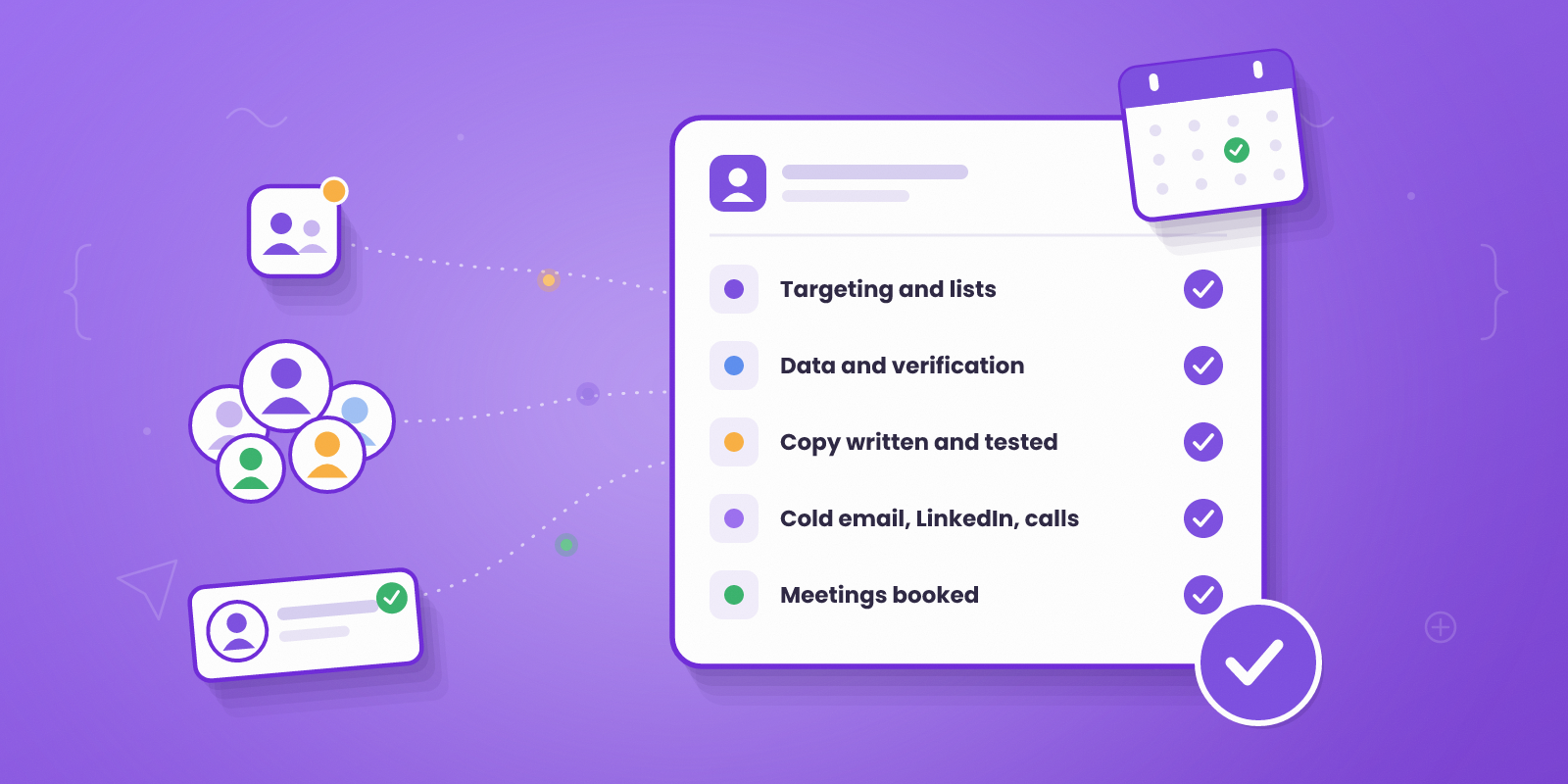
Targeting and data, sending infrastructure, signal-based copy, multichannel management, and reply handling. If a provider owns only one or two and hands you the rest, it is done with you, a cheaper product with a different result.
A loaded SDR costs $120,000 to $180,000 a year and takes three to six months to ramp. A done for you agency turns that into a variable cost and produces pipeline in two to three weeks because the infrastructure already exists.
Retainers are the norm, with omnichannel reaching $20,000 or more, and pay-per-lead or pay-per-appointment pricing by the unit. A low quote that skips warmup, data, and signal targeting just moves the bill to you.
Across 400+ campaigns, a weak offer sits near a 0.5 percent reply rate at any budget. One Reachly client returned 4.57x with break-even by month three, which makes the offer, not the invoice, the number that decides whether done for you is worth it.
You are the one keeping pipeline alive, and you already know outbound works. The problem is that building it yourself means buying domains, warming them for a month, sourcing and verifying data, writing copy, wiring up a sending platform, and then babysitting all of it every single day before a single meeting lands on the calendar. That is a full time job, and you already have one. So the real question is not whether outbound works. It is whether you should build the machine or hand the whole thing to someone who has already built it.
That is what "done for you lead generation" promises: a team that owns the entire pipeline motion so you can stay focused on closing. The label gets stretched to cover everything from a freelancer sending 200 LinkedIn requests a week to a full agency running cold email, LinkedIn, and cold calling as one system. This guide breaks down what done for you lead generation actually means in 2026, what a real service includes, what it costs, how it compares to hiring in house, and how to tell a real partner from an expensive list-scraper.
What is done for you lead generation?
Done for you lead generation is a service where an external team runs your entire outbound pipeline for you, from targeting and data to outreach and booked meetings, so your team only has to show up to the calls. You are not buying a tool or a course you then have to operate. You are buying the outcome, which is qualified conversations with the right buyers, without adding headcount or building infrastructure in house.
The "done for you" part is the whole point. A DIY tool hands you a dashboard and wishes you luck. A done for you provider owns the work: they pick the accounts, build the list, write and test the copy, manage deliverability, and put meetings on your calendar. In B2B this usually means outbound lead generation across email, LinkedIn, and phone, because that is where you control who you reach instead of waiting for inbound to trickle in. The model is popular for two reasons: outbound is technical and easy to get wrong, and the ramp time on doing it yourself is measured in months you do not have.
Done for you b2b lead generation shows up under a few names. Some call it managed lead generation, some call it a lead generation service, and on LinkedIn specifically it is often sold as done for you LinkedIn lead generation. The wrapper changes. The core promise, someone else owns the pipeline work, does not.
What a done for you lead generation service actually includes
The gap between a real done for you service and a glorified list vendor is what sits inside the fee. Outbound only works when every layer is handled, because one broken layer, a cold domain, an unverified list, a weak offer, quietly kills the whole campaign. A complete program owns all of it.
If a provider only owns one or two of those layers and hands you the rest, it is not done for you. It is done with you, which is a different, cheaper product with a different result. The layer people underestimate most is deliverability. Get the domains and authentication wrong and the emails never reach the inbox, which is why the fundamentals in our guide to cold email best practices are non-negotiable inside any real program.
Done for you vs in-house vs freelancer vs DIY tools
The done for you model is one of four ways to get outbound done, and the right choice depends on your budget, your timeline, and how much of the work you want to own. Here is the honest comparison.
| Model | Who does the work | Time to first meetings | Typical cost | Best for |
|---|---|---|---|---|
| Done for you agency | An external team owns the full system | 2 to 3 weeks | $3,500 to $12,000+ a month | Teams that want pipeline fast without building or hiring |
| In-house SDR | A rep you hire, train, and manage | 3 to 6 months to ramp | $120,000 to $180,000+ a year loaded | Companies with a proven motion and time to build a team |
| Freelancer | One contractor, usually single-channel | 2 to 6 weeks, variable | $1,000 to $4,000 a month | Low-stakes testing on a tight budget, quality varies |
| DIY with tools | You and your team operate the stack | 1 to 3 months to learn | $500 to $2,000+ a month in software | Founders with time to learn who want to own everything |
The math that surprises most founders is the in-house comparison. A single fully loaded SDR is a six-figure fixed bet that produces nothing for the first three to six months while they ramp, and produces three to five meetings a month once they do. A done for you agency turns that fixed cost into a variable one that produces pipeline in weeks, because the infrastructure and playbooks already exist. The freelancer route is cheapest on paper and the most variable in practice, since one person rarely covers data, deliverability, copy, and multichannel management at a high level. DIY with tools is the right call only if you genuinely have the time to learn deliverability and the patience to test, which is the same discipline behind any modern outbound sales strategy.
What does done for you lead generation cost?
Most done for you lead generation runs on a monthly retainer between $3,500 and $12,000, with full omnichannel programs reaching $20,000 or more, while pay-per-lead and pay-per-appointment deals price by the unit instead. The spread is wide because the label covers a freelancer on LinkedIn and a full agency running three channels with infrastructure included. Price and value are not the same number, so read what sits inside the fee before you compare quotes.
| Pricing model | How you pay | What to watch for |
|---|---|---|
| Monthly retainer | Flat fee for a full managed system | Confirm infrastructure and data are included, not billed on top |
| Pay per lead | Fixed price for each delivered lead | Rewards volume over fit, so define what a "lead" means in writing |
| Pay per appointment | Price per booked, qualified meeting | The qualification bar has to be tight, or you pay for no-shows |
| Hourly or project | Time billed, or one scoped build | Fine for a one-off setup, wrong for ongoing pipeline |
The cheapest option is rarely the lowest cost. A low retainer that skips warmup, data verification, and signal targeting is not a discount, it just moves the bill to you in the form of a burned domain and wasted weeks. If you want to sanity-check any quote against the pipeline it should produce, run the numbers through an ROI calculator before you sign anything.
How to choose a done for you lead generation partner
Once you know what a real service includes, choosing is mostly a matter of asking the right questions and watching for the answers that reveal a list-scraper wearing an agency logo. Five things separate a partner from a vendor.
First, ask who owns the infrastructure. A real done for you provider buys and warms the domains, sets up authentication, and includes the sending platform. If they expect you to bring your own or quietly bill it separately, the "done for you" claim is thin. Second, ask how they target. Generic list buys produce generic results. A serious partner works from signal-based outbound, reaching accounts because something changed, funding, a new hire, a tech switch, not just because they fit a job title filter.
Third, ask how they define and qualify a lead, because a meeting with someone who has no budget and no authority is still billable. The bar for a qualified meeting should be written into the contract, the same discipline you would apply when you qualify leads internally. Fourth, ask what channels they run and in what order. Single-channel is cheaper and books less. A coordinated stack of cold email, LinkedIn, and cold calling compounds, and on LinkedIn specifically the cadence matters, which is why a real LinkedIn lead generation motion looks nothing like a blast of connection requests. Fifth, ask what they report. Reply rate, meetings booked, and pipeline generated are real numbers. "Impressions" and "activities" are not.
Our take: The fastest way to spot a weak done for you provider is to ask what happens in week one. A real partner talks about your ICP, your offer, and domain warmup. A list vendor talks about how many contacts they can send this week. The first is building a system. The second is renting you a spam problem.
When done for you lead generation is worth it
The cost only means something next to the return, and after 400+ campaigns the pattern is consistent: the agency sets your ceiling, but the offer decides whether you reach it. Teams with clean infrastructure and a weak offer sit near a 0.5 percent reply rate no matter who runs the outreach. The same setup behind a direct, question-based offer moves well past 1 percent. Done for you lead generation is worth it when you have an offer worth putting in front of buyers and no desire to spend six months building the machine to do it.
An agency lives in the weeds across many clients, so it sees what is working right now faster than any single in-house team can. Outbound can ship in three to four weeks and tell you immediately whether your offer matches the market. That speed is the real product. You are not paying someone to send emails, you are paying to skip the six months it takes to learn what we already know.
Put real numbers on it. For Primal, a done for you program produced 85+ qualified leads in six months, a 4.57x return, break-even by month three, an 8 percent average positive reply rate, a 35 percent reduction in cost to acquire a customer, and zero added headcount on their side. For The Great Room, the same model landed a $250K contract and moved face-to-face meetings from two a quarter to two a month with no new hires. Against a retainer of a few thousand a month, that is not a cost line. It is the highest-return line in the budget, provided the offer behind it is strong.
How Reachly does done for you lead generation
Reachly is a done-for-you B2B outbound agency that runs cold email, LinkedIn, and cold calling as one signal-based system. We own every layer covered above: domains bought and warmed for at least 30 days, data sourced and verified, signal-based targeting, copy written and tested, multichannel management, and reporting you can actually read. Pricing starts at $3,500 a month and scales with how hard your ICP is, how many channels you run, and the volume you need. We are live for a client in two to three weeks because the infrastructure and playbooks already exist.
Across 400+ campaigns we have booked 2,500+ meetings and generated more than $3M in pipeline for 50+ B2B clients, holding bounce rates under 3 percent and deliverability above 97 percent. If you want the exact number for your motion and a straight answer on whether outbound fits your offer, the fastest path is a short call to scope it against your ICP. Start on the Reachly homepage, or if booked meetings are the only unit you care about, see how B2B appointment setting works.
Done for you lead generation FAQ
It means an external team runs your entire outbound pipeline for you, from targeting and data to outreach and booked meetings, so your team only handles the sales calls. Unlike a DIY tool or a course, you are buying the outcome and the team that produces it, not software you then have to operate yourself.
Most done for you B2B programs run $3,500 to $12,000 a month on a retainer, with omnichannel programs reaching $20,000 or more. What you pay matters less than what is inside the fee. A quote that includes domains, warmup, data, verification, and multichannel management is a different product from a low quote that leaves those costs to you.
It is worth it when you have a strong offer and no desire to spend six months building infrastructure in house. One Reachly client returned 4.57x with break-even by month three, which makes a few-thousand-a-month retainer the highest-return line in the budget. The agency sets the ceiling, but the offer decides whether you reach it.
For most teams starting or restarting outbound, yes. A fully loaded SDR costs $120,000 to $180,000 a year and takes three to six months to ramp before producing three to five meetings a month. A done for you agency turns that fixed cost into a variable one and produces pipeline in two to three weeks because the infrastructure already exists.
It is the same model applied to one channel: a provider manages your LinkedIn outreach, from targeting and connection cadence to messaging and booked calls. It works best as part of a multichannel program rather than alone, since LinkedIn paired with cold email and cold calling books far more meetings than any single channel run in isolation.

.webp)