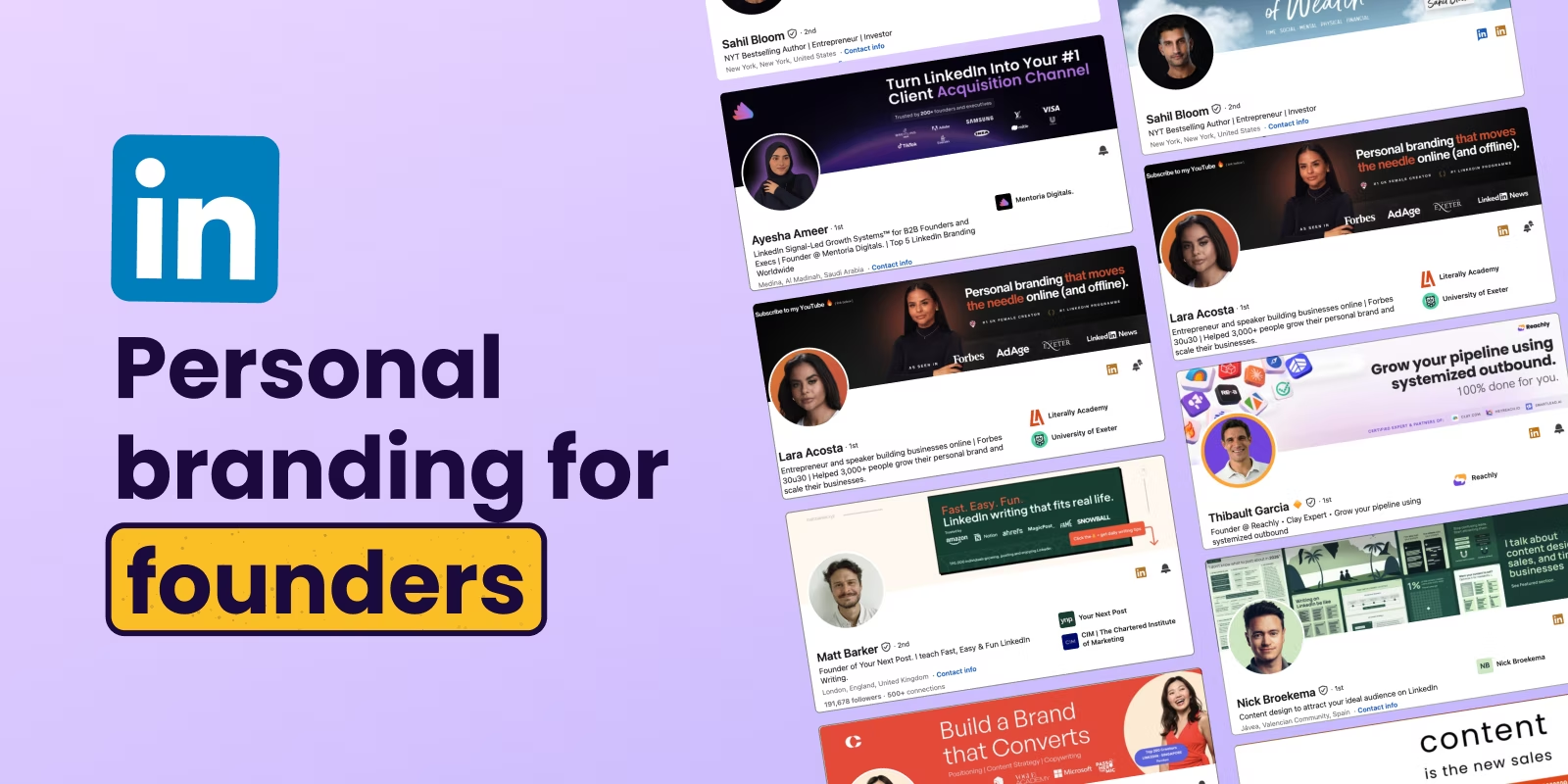
 Key Findings
The point of personal branding on LinkedIn is to be the obvious person to buy from in one market, so your name is already known when the buyer has the problem you solve.
People follow people, personal accounts get more reach, and trust transfers to a founder, not a logo. Lead with your profile and keep the company page as the landing spot.
Post three to five times a week against three or four content pillars, written in your own voice. Cadence builds familiarity. No single post does the work.
Track who engages, reach out while the signal is fresh within two to four weeks, and run a deliberate sequence. Warm LinkedIn outreach hit 47 percent reply on a Thailand pilot.
A ghostwriter can turn one interview into a week of posts and remove the writing bottleneck, but the voice and the opinions have to stay the founder's own.
Most founders treat LinkedIn like a trophy case. A funding announcement here, a reshared company post there, a photo from a conference once a quarter. Then they wonder why the platform that is supposed to be full of their buyers never produces a single conversation that matters. The profile looks fine. The posting is sporadic. And the pipeline stays exactly where it was.
The gap is not effort. It is approach. LinkedIn personal branding for founders is not about looking impressive to other founders. It is about becoming the most obvious person to buy from inside one specific market, so that when a prospect finally has the problem you solve, your name is already in their head. That is a sales asset, not a vanity project, and it compounds in a way that paid channels never do.
This is the operator version of the playbook. The same thinking Reachly applies to founder-led outbound, pointed at the one channel where your buyers already spend their attention. By the end you will know what a founder brand actually is, why it beats your company page, what to post, and how a personal brand on LinkedIn turns into real meetings instead of likes.
TL;DR: Summary
- A founder brand is a sales asset. Judge it by booked meetings, not by followers or likes.
- Lead from the personal profile. People follow people, and trust transfers to a founder in a way it never does to a logo.
- Post three to five times a week across a few fixed pillars. Consistency beats volume and polish.
- Your profile is the credibility layer behind every outbound touch, so the banner, photo, and headline have to carry the same message as your campaigns.
- The headline does the most work. Tie it to audience, problem, and product category rather than to your job title.
- Track inbound product questions, CTA clicks, positive replies, and meetings after profile visits. Ignore raw views.
- A brand only turns into pipeline when you attach a deliberate multichannel sequence to the attention it creates.
What LinkedIn personal branding for founders actually means
A founder personal brand is the set of ideas, opinions, and proof that people associate with your name before they ever speak to you. On LinkedIn, it is built through what you post, what you comment on, and how your profile reads to a buyer who lands on it cold. It is not your logo, your follower count, or a polished bio. It is whether a stranger in your market finishes reading one of your posts and thinks, this person understands my problem.
The reason personal branding on LinkedIn works better for founders than for anyone else in the company is trust transfer. People do not connect with a brand the way they connect with a person. They follow individuals, they remember opinions, and they buy from humans they believe understand them. A founder who shows up consistently with a clear point of view becomes the face of the category in their corner of the market. That recognition is the thing a cold email cannot manufacture and a company page cannot fake.
There is a second job hiding inside the first. Building a founder brand forces you to articulate what you actually believe about your market: who you serve, what is broken, and why your way is better. That clarity is the same raw material that powers a sharp offer and good outbound copy. Founders who post regularly tend to sell better in every channel, because they have already practiced saying the thing that makes a buyer lean in.
Why a founder brand beats the company page
Every founder eventually asks why they should post from their own profile instead of feeding the company page. The honest answer is that the company page is a brochure and the founder profile is a person. LinkedIn's own distribution rewards individuals far more than brand accounts, and buyers behave the same way. Here is what the founder profile does that the company page structurally cannot.

None of this means abandon the company page. It means the order is backwards at most startups. The founder profile should be the front door, and the company page the place people land once they already trust you. If you only have the energy to run one of them well in your first year, run the founder brand. It does more for pipeline and costs nothing but consistency.
The founder personal branding playbook on LinkedIn
A founder brand is not built by going viral once. It is built by showing up with the same point of view, in front of the same people, often enough that you become familiar. Here is the sequence Reachly would run if the goal were to make a founder the recognized voice in their niche within ninety days. None of it requires you to be a writer. It requires you to be consistent.
The founder brand playbook in six moves
The two steps founders skip most are the first and the last. They start posting before they have decided who they are for, so the content drifts and nothing sticks. Or they build an audience and never connect it to a sales motion, so the brand stays a popularity contest. Decide the audience first, and wire the brand into outbound from day one. That is what separates a founder brand that books meetings from one that just collects followers.
What a strong founder profile looks like
Theory is easy to nod along to, so here is a real one. This is the profile our founder, Thibault Garcia, runs at Reachly. Notice what it does in the first three seconds. The headline names who he helps and the outcome, the banner states the offer in plain language, and the whole page reads like a sales page instead of a resume.
.png)
Copy the structure, not the words. Your headline should finish the sentence "I help [audience] reach [outcome]," your banner should state your offer once in plain language, and your About section should speak to the buyer instead of listing where you used to work. Get those three right and the profile starts converting the attention your posts create.
The banner is the second thing a visitor reads, so it is worth picking a layout from best LinkedIn banner ideas. Here is the job each of the three elements has to do.
Your banner should qualify visitors fast
The banner sits in the highest-visibility space on the page, so use it to filter the right people in and the wrong people out. A generic skyline, a floating logo, and a slogan about building the future all do the same amount of work, which is none. Use plain English tied to the product you sell.
- A clear value proposition. Say what the product helps buyers do.
- A buyer cue. Name the function, team, or company type if that sharpens relevance.
- A campaign match. Use the same language as your outbound, your landing page, and your launch posts.
"AI call scoring for mid-market sales teams" gives a buyer something to react to. "Founder. Operator. Innovator." leaves them guessing.
Your photo should reduce doubt
Buyers use the headshot to answer one question quickly. Does this founder look serious enough to trust with my time? Use a clean background, decent lighting, and a clear view of your face, and wear what your buyer expects to see on a customer call. Cropped wedding photos, event selfies, heavy filters, and moody brand shoots add friction for no return. The goal is to look current, credible, and reachable.
Your headline carries the conversion load
The headline gets scanned before the About section, before your featured links, and often before anyone clicks into the full profile, so treat it as launch copy rather than a job title. LinkedIn search visibility leans heavily on the words in your headline, About section, and experience entries, which makes "Founder and CEO" a weak choice. It signals status where you need relevance. Tie the words to audience, problem, and product category.
| Weak headline | Better headline |
|---|---|
| Founder and CEO at Acme | Founder building workflow software for APAC SDR teams |
| Partner | Partner, B2B demand generation |
| SaaS Founder | Founder helping RevOps teams fix outbound data quality |
How does your founder profile support outbound?
Your LinkedIn profile is the credibility layer behind the campaign. Almost every decent outbound motion sends people back to the founder rather than to the company page, and that visit is a decision point.
Think about a normal launch sequence. A prospect gets a cold email from a founder or a senior operator. They ignore it, or open it later. Then a connection request arrives. One of your reps comments on their post. Someone from their team checks the company site. Somewhere in that sequence they click your name, and a weak profile costs the campaign its force.
What message alignment looks like in practice
Perfect copy alignment is not the target. Message alignment is. If your outbound says you help APAC SaaS teams fix outbound data quality, your profile should carry that same sentence in shorter form. A profile describing a visionary builder passionate about revenue innovation creates doubt at exactly the moment you need it removed.
A clean multichannel setup usually runs like this:
- Cold email opens the problem and gives context
- The LinkedIn profile confirms credibility and sharpens positioning
- LinkedIn messages continue the same angle in shorter form
- Calls and follow-ups reference the same use case and the same next step
Tools like Clay, Smartlead, and HeyReach handle list building, sequencing, and delivery. None of them fix a founder profile that reads as vague. Reachly runs this motion across email, LinkedIn, and calling for B2B teams, and the founder profile is the part clients most often leave until last. The full channel playbook is in LinkedIn outreach.
How do you measure whether the profile is working?
A founder profile that collects views without creating meetings is decoration. Judge it the way you judge a landing page or an outbound sequence, which means judging it by conversion. If buyers visit after seeing a post, an email, or a LinkedIn message, the question is whether that visit lifted reply rates, demo requests, or booked calls.
What to ignore and what to track
Ignore raw profile views unless they line up with buying behavior. Ignore connection growth unless the new connections match your target accounts. Ignore likes unless they lead to profile visits from people who can buy.
Track the signals that show the profile is reducing doubt:
- Inbound messages with product intent. Demo interest, pricing questions, and requests to learn more.
- Clicks on your profile CTA. Traffic from the About section and Featured links to booking pages, waitlists, or launch assets.
- Positive replies after outbound touches. A prospect referencing your background or a recent post is the profile doing its job.
- Meetings influenced by profile visits. Ask on calls how they found you, or watch visit-to-booking patterns during launch week.
| Metric | What it tells you |
|---|---|
| Inbound product-related connection requests | Your positioning is attracting the right audience |
| Clicks on booking or waitlist links | Profile traffic is turning into action |
| Positive replies tied to founder outreach | Your credibility holds up under account research |
| Meetings booked after profile visits | The profile is helping create pipeline |
Keep it to one page and update it weekly. If profile visits climb while meeting volume stays flat, the profile is attracting curiosity without enough clarity. If outbound reply quality improves after a headline change, keep the change and test the About section next.
The weekly review question that matters
Ask one question every week. Did this profile create more buying conversations than it did last week? When the answer is no, start with the obvious friction points:
- The headline is broad where it should be specific
- The Featured section buries the main next step
- The About section explains your career instead of the problem you solve
- The profile asks for nothing clear
- The Experience section reads as a resume instead of proof
What to post: the content pillars that build a founder brand
The blank page is where most founder branding dies. The fix is to stop treating every post as a fresh idea and instead rotate a small set of content pillars. Pick three or four, and almost any thought you have during the workday slots into one of them. This is how founders post consistently without burning an hour staring at the composer.
| Pillar | What it does | Example post |
|---|---|---|
| Point of view | Stakes out what you believe about your market and why the common approach is wrong | "Most founders hire an SDR too early. Here is what to build first." |
| Behind the build | Shows the real work of running the company, the decisions and the trade-offs | "We turned down a 250K contract last month. The reason taught me something." |
| Proof and results | Shares a concrete number or outcome so the audience believes you can do it | "A client went from a flat pipeline to 85 qualified leads in six months. Breakdown below." |
| Teach the how | Gives away a tactic your buyer can use today, which builds trust and authority | "The 70 to 80 word cold email structure we use on every campaign." |
| Founder story | Makes you human and memorable, the part a company page can never replicate | "I built my first reputation on Fiverr with 200 orders. Here is what it taught me about sales." |
Two rules keep the pillars working. First, write the way you talk. The most underrated move in 2026 is copy that reads as humane and takes no brainpower to understand. Buyers are tone deaf to anything that smells like a press release or AI slop, so keep the voice yours. Second, end posts with a light invitation to reply, not a hard pitch. The goal of a post, like the goal of a cold email, is a reply. A conversation is where the deal starts, and the comment or the DM is where the conversation starts.
If writing is the bottleneck, this is the one task worth handing to a ghostwriter who interviews you and captures your real takes. The voice has to stay yours. You can borrow the typing, never the thinking. A good founder content guide and a steady interview cadence will produce more usable posts in an hour than most founders write in a month.
Reachly's content strategist, Vivian Ger, builds these pillars with founders before anything gets scheduled.
How a founder brand turns into pipeline
A brand that earns attention but never books a meeting is a hobby. The point of LinkedIn personal branding for founders is pipeline, and the bridge from content to revenue is a deliberate motion, not a hope that buyers will DM you first. Here is how the attention converts.
Start with the warm layer your content creates. Every founder post produces a quiet list of people who liked, commented, or viewed your profile. Those are buying signals. A tool like Trigify can monitor who engages with your posts and your competitors' posts, so you know exactly who to reach out to while the interest is fresh. That intent has a short shelf life, usually two to four weeks, so speed matters. Layer in profile visitors and the signal stack laid out in our guide to signal-based outbound, and your content becomes a lead source instead of a popularity meter.
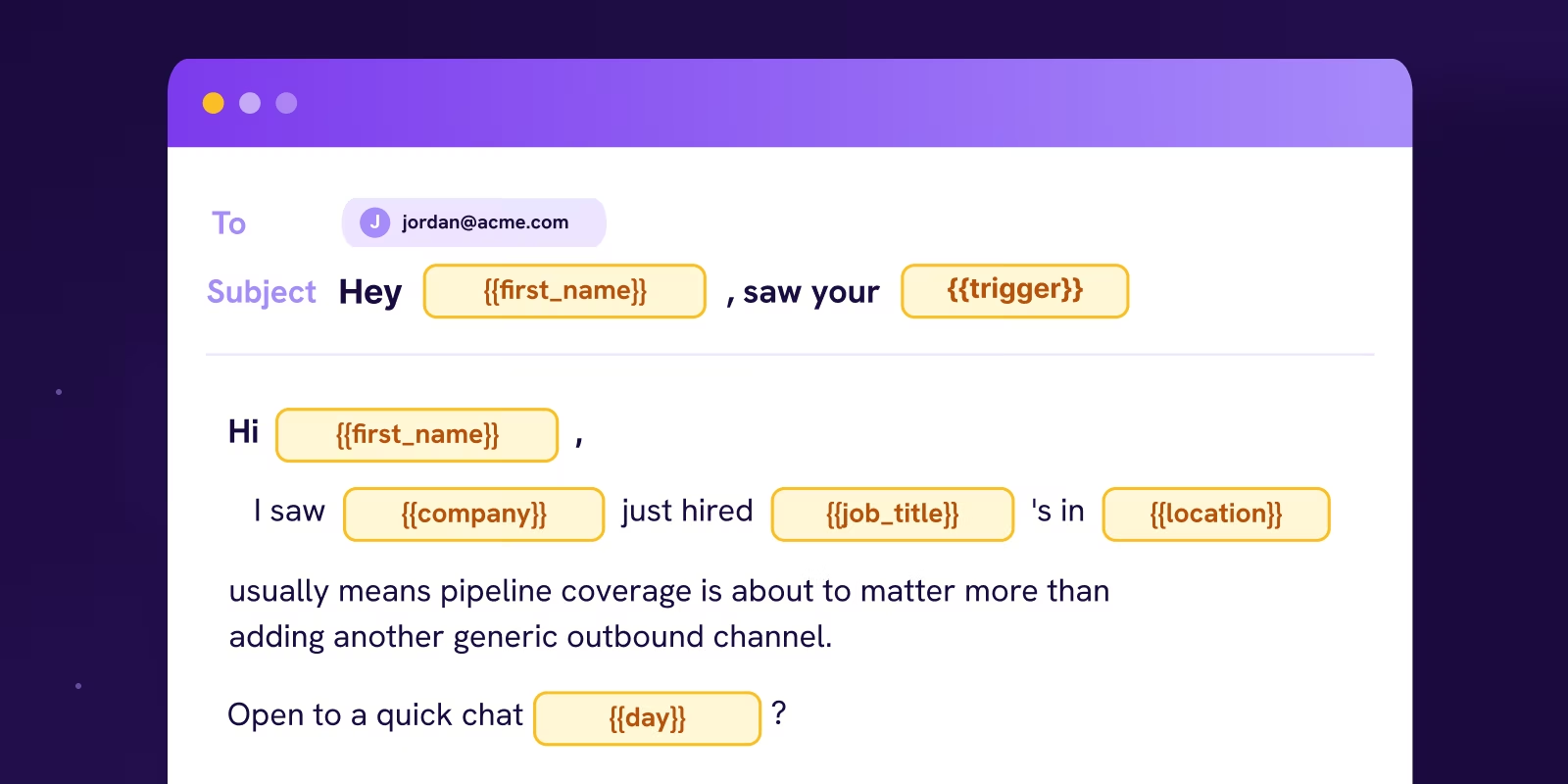
Then run the outreach with intent, not spam. The pattern that works is deliberate: an empty connection note, then a short, lowercase, question-based message a day or two after the person accepts. Keep it to four or five touches across two to four weeks, because there is no out-of-office on LinkedIn and cadence has to be planned. The numbers move when the brand is doing its job first. On a Thailand pilot, warm LinkedIn outreach hit connection acceptance around 35 percent against a 25 percent benchmark, and reply rates as high as 47 percent, because the audience already recognized the sender. Pair the brand with a tool like HeyReach to run the sequencing and you have a repeatable system. The full structure lives in our LinkedIn lead generation playbook.
A founder brand is not the goal. It is the warm-up. By the time we send a connection request or a cold email, the prospect has already seen the founder's posts in their feed, so we are not a stranger anymore. That recognition is worth more than any clever subject line. The content earns the attention, and the sequence turns it into a meeting. Skip either half and you have a popularity contest or a spam problem.
This is the same logic behind founder-led sales in general. The founder is the most credible person in the company to start a conversation, and a personal brand makes that credibility visible across a whole market before the first message goes out. Content plus signals plus a tight sequence is the system. It connects directly to a modern outbound sales strategy, where the LinkedIn presence is the top of the funnel and the multichannel sequence is what carries a warm prospect to a booked meeting.
Turn your LinkedIn presence into booked meetings
If the goal is pipeline and not a hobby, the brand is only worth building when something catches the attention it creates. Reachly builds both halves for B2B founders. We help shape the founder voice into a steady LinkedIn presence through LinkedIn ghostwriting, then run the multichannel outbound behind it across cold email, LinkedIn, and cold calling, so the people who engage with your content end up on your calendar.
The proof shows up where it counts. For Primal, the approach produced more than 85 qualified leads in six months and a 4.57x return. Reachly clients run at bounce rates under 3 percent, deliverability above 97 percent, and positive reply rates between 10 and 20 percent on a normal campaign. You stay the voice and the closer. We handle the system that turns your personal brand into booked meetings. See how it works on the Reachly homepage, or hand the outbound to our LinkedIn outreach team and keep your founder brand compounding without the grind.
LinkedIn personal branding for founders FAQ
Three to five times a week is the range that builds familiarity without burning you out. Consistency matters more than volume or polish. A founder who posts three solid times a week for six months will out-build one who posts daily for three weeks and quits. Pair posting with ten minutes of commenting a day in your buyers' feeds.
Lead with your personal profile. People follow people, personal accounts get more organic reach than brand pages, and trust transfers to a founder in a way it never does to a logo. Keep the company page active as the place buyers land once they already trust you, but make the founder profile the front door.
Rotate three or four content pillars: your point of view on the market, behind-the-scenes of building the company, proof and results, and tactical how-to your buyers can use today. Write the way you talk, keep posts short, and end with a light invitation to reply rather than a hard pitch. Almost any workday thought slots into one of those pillars.
Only if you connect it to a sales motion. The brand creates a warm layer of people who engage with your content. You turn that into pipeline by tracking engagement signals, reaching out while the interest is fresh, and running a deliberate multichannel sequence. Warm outreach to people who recognize you converts far better than cold, with reply rates that can reach the 40s on a well-known sender.
You can outsource the production, never the thinking. A ghostwriter who interviews you and captures your real opinions can turn one conversation into a week of posts, which removes the writing bottleneck most founders hit. The voice and the points of view have to stay yours, or the audience feels the gap. Borrow the typing, keep the takes.
Recommended service
LinkedIn Ghostwriting
Reachly writes and runs your LinkedIn presence so your profile builds authority and brings in inbound B2B leads.