
 Key Findings
The early deals run on founder conviction. The ones who scale turn that instinct into a documented playbook that survives the day they stop closing every deal.
Outbound ships in three to four weeks and tells you if the offer fits the market. The founder is the only one who can hear a "no" and rewrite the product by the next call.
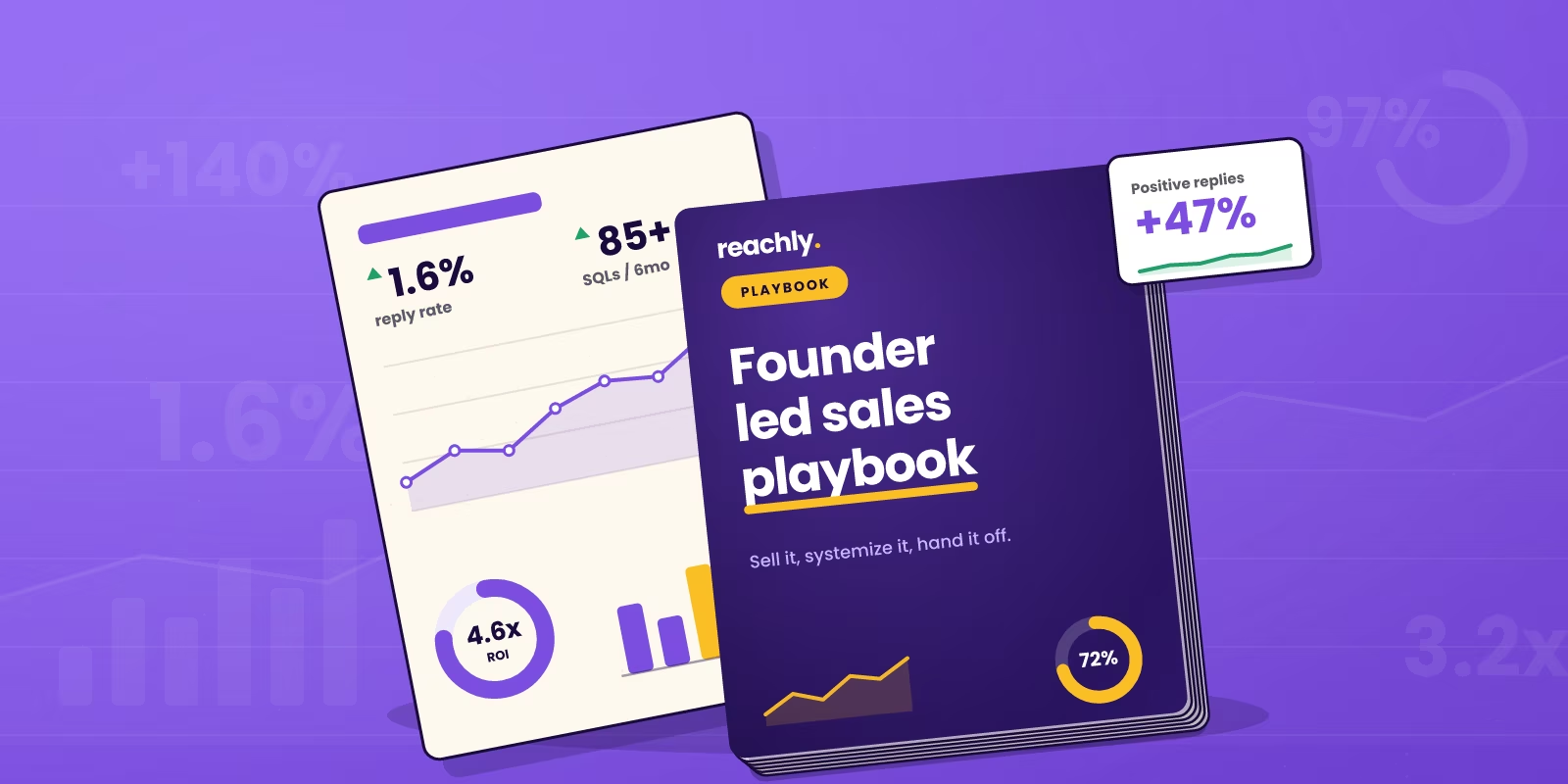
Across 400 plus campaigns, a sharper offer fixed flat outreach more often than any tool. One client moved from 0.5 to 1.6 percent reply rate on the same list after rewriting the offer.
Not a junior SDR who inherits guesswork. A GTM engineer runs Clay tables, builds lists, writes copy, and scales the system the founder already proved.
When sourcing and sending eat the hours you should spend closing, give away the volume work to a hire or an agency and keep the high-stakes deals yourself.
Most founders do not fail at selling because they are bad at it. They fail because they treat founder led sales as a phase to survive instead of a system to build. The early deals come from sheer presence: you know the product cold, you answer every question, and prospects buy the conviction as much as the software. Then you try to grow, the calendar fills with everything except selling, and the pipeline that ran on your energy quietly stalls.
A founder led sales playbook fixes that by turning what you do instinctively into something repeatable. Not a 40-page document nobody reads, but a tight set of decisions about who you target, what you say, how you follow up, and when you bring in help. Done right, it gets you to your first deals faster and leaves behind a sales motion that survives the day you stop being the one closing.
This is the operator version. The same sequence Reachly runs with B2B founders before any outbound goes live: sharpen the offer, build a small target list, run a multichannel sequence yourself, track the one metric that matters, then hand the system off without dropping the relationships. By the end you will have a founder led sales playbook you can actually run this week.
What founder led sales actually is
Founder led sales is the stage where the founder personally runs the sales process: sourcing prospects, starting conversations, handling objections, and closing deals before there is any dedicated sales team. It is the default motion for almost every B2B startup, because in the beginning no one else can sell the product with the same authority.
The part most guides miss is what founder led sales is for. It is not just a way to book revenue before you can afford a rep. It is the fastest path to product-market fit. Every objection you hear, every reason a deal stalls, every phrase that makes a prospect lean in, that is market feedback you cannot get from a hired salesperson reading a script. The founder is the only person who can hear "no" and rewrite the product, the pricing, or the pitch by the next call.
That dual job, closing deals and learning the market, is why the founder led sales motion is worth running deliberately instead of by accident. A founder who sells with a system learns faster than one who wings it, because the system makes the feedback comparable from one conversation to the next.
Why founder led sales beats hiring a rep too early
The instinct, once a few deals close, is to hire a salesperson and get back to building. It almost always backfires. A rep hired before the motion is proven inherits guesswork: no clear ICP, no tested offer, no repeatable sequence. They burn through your warm intros, miss quota, and you conclude that sales is hard to hire for. The real problem was hiring before there was anything to hand over.
Outbound is also the fastest read on whether your offer matches the market. You can ship a founder led sales motion in three to four weeks and know almost immediately if the market wants what you built. Inbound and content take six months to compound. For an early B2B startup, that speed is the whole point, and the founder is the one who can act on the signal fastest.
Outbound can ship in three to four weeks and tell you immediately whether your offer matches the market. Inbound takes six months to compound. The founder should run that first loop themselves, because they are the only person who can change the product, the price, and the pitch between one call and the next.
None of this means founder led sales should last forever. It means you run it long enough to learn the market and build a system worth handing over. The mistake is exiting too early, before the playbook exists. The other mistake is staying too long, doing manually at deal 80 what should have been a system at deal 20. The playbook below is how you avoid both.
The founder led sales playbook, step by step
Here is the full sequence, start to finish. It is the same order Reachly uses to stand up an outbound motion, adapted for a founder running it solo. Skipping a step is usually why founder led sales stays stuck on referrals and warm intros instead of becoming a real pipeline.

The founder led sales playbook in six moves
Two of these steps get skipped the most. Step one, the offer, is where almost every stalled founder led sales motion actually breaks. Founders obsess over the email and ignore the thing the email is selling. The other is step five, documenting as you go. Founders carry the playbook in their head, then cannot explain it when it is time to hire, so the knowledge never transfers. Write it down while you are living it.
What the founder owns at each stage
Founder led sales is not one job. It changes as revenue grows. In the earliest stage you are doing everything by hand to learn. Later, your job is to build the system and step back from the parts a process can handle. Map your role to the stage so you do not stay stuck doing manual work long after it should have become a system.
| Stage | What the founder owns | The metric that matters |
|---|---|---|
| Pre-revenue, first deals | Every conversation by hand. Sourcing, outreach, calls, closing, and rewriting the offer after each "no" | Positive reply rate and patterns in why deals stall |
| First $1M, finding the pattern | Running a documented sequence, tracking what wins, building the repeatable motion | Repeatable meetings booked from cold, not just referrals |
| Scaling toward a team | Hiring or outsourcing the top of funnel, keeping only high-stakes closes | Pipeline created without the founder sending every message |
| Post-handoff | Coaching the system, taking strategic deals, reviewing what converts | Meetings and revenue that hold steady when the founder steps out |
The through line is that the founder never fully leaves sales. What changes is which part they own. Early on you own the whole motion. Later you own the offer, the strategy, and the closes that decide the company, while a system or a team handles the volume. A good founder led sales playbook is really a plan for that gradual handoff, written before you need it.
The outbound system behind founder led sales
The reason founder led sales stalls is rarely the founder. It is the lack of a system underneath them. You can be the best closer in your category and still go quiet if there is no steady flow of right-fit conversations coming in. That flow is an outbound system, and it has the same parts whether a founder or an agency runs it.
The list comes first. A tight, verified list of 150 to 300 accounts that match one sharp ICP, enriched with Clay and kept under a 3% bounce rate. Then the sequence: a short cold email built around the offer, a LinkedIn touch, and a cold call placed after the prospect has already seen your name twice. The order matters. By the time you pick up the phone, you are not a stranger. The full structure is laid out in our modern outbound sales strategy guide, and the timing rules live in our cold email best practices.
The piece that separates a founder led sales motion that compounds from one that spins is signals. Instead of emailing a static list cold, you watch for reasons to reach out now: a funding round, a key hire, a tech-stack change, a competitor switch. Reaching out on a fresh signal turns a cold email into a timely one, and the founder is the most credible person to send it. This is the heart of signal-based outbound, and it is what keeps the list from going stale. When replies start coming in, the next skill is sorting the serious buyers from the curious, which is its own discipline covered in how to qualify leads.
The offer sits above all of it. Across more than 400 campaigns, the most common fix for a flat founder led sales motion was never a new tool. It was a sharper offer. One Series A client sending 20 to 30 thousand emails a month moved their reply rate from roughly 0.5 to 1 percent up to 1.6 percent after switching to direct, question-based copy with a lead magnet and a stronger offer. Same list, same market, different offer. If your outreach is quiet, start there before you blame the channel.
When to stop selling solo, and who to hand off to
The signal that it is time to bring in help is simple. When sourcing, sending, and following up start eating the hours you should spend on product, customers, and closing, the top of the funnel needs to leave your plate. Notice what to hand off first: the volume work, not the relationships. You keep the high-stakes calls that decide the company. You give away the list building, the sending, and the follow-up.
The hire most founders reach for is wrong. A junior SDR inherits all your guesswork and rarely sells the product with your conviction. The first real outbound hire is a GTM engineer, someone who can run enrichment tables in Clay, build lists, write decent copy, and orchestrate the sequence across channels. That role supports both signal-triggered and evergreen campaigns, and it scales the system instead of just adding hands. If you want to see which parts of the stack a GTM engineer actually runs, our breakdown of the best B2B lead generation tools maps it out.
The first outbound hire is a GTM engineer, not an operator. Someone who orchestrates Clay tables and complex workflows, writes good copy, builds lists, and sources leads. Hire that role and you scale the system the founder built. Hire a junior SDR too early and you just hand your guesswork to someone with less context than you have.
The other path is to outsource the top of funnel to an agency that already runs the system, so the founder skips the hiring risk entirely and keeps doing what only they can do: closing. The right move depends on budget and stage, but the principle holds either way. Hand off the machine, not the magic.
The handover model here is the one Reachly's founder uses with clients who have outgrown founder-led outbound.
Let Reachly run the outbound behind your founder led sales
If the goal is booked meetings and not a perfectly tuned process, there is a faster path than building the system yourself. Reachly stands up the full outbound motion for B2B founders across cold email, LinkedIn, and cold calling, using Clay for enrichment and signals, Smartlead for sending, and HeyReach for LinkedIn. You stay the closer. We handle the ICP, the list, the signals, the sequence, and the deliverability so the conversations land on your calendar.
The numbers show up where they count: bounce rates under 3 percent, deliverability above 97 percent, and positive reply rates between 10 and 20 percent on a normal campaign. For Primal, the approach produced more than 85 qualified leads in six months and a 4.57x return, with the founder still owning the closes. You can see how it works on the Reachly homepage, or hand the top of funnel to our outbound lead generation team and keep founder led sales running without the grind.
Founder led sales playbook FAQ
Founder led sales is the early go-to-market motion where the founder personally sources prospects, runs the conversations, and closes deals before there is a sales team. It is the default for most B2B startups because no one else can sell the product with the same authority, and it doubles as the fastest route to product-market fit.
Long enough to learn the market and build a repeatable system, usually through the first deals and into the first $1M. Exit too early and your hire inherits guesswork. Stay too long and you are doing manual work at deal 80 that should have been a system at deal 20. The handoff trigger is when sourcing and sending start eating the time you should spend closing and building.
A sharp ICP and offer, a tight target list, a multichannel sequence across cold email, LinkedIn, and cold calling, the metric you track (positive replies, not opens), and a running record of the subject lines, openers, and objection answers that win. That record is what your first hire or agency inherits when you hand off the top of funnel.
After the motion is proven, not before. The first outbound hire should be a GTM engineer who can build lists, run enrichment in Clay, write copy, and orchestrate the sequence, rather than a junior SDR who inherits your guesswork. Hire once you have a documented, repeatable motion worth handing over.
Usually the offer, not the channel. Across more than 400 campaigns the most common fix for flat outreach was a sharper offer, not a new tool. One client moved from roughly 0.5 to 1.6 percent reply rate on the same list after rewriting the copy and offer. Check the offer first, then the list quality and deliverability, then the sequence.
Recommended service
Outbound Lead Generation Services
Reachly builds and runs the whole outbound motion across email, LinkedIn, and phone, and books qualified meetings on your calendar.