Outsourced lead generation services means hiring an outside agency to find and qualify potential customers for your business. Instead of your sales team spending half their day prospecting, they get a calendar full of meetings with people who actually want to talk. This is about building a predictable pipeline. Not buying a list of contacts.
In-House SDR vs Outsourced Agency
One of the first questions is whether to build your own team or hire an agency. Each path has trade-offs in cost, speed, and focus. There is no single right answer, only the one that fits your company's stage.
Here's a direct comparison.
Building an in-house team gives you total control, but it is a slow and expensive project that pulls focus from other priorities. An outsourced agency offers a faster path to results, bringing immediate expertise and a full tech stack without the long-term headcount and overhead.
The Two Flavors of Outsourced Services
Not all outsourced lead gen is the same. You need to understand the two very different types before you spend a dollar.
First, you have list providers. These companies sell static lists of names and emails, then leave your team with the impossible task of outreach. Looks cheap upfront. It is a direct path to burning your domain and destroying your sender reputation because the data is usually stale or sold to hundreds of other companies.
Then you have true done-for-you (DFY) multichannel partners. Agencies that operate as an extension of your team, managing the entire outbound process from start to finish.
This typically includes:
- Building hyper-targeted lists of your ideal customers
- Writing personalized, human-sounding copy that gets replies
- Running coordinated campaigns across email, LinkedIn, and sometimes phone
- Handling all the back-and-forth replies and booking qualified meetings straight onto your sales calendar
This is not about sending emails. It is about installing a fully managed outbound engine built to produce a predictable flow of sales-ready conversations, month after month.
Some studies show that outsourcing lead generation can improve results by as much as 43% compared to keeping it in-house. That jump comes from the specialized tools and deep expertise that dedicated agencies bring to the table.
How a High-Performing Campaign Actually Works
If you think modern outbound is just blasting a massive email list, you are about a decade behind. The spray and pray method is dead. Today's high-performing campaigns are a science, and it is how savvy outsourced lead generation services consistently book meetings that actually convert.
A campaign that works does not start with a generic template. It starts with a strategic map.
Step 1: Build a Precise Target List
The first move is to define your Total Addressable Market (TAM) with surgical precision. A real partner does not just scrape a list from LinkedIn Sales Navigator and call it a day. That is the lazy approach, and it floods your pipeline with prospects who were never going to buy.
A proper TAM build is about layering data. Combining firmographic data from sources like Apollo or ZoomInfo with real buying signals. This creates a highly targeted list of companies that match your ideal customer profile down to the last detail.
This is not about finding everyone. It is about finding the right ones.
Step 2: Find Reasons to Reach Out Now
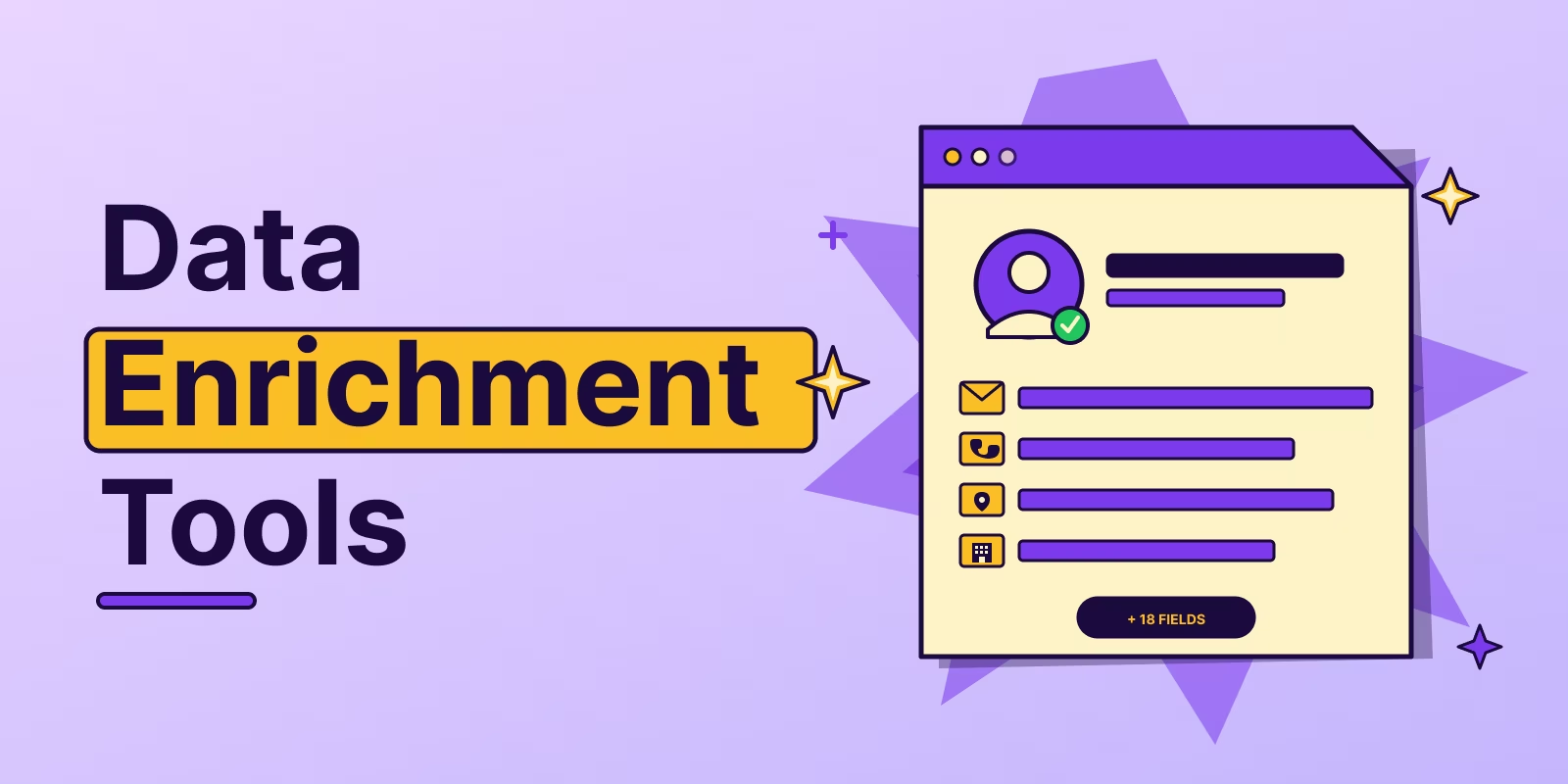
Once you know who to target, the next question is: why now? This is where data enrichment separates relevant outreach from random noise that gets ignored.
This step involves using tools like Clay to pull in real-time buying signals that give you a legitimate reason to start a conversation. You are hunting for triggers that show a company is actively feeling a pain you can solve.
Some of the most powerful signals include:
- Recent funding: A fresh round of capital often means new budgets are approved for growth projects.
- Hiring trends: A company rapidly hiring for sales or engineering roles is a giveaway that they are scaling.
- Technology changes: If a prospect just dropped a competing tool, it is the perfect moment to introduce yours.
- Website traffic spikes: A sudden surge of interest in a specific product page signals they are in a research phase.
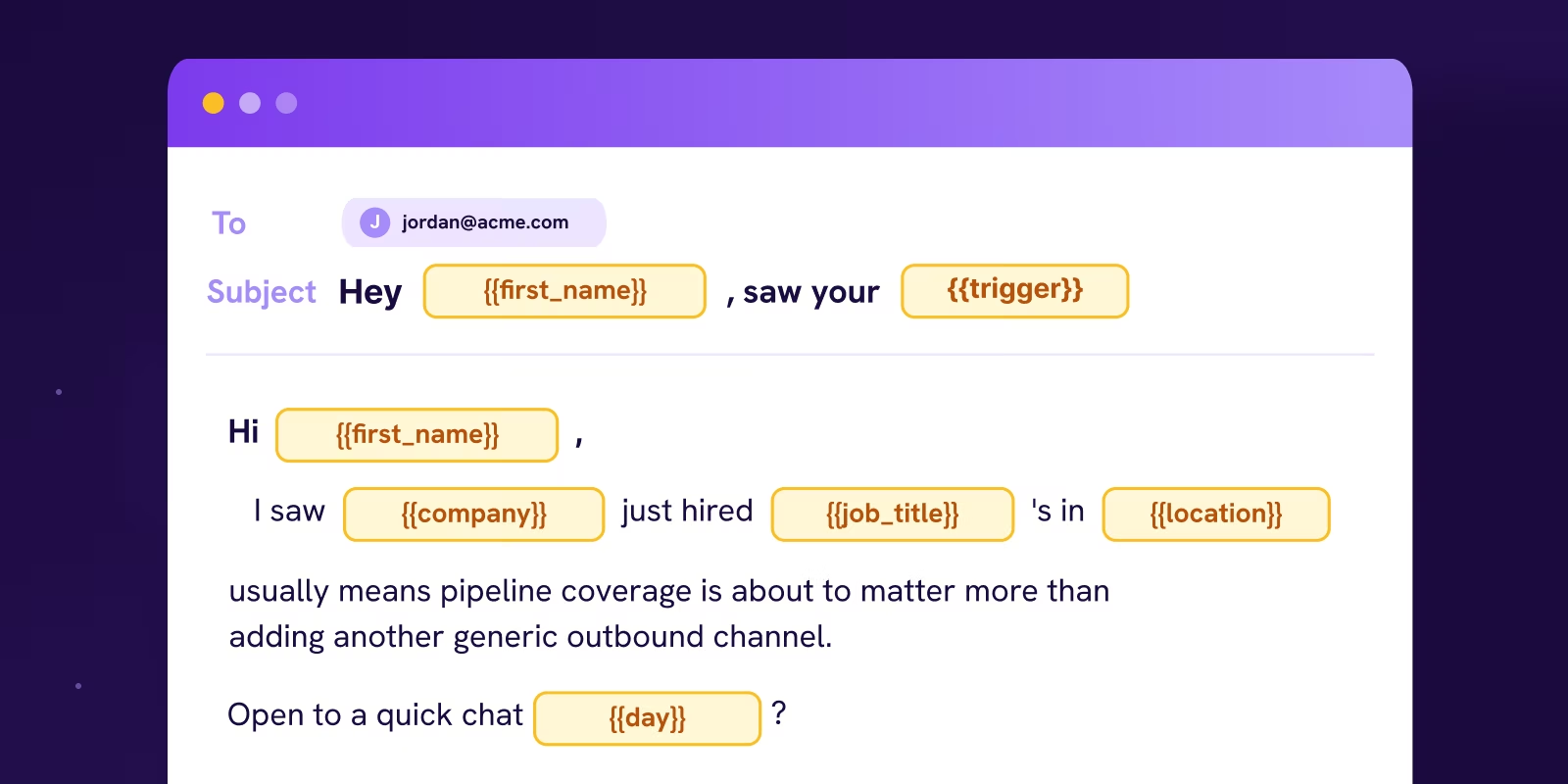
This is what real personalization looks like. Instead of opening with "I saw you are the Head of Sales," you can say "Saw you are hiring five new AEs. Our tool can cut their ramp time in half." One gets deleted. The other gets a reply.
Step 3: Design the Multichannel Sequence
With a relevant, enriched list in hand, it is time to design the campaign sequence. A coordinated series of touchpoints across multiple channels, typically a mix of cold email, LinkedIn, and cold calls. Far more than sending one email and hoping it lands.
A typical sequence looks like this:
- Day 1: A personalized email referencing the specific buying signal you found.
- Day 2: A simple LinkedIn connection request. No pitch in the note.
- Day 4: A follow-up email that offers a new angle or a relevant case study.
- Day 7: A thoughtful comment on their latest LinkedIn post to build name recognition.
- Day 10: A final, direct email or a well-timed cold call to make a clear ask for a meeting.
Tools like Smartlead or HeyReach automate the delivery of the sequence, but the messaging is always handcrafted. The goal is to be persistent without being a pest, building familiarity across different platforms before you ask for their time.
Step 4: Secure Your Technical Foundation
None of the above matters if your emails land in spam. Getting the technical setup right is non-negotiable. Before a single email is sent, a professional agency will set up dedicated sending domains and mailboxes.
If your main website is company.com, your outreach campaigns will run from separate domains like company.co or getcompany.com. This creates a firewall, isolating your outbound activity and protecting your primary domain's reputation. Your day-to-day corporate emails flow without interruption, and your campaigns get the best possible shot at landing in the primary inbox. It is a critical safety measure that many teams tragically overlook.
The Real Benefits and The Hidden Tradeoffs
The typical sales pitch for outsourced lead generation services hits the usual points: saving time and money. That misses the single biggest advantage. Speed to pipeline.
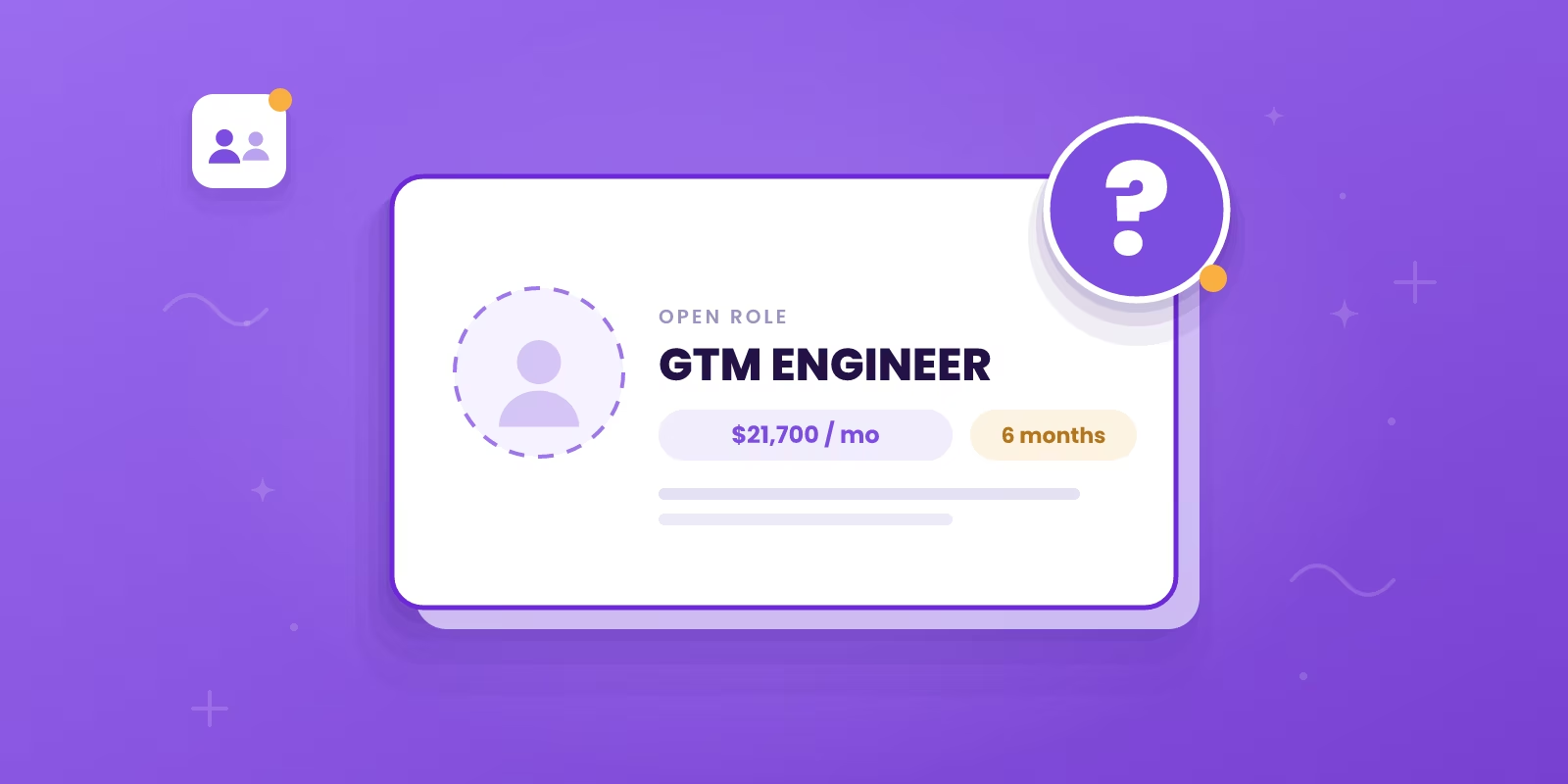
A solid agency can launch a campaign and start generating positive replies in weeks. Compare that to the months it takes to find, hire, and train a single sales development rep. You are not just hiring a person. You are leasing an entire, pre-built outbound department. Instant access to seasoned experts and a premium tool stack like Clay and Smartlead, that would be a huge investment to build and manage on your own.
The Immediate Upside
Partnering with an agency is a shortcut. Instead of spending six months making your own costly mistakes, you plug into a team that has already made them, learned the lessons, and figured out what works.
This translates into faster results in several key areas:
- Speed to market: A well-run agency can get your campaigns live within 2-3 weeks.
- Expert execution: You get a dedicated team that lives and breathes multichannel outbound, handling everything from technical setup to copy that converts.
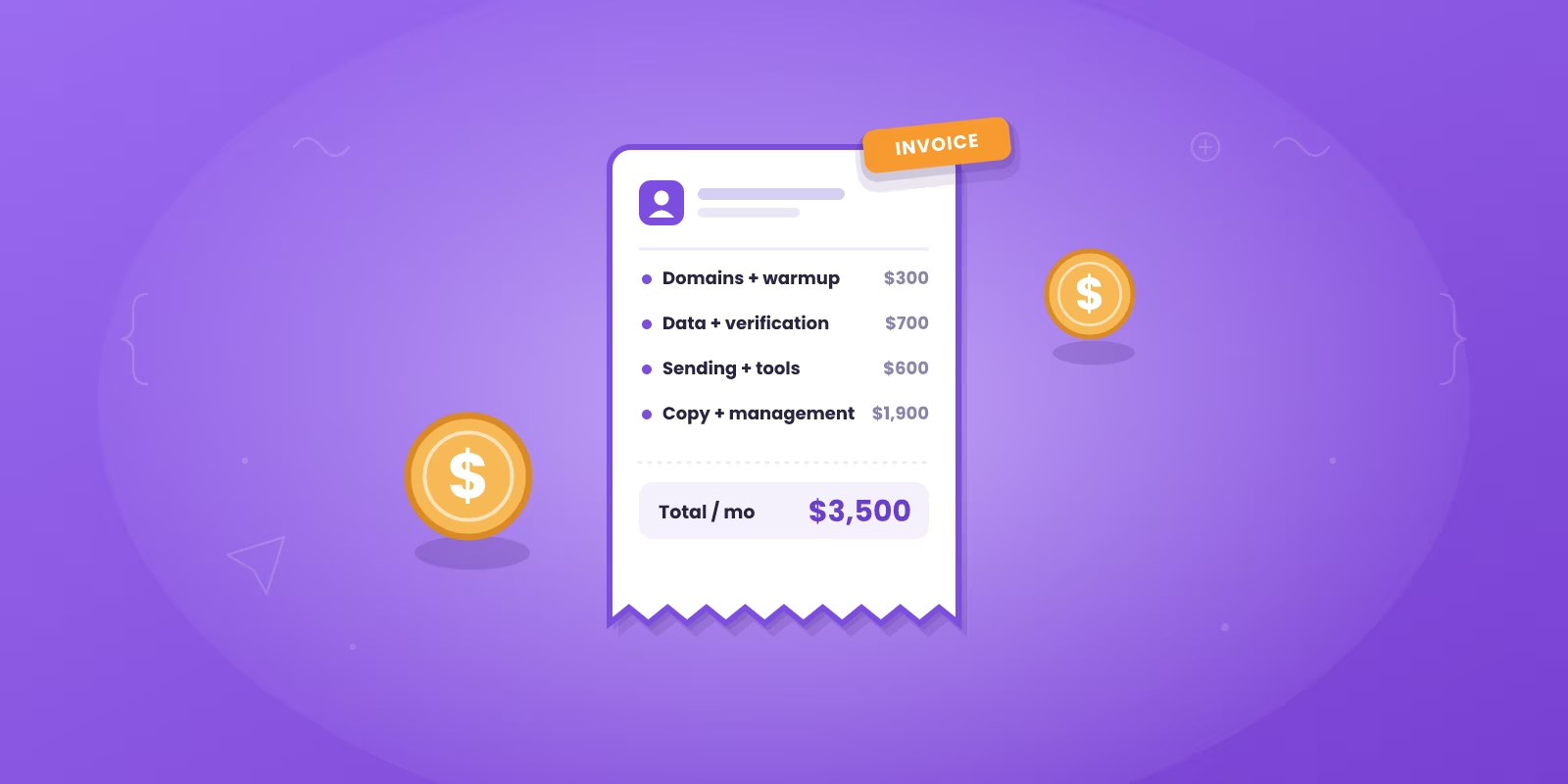
- Cost efficiency: You bypass the salaries, benefits, and $1,000+ per month in software licenses you would need for each in-house SDR.
- Focus: Your sales team stops prospecting and dedicates their time to what they do best: closing deals with qualified leads.
The Hidden Tradeoffs
Now for the other side. Outsourcing is not a silver bullet. Anyone who tells you otherwise is selling something.
First is a loss of direct control. You are entrusting an external team with your brand's voice. This requires a huge amount of trust and crystal-clear communication. If their copy sounds robotic or their targeting is sloppy, it is your brand that looks bad.
The agency is your ambassador. If you would not trust them to speak for you at a conference, do not trust them with your outreach. Vetting their communication style and past work is non-negotiable.
Another tradeoff is dependency. If your entire pipeline flows from a single agency, you are making your business vulnerable. A strong partnership reduces this risk, but it is something to keep in mind. You need tight feedback loops to ensure their messaging stays aligned as your product and market evolve.
Finally, outsourcing cannot fix a broken product or a non-existent market fit. A brilliant outbound campaign can get you in front of the right people, but that is where its job ends. If those people consistently say no after seeing your demo, the problem is not the lead. It is the offer.
A Realistic Timeline and KPIs That Matter
If an agency promises you 100 meetings in the first month, run. Real results from outsourced lead generation services take time to build. Anyone selling you an instant pipeline is selling a fantasy.
The First 30 Days: Setting the Foundation
The first month is not about meetings. It is about getting the strategic and technical groundwork right so future months deliver. Rushing this stage is the fastest way to burn your budget and your brand's reputation.
A typical month-one timeline looks like this:
- Weeks 1-2: Onboarding and strategy. The agency becomes an expert on your business. Deep dive into your Ideal Customer Profile (ICP), value proposition, and case studies. This phase also includes the non-negotiable technical setup of dedicated sending domains and warming them up.
- Week 3: Campaigns go live. The first sequences are launched. Initial emails and LinkedIn messages hit the first batch of prospects.
- Week 4: First signals and calibration. You will not see a flood of meetings. You will see the first real-world data trickling in: open rates, clicks, and initial replies. This is where the agency calibrates, turning off what is not working and doubling down on angles that get a response.
By the end of the first month, the key outcome is engagement. You should be seeing positive replies from interested prospects. That is the first real sign of life.
Month Two and Beyond: Building Momentum
Meetings usually start appearing consistently during the second month. This is when the follow-up steps in your sequences hit their stride and conversations turn into booked calls.
By month three, a well-run campaign should be a predictable engine, delivering a steady flow of qualified meetings to your sales team's calendar.
KPIs That Actually Matter
Forget vanity metrics like total emails sent or impressions. They do not pay the bills. A good agency gives you a live reporting dashboard focused on the numbers that directly measure pipeline health and return on investment.
These are the only metrics you need to watch:
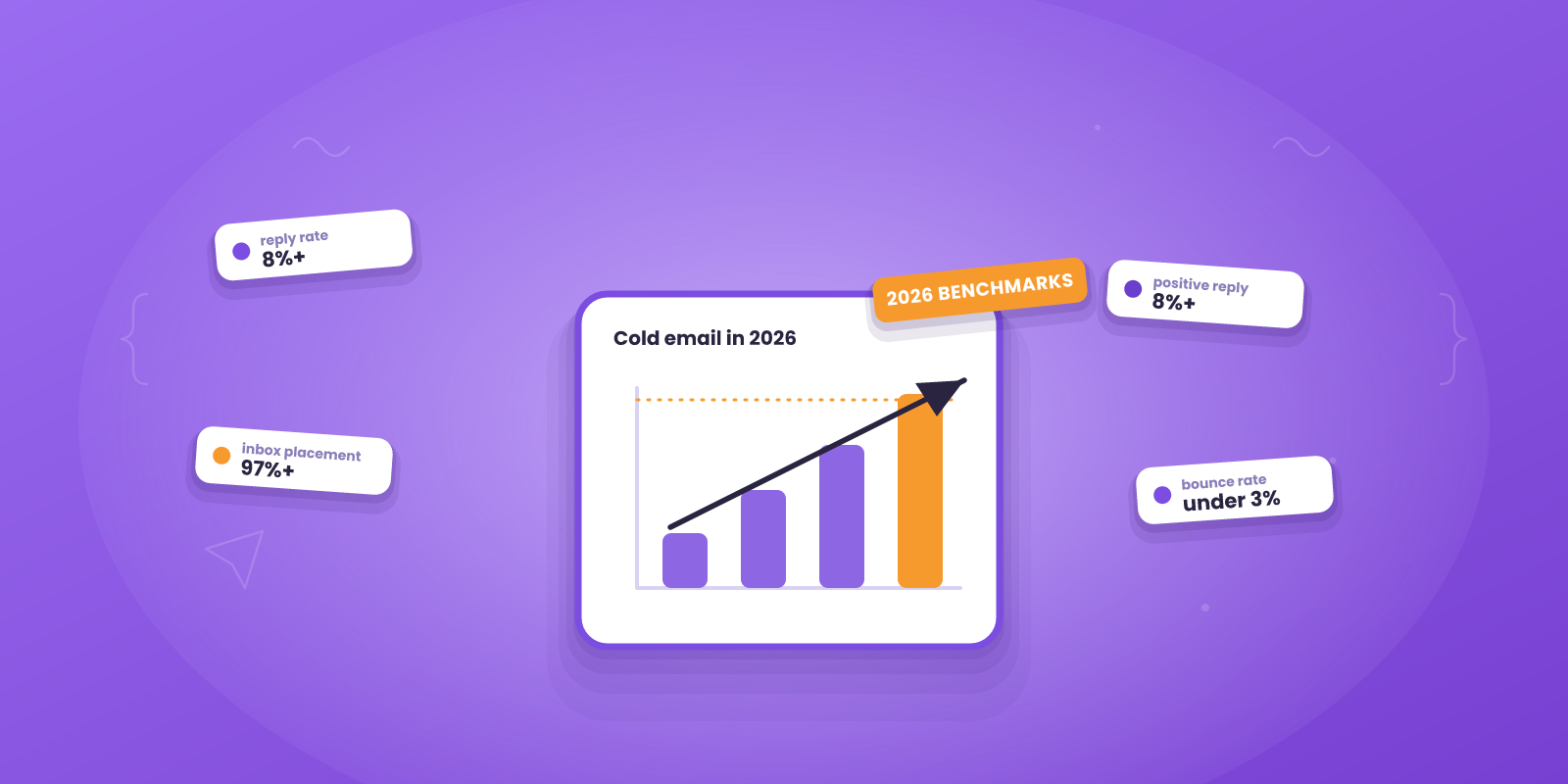
- Positive reply rate: The percentage of prospects who reply with genuine interest. This is the purest measure of message-to-market fit. A strong rate is typically 2-4% for a well-targeted campaign.
- Interested lead rate: The percentage of total prospects who become qualified leads. Shows the overall efficiency of the campaign.
- Meetings booked: The ultimate output. The number of qualified sales appointments set on your calendar each month.
- Cost per meeting: Total agency fee divided by meetings booked. This tells you exactly what it costs to get a qualified prospect on the phone.
Your goal is not just to generate leads. It is to acquire customers profitably. If your cost per meeting is $400 and your average deal size is $20,000, the math works. If it does not, something needs to be fixed.
The lead generation industry is projected to hit $295 billion by 2027. Yet customer acquisition costs have climbed by around 60% in the last five years, with average B2B sales leads costing anywhere from $31 to $60 and much more in competitive niches. This trend underscores the need for an efficient, quality-first approach where 100 highly qualified leads are always more valuable than 1,000 cold names on a list.
How to Choose the Right Partner
Picking the wrong partner for outsourced lead generation services is a fast and expensive mistake. It does not just burn your budget. It can poison your brand's reputation with your most valuable prospects.
Question Their Technical Setup
Your first questions should dig into their technical foundation. Shoddy technical practices will land your emails in spam, making the entire campaign worthless.
Ask them directly: "Do you send from our primary domain or from dedicated sending domains?"
If they say they will use your main company.com domain, walk away. It is a massive red flag that proves they do not understand modern outbound risks. A professional agency will always insist on setting up and warming up separate-but-similar domains to shield your core domain's reputation.
Scrutinize Their Approach to Copy and Personalization
Do not fall for vague promises about personalized outreach. Ask them to show you actual email copy and walk you through their personalization workflow, step by step.
A great partner will explain precisely how they find and use data to make their outreach relevant. They should openly discuss their tech stack, mentioning tools like Clay for data enrichment or Smartlead for managing sequences. They will show you how they take a data point like a recent funding round and turn it into a compelling reason for a prospect to start a conversation.
If their answer is just "we personalize every email," they are plugging first name and company name into a generic template. That is not personalization. It is a mail merge.
Agency Red Flag Detector
Spotting a bad fit early can save you months of headaches and thousands of dollars.
You are looking for a transparent, data-driven partner who acts as an extension of your team. A great agency does not feel like just another vendor. They feel like your own internal outbound department. They own the results, communicate proactively, and are just as obsessed with the same metrics you are.
Common Pitfalls and How to Avoid Them
A company invests in outsourced lead generation services, only to see the campaign fizzle out within a few months. It is easy to point the finger at the agency, but the client is often just as responsible for a campaign that goes nowhere.
Vague Ideal Customer Profile
This is the number one killer of outbound campaigns. If you cannot give your agency a crystal-clear picture of who to target, you are setting them up to fail. A vague ICP like "SaaS companies in North America" is a recipe for burning cash and getting zero results.
Your agency needs the details. Not just firmographics like company size or industry. They need to know technographics and specific situational triggers. A razor-sharp ICP is the difference between shouting into the void and having a quiet, productive conversation with your future best customers.
Before you talk to an agency, you need to be able to answer these questions cold:
- Who are the three key people, by job title, who feel the pain my product solves most acutely?
- What recent event makes a company a perfect fit for us right now?
- Which competing tools are they probably using, and what makes our solution a smarter choice?
If you cannot answer these with confidence, you are not ready to outsource.
Unrealistic Expectations and Impatience
Outbound is a long game. Expecting a packed calendar of qualified deals in month one is unrealistic and puts impossible strain on the partnership. The first 30 days are all about setup, strategy, and testing. Building the engine, not flooring the accelerator.
Real momentum builds in months two and three. Anyone promising 20 meetings in the first month is selling you a fantasy to get your signature. A good agency will be upfront about a realistic timeline. Your job is to hold them accountable to leading indicators in the early days, like positive reply rates, not just the final number of booked meetings.
Poor Internal Follow-Up
An agency can land a meeting with a perfect-fit prospect, but if your sales team drops the ball, you have wasted all of that effort and money. That prospect is interested now. If your account executive waits three days to send a confirmation or shows up to the call unprepared, that warm opportunity goes ice-cold fast.
You must have a rock-solid internal process for handling these leads. Prompt follow-ups, pre-call research, and a tight feedback loop to the agency on lead quality. If your team is not prepared to treat these meetings like gold, you are simply not ready for outsourced lead generation services.


.webp)