
If your outbound system starts with a list, it starts too late. The objective is catching accounts when something changed and that change creates a reason to talk.
That is the shift behind modern business sales approaches. Better subject lines help at the margin. Timing decides whether the message matters at all. Broad cold outreach still fills sequences, but it also burns domains, wastes rep hours, and pushes teams to optimize copy for prospects who have no reason to respond yet. The gap shows up in the numbers, teams running signal-based outbound report 15-25% reply rates against roughly 3% for traditional cold email, according to Unify's signal-based selling outbound playbook.
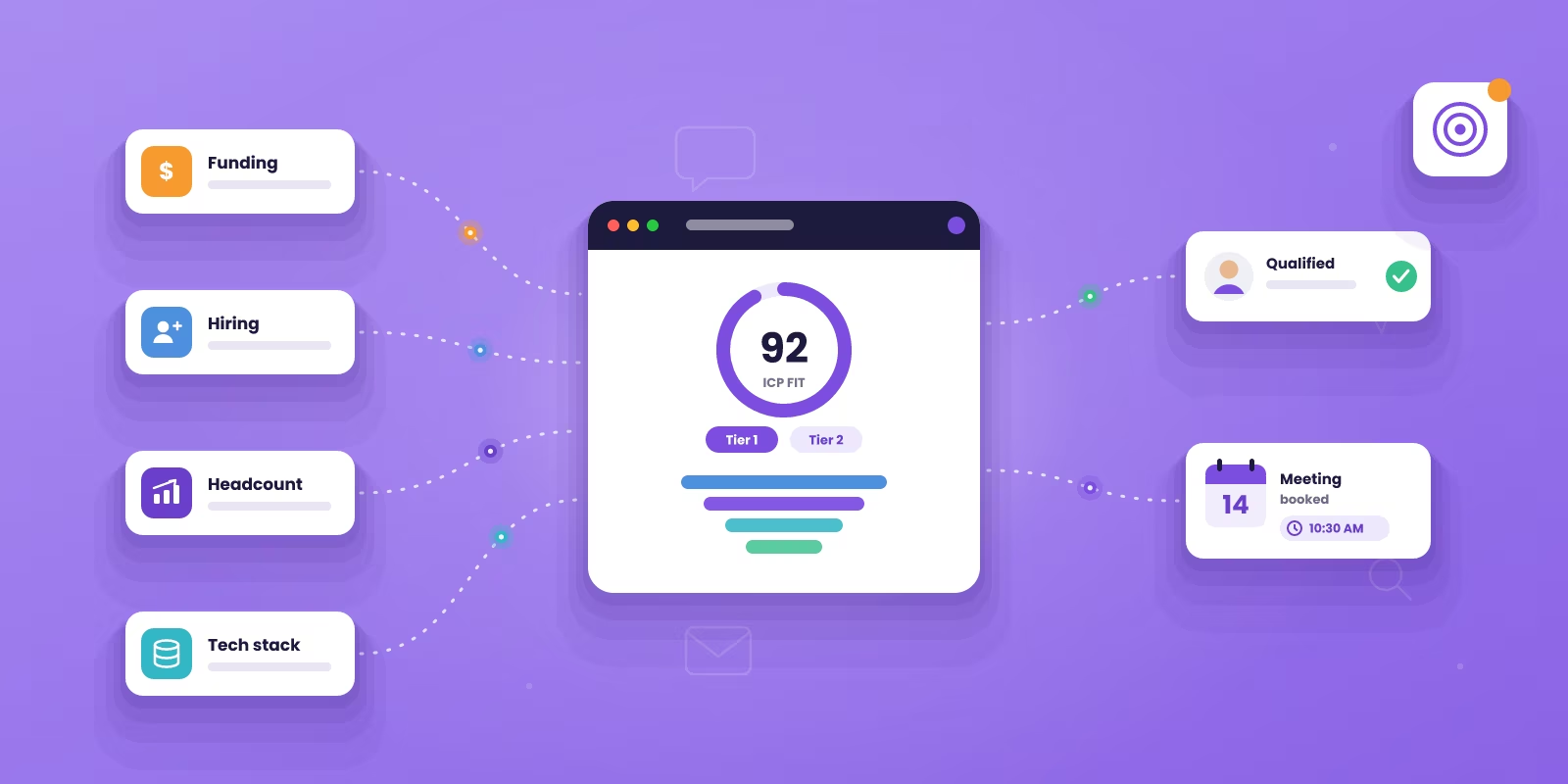
A signal based outbound playbook fixes the operating model, not just the message. It adds a second filter on top of ICP. Fit still matters, but fit plus change is what creates pipeline. A pricing page visit, a new VP hire, a funding event, a stack change, or a hiring surge can all be reasons to reach out, if they connect to a problem you solve.
That is why this article is an architectural plan, not a vendor roundup. The system only works when the parts connect correctly: signal capture, ICP logic, sequencing, copy, scoring, measurement, and stack orchestration. Get one layer wrong and the rest underperform. Teams that want better targeting also need B2B data enrichment workflows to keep accounts, contacts, and trigger data usable inside the same motion.
Speed matters too. A signal loses value when it sits in a spreadsheet for three days. MetricsWatch's guide to real-time analytics explains why real-time visibility changes execution. In outbound, that means routing the right trigger to the right rep fast enough to contact the account while the window is still open.
This playbook is the blueprint for building that system so outreach happens for a reason, not just on schedule.
TL;DR: Summary
- Signal based outbound adds timing as a second filter on top of ICP fit. Both have to be true before an account enters a sequence.
- The system has seven layers: signal capture, ICP logic, cadence, copy, scoring, measurement and stack orchestration. One weak layer drags the rest down.
- Score signals with explicit weights rather than intuition. Funding at 30% and headcount growth at 25% outrank a competitor post like at 5%.
- A signal is worth acting on for two to four weeks. After that every competitor has seen the same public event.
- The cadence is two emails six to seven days apart, a LinkedIn layer, then one call, and then it stops.
- Non-responders go back into monitoring and get re-approached one and a half to two and a half months later on a fresh trigger.
- Use AI for the one-line signal opener only. A fully generated body spends the trust the signal earned.
Layer 1: Signal triggers and real-time buying intent detection
The usual outbound mistake happens before a rep writes a line of copy. Teams start with a static list, then try to manufacture urgency with messaging. That approach misses the point. Good outbound starts with change. A trigger tells you something happened inside the account that could make your solution relevant right now.
Signal detection is the first layer of the system. If this layer is noisy, every downstream layer gets worse. Reps chase bad accounts, sequences fire at the wrong time, and scoring models rank activity that never turns into pipeline. We cover the broader category in our B2B buying signals guide, but the operating logic comes down to a small number of trigger types your team can actually verify and act on. Start with 3 to 5 trigger types, run each one for a quarter, and keep only the triggers whose signal-to-meeting rate clears 3%.
| Signal type | Why it matters | Action speed |
|---|---|---|
| Job change | A new VP Sales, RevOps leader, or demand gen owner reviews process, vendors, and team gaps inside their first 90 days. | Fast. Reach out within 2 weeks of the start date. |
| High-intent website behavior | Pricing page visits, repeated product page sessions, and demo page traffic from the same account suggest active evaluation. | Same day. The window closes quickly. |
| Hiring patterns | Open roles for SDRs, AEs, solutions engineers, or RevOps reveal where a company is investing and where friction is building. | Within 1 to 2 weeks of the role posting. |
| Funding and expansion | Useful but crowded. Most relevant when paired with a second signal like hiring or stack change. | Slower. Wait for fit confirmation, then sequence. |
| Tech stack change | Installing or uninstalling a competitor or adjacent tool creates a clear opening for replacement or integration messaging. | Within 30 days of the detected change. |
One rule saves a lot of wasted effort. A trigger is only useful if your team can explain why it matters to this account, this role, and this problem.
Account-level and contact-level inputs
A good trigger model mixes account-level and contact-level inputs. In practice, that often means job change data, hiring data, page-level intent, CRM history, and selective manual review of company news. Manual review matters more than vendors admit. Scrapers pick up activity. They do not judge whether the activity creates a reason to buy. A good social media lead generation playbook helps teams separate signal from chatter on the public side.
Fast outreach helps only when the trigger deserves immediate action. A pricing page spike from a target account should move quickly. A broad funding alert can wait until someone checks whether the company even fits your ICP.
Routing by tier
The architecture matters here. Tier 1 signals should route to a rep or founder with context attached. Tier 2 signals can enter an automated sequence with lighter personalization. Negative signals, including layoffs, budget cuts, or obvious instability, should suppress outreach instead of accelerating it.
Real-time detection is not about buying more tools. It is about building a system that captures fresh change, verifies it, enriches it, and routes it before the window closes. That is the difference between signal-based outbound as a tactic and signal-based outbound as an operating model. For more on the data layer behind this, see our piece on B2B intent data.
How long does a signal stay worth acting on?
Two to four weeks, and then it is a liability rather than an advantage. The trigger that justified the outreach is a public event, so every competitor watching the same feed reaches the same account on the same week.
The failure mode is predictable. A team detects a funding round, adds the account to a list, and emails it six weeks later inside the next campaign batch. By then the buyer has already had the conversation with three other vendors, and the opener that would have read as timely in week one reads as late.
| Signal | Useful window | What that means operationally |
|---|---|---|
| Pricing or product page revisit | 5 to 10 days | Same-day routing to a rep, with context attached |
| Recent funding | 2 to 4 weeks from the announcement | Crowded, so pair it with a second signal before firing |
| New executive into a buying seat | 30 to 90 days | The widest window in the set, and the one most teams miss entirely |
| Tech stack change | Within 30 days of detection | Replacement or integration messaging, named against the tool |
| Hiring for a relevant role | 1 to 2 weeks after the post | Weak alone, useful stacked with funding or headcount growth |
The consequence for the operating model is that signal based outbound runs continuously rather than in monthly waves. Detection watches every day, new signals route in as they fire, and any list older than three months gets re-verified before it is sent to, because contact data decays on its own schedule. Our guide to B2B buying signals covers the definition and the strength ranking behind each of these windows.
Layer 2: Targeting precision through ICP mapping and segmentation
Strong signals create bad pipeline when targeting is loose.
Founders usually feel this after a few weeks of outbound. The team sees hiring spikes, funding news, or fresh engagement and starts working every account that looks active. Activity is not fit. If your product solves a narrow problem for a narrow buyer, broad signal capture just gives reps more ways to waste time.
The operating model is simple. Score fit separately from timing. Then decide who deserves human attention, who belongs in automation, and who should stay out of the system entirely. Our modern guide to B2B segmentation covers the segment-design side of this in more depth.
Where to look for the pattern
Start with accounts that bought, launched, renewed, and gained value. That group tells you more than the loudest customer, the biggest logo, or the prospect your team wishes would convert.
Reachly's guide to sales prospecting techniques puts a vague ideal customer profile first on its list of things that kill a prospecting campaign.
Look for repeatable traits. Industry, employee count, geography, sales motion, tech stack, compliance requirements, average contract shape, and time-to-value all matter. So do the less glamorous patterns founders skip over, like whether implementation needed a champion with operational authority or whether legal slowed every deal to a crawl.
This section is where a lot of teams get the architecture wrong. They treat ICP like a brand statement instead of a routing system. A good ICP definition changes execution. It tells the team which signals matter, which titles are worth finding, how much personalization an account deserves, and whether the account should enter a sequence at all.
Segment for action, not for slideware
Three or four segments are enough if each one changes how outbound runs.
A practical model looks like this:
| Tier | Definition | How it should run |
|---|---|---|
| Tier 1 | High-fit accounts with a live reason to buy. | Reps or founders handle these directly with custom research. |
| Tier 2 | Good-fit accounts with weaker or indirect signals. | Structured multichannel outreach with lighter research. |
| Tier 3 | Decent fit, no strong timing yet. | Monitor and enrich. Keep out of premium sending infrastructure. |
| Suppression | Looks active but fails core requirements. | Block from outbound entirely. |
That last segment matters more than people think.
Good outbound systems are defined as much by exclusion as inclusion. If you cannot serve a market well, do not let a flashy signal overrule that. If the account uses the wrong stack, has no plausible owner for the problem, or would create a services-heavy sale for a low ACV deal, keep it out.
Same trigger, different treatment
Two companies can show the same trigger and deserve completely different treatment. A B2B SaaS company opening sales roles in Singapore may be a strong fit for a workflow tool sold into APAC revenue teams. A legacy services business hiring in the same city may produce the same surface-level signal and still be a poor prospect because the buying process, team structure, and urgency are different. The trigger matched. The account did not.
That is why segmentation has to go deeper than firmographics. Add operational context. How they sell. How fast they hire. Whether they rely on outbound or partnerships. Whether the likely buyer owns budget or only influences it.
Segmentation is only useful if it controls what happens next. Tier 1 accounts should get tighter research, clearer hypotheses, and outreach that reflects the trigger and the business model behind it. Tier 2 accounts can use repeatable messaging blocks with lighter signal references. Tier 3 accounts should stay in monitoring until a meaningful event justifies contact.
The over-segmentation trap
One warning from experience. Founders often over-segment early. They create eight personas, six vertical cuts, and a scoring model nobody trusts. Start narrower. If a segment does not change ownership, channel mix, personalization depth, or follow-up rules, it is probably not a segment. It is just a note in the CRM.
A signal-based outbound system only works when the targeting layer acts like a filter, not a fan. That is the difference between a list of interesting accounts and a pipeline architecture reps can execute without second-guessing every record. Our modern outbound sales strategy guide goes deeper on how segment design connects to channel mix.
Layer 3: Outbound cadences and multi-touch sequencing
The default seven-touch sequence is one of the fastest ways to waste a good signal.
Cadence design is not a calendar exercise. It is a response system. A buyer who just showed intent should not enter the same flow as a name pulled from a static list three weeks ago. Signal strength, account tier, and channel coverage should decide speed, channel order, and whether a rep stays in the loop or automation runs the first touches.
Matching cadence speed to signal decay
Signals decay. Some are stale in hours. Others stay useful for a week or two. That changes the sequence more than any generic best practice about touch count. A pricing page return visit, demo page activity, or fresh leadership hire can justify same-day outreach. A softer signal, like light content engagement or an old technographic change, usually deserves more distance between touches and less channel pressure.
The operating rule. Urgency should come from context, not from quota panic.
A signal-triggered cadence that actually fits the timing window. This is the structure Reachly runs for high-fit accounts after a Tier 1 trigger fires.
| Day | Channel | Action | Why it works |
|---|---|---|---|
| 1 | Profile visit and connection request referencing the signal. | The prospect sees your name before the first email lands. | |
| 1 | Signal-specific opener, 3 to 4 sentences, low-friction CTA. | Short message tied to a recent change earns the reply. | |
| 3 | New angle. Relevant result or stat. Stays under 80 words. | Different angle stops the second touch from feeling like a nudge. | |
| 5 | LinkedIn or email | If connected, send a LinkedIn message. If not, send Email 3. | Channel match increases response without piling on the inbox. |
| 8 | One sentence. Direct. Easy out. | Short closes do better than long retries on a fading signal. | |
| 12 | Phone and email | Call attempt for high-value accounts plus a final email. | The call comes after two visible touches, so it lands warm. |
How Reachly coordinates this across campaigns: Email runs through Smartlead with dedicated sending domains and live deliverability monitoring. LinkedIn runs through HeyReach across multiple sender accounts. Replies on either channel pause the rest of the sequence automatically and route to the inbox team for qualification.
Where the sequence stops
The sequence also has to end. Two emails six to seven days apart, the LinkedIn layer, and one call at day 12 is the whole shape. After that, stop. Long sequences burn deliverability and train prospects to report the sender, and the signal that justified the outreach has decayed by the second week.
Accounts that did not reply go back into monitoring rather than into a longer drip. Re-approach them one and a half to two and a half months later on a fresh trigger and a different angle, which is a new campaign rather than a continuation of the old one.
Branching on engagement
Static sequencing breaks the whole model. If someone engages, the cadence should change. If someone ignores every touch, the cadence should also change.
That branch can be simple. Move a clicked prospect to a rep-owned follow-up. Suppress the next generic touch after a reply. Pull the phone step forward when the account returns to the site. Push the account back to monitored status after the signal window closes. Teams that skip this logic usually compensate with extra touches, which drives activity up without improving meeting quality.
Execution often falters at this stage. The workflow has to tell reps what changed and what to do next. If your team is still guessing when to send the second or third follow-up, set rules inside your cold email follow-up process for engaged and monitored accounts.
If engagement does not change the next step, the cadence is just automation wearing a signal label.
There is a trade-off here. More touches can raise surface-level activity, but they also raise the odds of bad timing, channel fatigue, and wasted rep time on accounts that never had enough intent to begin with. Good operators protect rep attention. They use fast sequences for live opportunities, slower sequences for developing interest, and no sequence at all when the signal does not justify the interruption. That behavioral side is where most programs slip. Prospeo's signal-based outbound playbook makes the point well: teams need explicit SLAs for when to call immediately versus nurture, or reps start ignoring everything but the strongest triggers, classic signal fatigue.
That is the difference between a tool-driven setup and an outbound architecture. The sequence is not the strategy. The branching rules are.
Layer 4: Messaging templates and signal-informed copy
Templates are not the problem. Lazy inputs are.
A good outbound system does not ask reps to write every email from scratch. It gives them a message architecture that changes with the signal, the buyer, and the likely business consequence. That is the difference between personalization theater and signal-based outreach that generates replies. Our piece on cold email best practices covers the underlying mechanics in more depth.
The first line has one job. Prove the outreach is tied to something real that changed.
Weak: "Congrats on the funding. We help companies grow."
Stronger: "Saw you hired a VP Sales and opened roles under that team. That usually puts pressure on coverage, ramp time, and forecast accuracy within the next quarter."
The signal earns the rest of the email. Without it, the message reads like another generic pitch sent to a list. With it, the buyer can immediately see why this note showed up now instead of three months ago.
That timing matters more than wordsmithing. Signal-based outbound tends to outperform generic cold email because the message matches a live buying moment, not because the copy sounds clever.
Two rules that keep copy honest
Two rules keep the copy honest. First, a detail only counts as a signal if it changes the offer or the consequence you lead with. A prospect's alma mater changes neither, so it is filler wearing the costume of research. A new VP of Sales changes both, because the incumbent tools are now under review.
Second, use AI for the one-line signal opener and nothing else. The signal earns the open, and a fully generated body spends that credit immediately, because buyers read generated prose faster than they read anything else in the inbox. Write the body by hand and check the generated snippet before it ships.
Build message blocks, not one master template
Founders usually ask for "the best template." That is the wrong asset to build.
What works is a set of reusable blocks your team can assemble based on three variables. A signal block (funding, leadership hire, job posting ramp, pricing page activity, tech stack change). A persona block (founder, sales leader, RevOps, finance, IT). A consequence block (missed pipeline target, slow rep ramp, messy handoffs, tool sprawl, rising acquisition cost). Then add two fixed pieces: a proof block that shows you have solved a similar problem in a similar context, and a CTA block that asks one easy yes-or-no question.
This is a blueprint issue, not a writing issue. If your architecture is sound, reps can produce good emails quickly. If the architecture is weak, they either spray generic copy or waste time handcrafting messages that do not scale.
Personalize the commercial detail, not the trivia
Outbound reps often over-personalize the wrong details. They mention a podcast appearance, a quote from LinkedIn, or a line about the prospect's college. That does not help unless it connects directly to the reason the account may buy.
Use details that strengthen the commercial case. What changed. What that change usually creates. Why that problem is expensive or urgent. Why your team is relevant to that moment. Skip details that only prove you can browse the internet. Buyers can tell the difference fast. Signal-based outreach feels observant. Fake personalization feels invasive, and sometimes amateur.
Different signals call for different copy angles. Treating them the same is one of the fastest ways to flatten reply rates. A hiring signal supports a capacity or process angle. A pricing page revisit supports a timing or evaluation angle. A new executive hire supports a change-management or team-build angle. A technology change supports an integration, migration, or replacement angle.
Here is the practical test. If you can swap one signal for another and the email still reads the same, the template is too generic.
Length, and where AI belongs
Keep the body short. Three to four sentences is enough in most cases. Buyers skim the first two lines, decide whether the message is relevant, and only then consider the ask. The 70 to 80 word range works because cold emails in 2026 are not competing with other cold emails. They are competing for attention span. People read their inbox in the lift, on the commute, between breaks. Time is of the essence.
AI can speed up variant creation. It can rewrite tone, shorten a paragraph, and generate persona versions. That is useful. It still cannot reliably infer the business consequence of a signal without clear rules and good inputs. If reps paste raw enrichment into a prompt and send whatever comes back, the output usually sounds polished and hollow. The email mentions facts but misses the actual problem behind them. Good teams use AI after they define the message logic. They do not let it invent the logic.
The best signal-based copy does one thing well. It connects a visible change to a plausible business problem in language the buyer already uses. That is the standard. Not cleverness. Not volume. Not a long list of personalization tokens. A message architecture that turns signals into relevant outreach, one component at a time.
Layer 5: Qualification, scoring, and sales-ready prioritization
A signal based outbound system breaks at handoff more often than at targeting.
Teams get the trigger right, write decent copy, and still hand sales a queue full of curiosity clicks, stale contacts, and accounts with no real path to purchase. Then they call it a top-of-funnel problem. It usually is not. It is a scoring problem. Our guide on how to qualify leads in sales walks through the qualification frameworks that actually translate to closed pipeline.
Scoring should answer one question. Is this account ready for a rep now?
That means fit and timing come first. Engagement comes after. An open is weak evidence. A click can mean interest, but it can also mean someone forwarded the email, skimmed it on mobile, or hit the wrong link. A strong score starts with the trigger itself, checks whether the account fits your ICP, confirms the contact has decision influence, and only then adds engagement as a supporting signal.
The five scoring inputs
Use a simple model. Signal strength. ICP fit. Role relevance. Engagement quality. Negative flags.
The priority rule is simple. An account with multiple credible signals and strong fit should rise even before a reply. An account outside your market with one shallow engagement event should stay out of the rep queue.
A lot of outbound teams lose the plot at this juncture. They score the person who clicked instead of the buying context around that person. A junior manager opening one email is less important than an account showing repeat product evaluation, active hiring in the relevant function, and clear ICP fit. Sales works opportunities at the account level. Your scoring model should do the same.
Weights make the model arguable, which is the point. Here is the matrix we start clients on. Tune the numbers against your own win data over time, and keep the principle that account-level events tied to budget outrank soft engagement.
| Signal | Category | Weight |
|---|---|---|
| Recent funding round | Account-level | 30% |
| Headcount or sales-team growth | Account-level | 25% |
| Tech stack change or new tool added | Account-level | 20% |
| Pricing or high-intent page revisit | Behavioral | 15% |
| Leadership change into a buying seat | 10% | |
| Engagement with a competitor or topic post | 5% |
An account that just raised and is hiring scores 55 before anything else fires, so it goes to the top of the queue today. An account that only liked a post scores 5 and waits. That is the whole job of the matrix: turning a pile of triggers into a ranked work list a rep can act on without a meeting.
Account readiness against contact readiness
Run separate scores for account readiness and contact readiness. Account readiness measures whether the company is in a buying window. Contact readiness measures whether this person is worth reaching now. You can route far better with that split than with one blended number that hides the reason a lead was prioritized.
Scoring only works if the inputs are trustworthy. Poor enrichment, incomplete firmographics, and unverified contacts create avoidable outbound mistakes. That lines up with what operators see in the field. Duplicate hiring data, stale job titles, and missing firmographic fields push weak accounts to the top of the queue and bury strong ones underneath.
The cost is real. Reps waste touches on dead contacts. Managers lose confidence in the routing logic. Sender reputation takes a hit when low-quality records absorb volume that should never have been sent. Bad scoring does more than waste effort. It trains the team to ignore the system.
What loose routing costs
Loose routing feels good for a week. Reps see more names, calendars fill faster, and activity looks healthy. A month later the meeting quality drops, show rates soften, and pipeline conversion tells the truth. Start with stricter handoff rules. Require clear fit, a credible signal, and a valid contact. Then review what sales accepted, what progressed, and what stalled. Tightening too much creates a smaller queue. Loosening too much creates a noisy one. The first problem is easier to fix.
Rep feedback matters, but it is not enough. Some reps want more volume. Others reject good accounts because the signal did not fit their usual talk track. The scoring model needs a harder standard.
The quarterly review
Review three buckets every quarter. Won deals. Qualified meetings that went nowhere. High-scored accounts that never converted. That review shows where the model is off. Sometimes the trigger is too noisy. Sometimes title weighting is wrong. Sometimes the actual issue is territory coverage or follow-up speed, not qualification logic.
If you want a simple way to pressure-test whether the scoring threshold makes economic sense, run it against a cold email ROI calculator. A lead grade is only useful if it improves pipeline per rep hour, not just reply volume.
Qualification is not a cleanup step after outreach. It is the control layer that decides which signals deserve expensive human attention. Get that layer right and the rest of the playbook compounds.
Layer 6: Measurement and outcome-driven KPIs
Outbound reporting goes wrong when teams measure motion instead of output. Opens, clicks, and task counts can help diagnose a problem, but they are not the scoreboard. The scoreboard is held meetings, qualified pipeline, deal progression, and revenue tied back to a signal and a sequence. Salesforge's signal-based selling playbook frames this in three tiers, activity (speed-to-outreach), engagement (reply and meeting rates), and revenue (pipeline), and treats a signal-to-meeting rate of 5-10% as the target, with anything under 3% a sign the playbook needs recalibration
A signal-based program should be measured from trigger to revenue. If reporting stops at reply rate, you cannot tell whether the system is finding demand or just generating curiosity.
Track the path in order: signal generated, account worked, first touch sent, reply, meeting booked, meeting held, opportunity created, pipeline created, deal won. That sounds obvious. In practice, a lot of teams skip the middle stages and then wonder why attribution turns into an argument between SDRs, AEs, and marketing ops.
The questions the report has to answer
The useful questions are operational. Which signals create real conversations? Which ones produce meetings that hold? Which sequences create pipeline, not just replies? How fast does outreach need to happen before the signal decays? Those answers show where the system breaks.
| Failure pattern | What it actually means | Where to look first |
|---|---|---|
| Replies are healthy, held meetings are weak. | The outreach got attention but the ask was too aggressive or the signal was too early. | Tighten the qualifying questions. Adjust the CTA. Re-check signal recency. |
| Meetings happen, opportunities do not. | Qualification standards are loose or AEs disagree with what sales-ready means. | Re-align scoring rules with sales. Audit recent disqualifications. |
| One signal type underperforms across every stage. | The signal is too noisy or too far from the actual buying moment. | Cut it, narrow the trigger conditions, or route it differently. |
| Activity rises, pipeline does not. | Volume is masking poor account selection. | Cut Tier 3 sends. Re-check ICP definition and suppression rules. |
Founders do not need prettier activity reports. They need to know whether this system creates more pipeline per rep hour than broad cold outbound.
That is the architectural lens. Measure output per SDR, per sequence, and per signal category. Review pipeline created per worked account, meetings held per 100 triggered accounts, and opportunity rate by signal type. Those metrics help you decide whether to add reps, tighten targeting, or kill a workflow. Vanity metrics do none of that.
For campaign economics, run pipeline per rep hour and meeting economics through the Reachly ROI calculator. If the math breaks once you account for show rates, close rates, and rep time, the sequence is busy, not productive.
Three attribution views
Attribution gets messy the moment multiple teams touch the same account. An inbound form fill, a founder-led email, and an SDR sequence can all happen inside the same buying window. If you do not define the rules up front, every team will claim credit and nobody will learn what was effective.
Set three attribution views. Sourced pipeline, where outbound created the opportunity. Influenced pipeline, where outbound helped move an active deal. Assisted engagement, where outbound reached an account already showing intent elsewhere. Keep them separate. If you blend them, outbound performance looks stronger than it is and budget decisions get distorted.
One more hard rule helps. Timestamp the signal, the first touch, the reply, and the meeting creation. Without that sequence, you cannot evaluate signal decay, follow-up speed, or whether reps are getting to good accounts too late.
Measure the handoff points. That is where signal-based outbound systems usually lose money.
Good measurement does not sit at the end of the playbook. It governs the rest of it. It tells you which signals deserve fast action, which messaging holds up under scrutiny, and which rep workflows produce revenue instead of noise.
Layer 7: Tooling and tech stack orchestration
Founders usually ask for a tool stack too early. The fundamental decision is system design.
Signal-based outbound breaks less on tool choice than on handoffs. If the signal enters one system, enrichment happens in another, sequencing lives somewhere else, and replies or status changes fail to sync back to the CRM, the team ends up running partial data through fast automation. That is how good accounts get mistimed, duplicated, or ignored.
A working stack needs five jobs covered well. Capture the signal. Resolve it to the right account and contact. Decide what should happen next. Execute across email, LinkedIn, and CRM tasks. Write the outcome back so the next action uses current context.
That sounds obvious. It is also where stacks fail. Teams buy a signal tool, an enrichment tool, and a sequencer, then assume integration equals orchestration. It does not. Orchestration means the system passes context between steps without forcing reps to patch the gaps by hand.
The stack this runs on
A practical stack for multichannel outbound often includes Clay for list building and enrichment, Smartlead for email infrastructure, HeyReach for LinkedIn workflow, and a CRM that can handle routing, ownership, and reporting cleanly. Those tools are interchangeable. The operating logic is not.
Clay is the layer most teams underbuild. If you are bringing in outside help on the data side, the question worth asking is whether the partner can keep enrichment, signal capture, and routing logic in sync with the rest of the stack, rather than how well known they are. Ask to see how a signal moves from capture to rep task inside their own build.
The detection layer needs naming too, because that is the half of the stack the CRM cannot cover. AI Ark handles lookalike company discovery and pre-built signal filters from a seed of your best accounts. Trigify watches the LinkedIn engagement layer. RB2B identifies individual website visitors rather than just the company. Those three feed Clay, which is where the scoring lives.
One source of truth, one decision layer
Use one source of truth for account status. In most cases, that is the CRM. Use one decision layer for routing and trigger logic. That can sit in ops workflows, a lightweight automation layer, or a signal platform if it writes back cleanly. Use one place to review conversation history before a rep touches the account. Without that, multichannel turns into channel conflict. A prospect gets a LinkedIn visit, an email, and a follow-up from another rep who never saw the first two actions.
The stack should answer simple operational questions fast. What signal fired. When it fired. Who owns the account. What touch already went out. What should be paused. What needs human review. If your team cannot answer those questions in under a minute, the stack is too fragmented.
The flashy part is signal detection. The expensive part is everything teams skip because it feels operational. You still need dedicated sending domains and mailbox management, reply ownership rules, reliable CRM field mapping, suppression logic across channels, confidence thresholds before contacts enter a sequence, and audit trails for status changes and task creation. These controls decide whether the system scales or sprays. Our email deliverability guide covers the infrastructure side in detail.
We have seen teams add more signals to fix weak performance when the underlying problem was bad routing, stale ownership, or contacts entering two workflows at once. Adding another data source to a broken flow just increases the speed of bad decisions.
Good stack design reduces the time between signal, decision, and action. Bad stack design hides delays until pipeline quality drops. Start with one signal, one route, and one execution path that the team trusts. Get that flow stable. Then add complexity on purpose. That is the difference between a modern outbound system and a pile of connected apps.
How Reachly runs this system for clients
The seven layers above describe the architecture. Running it daily is the harder problem.
Reachly built the agency around this exact operating model. Signal capture runs through Clay. Email sends through Smartlead with dedicated domains and warmup. LinkedIn runs through HeyReach across multiple sender accounts. Cold calling layers in after the email and LinkedIn touches have already landed, so the prospect has seen the name twice before the phone rings. Reply management, qualification, and meeting setting sit in one team so the handoff between channels does not break.
Two examples of how the system runs in practice.
The Great Room, a premium coworking operator across Singapore and Australia, had strong brand and unpredictable pipeline. Their internal team were closers, not prospectors. Internal outbound efforts produced 2 face-to-face meetings per quarter. Reachly built a signal stack around hiring operations roles, opening Singapore presence, and recent funding events. Cold email plus LinkedIn ran in coordinated cadence with a pre-qualification layer before tours. The result was 2 face-to-face meetings per month instead of 2 per quarter, drop-off rate from 50 percent on paid leads down to 30 percent on Reachly-sourced ones, and a $250K contract signed inside the first 9 months. Zero added headcount. Zero broker fees.
Primal, a digital marketing agency in Thailand, came in scaling sales through paid ads and looking to add outbound without scaling CAC. Reachly built one evergreen campaign targeting CMOs and CEOs in industries Primal had strong case studies in, then layered four signal-based campaigns on top: hiring for marketing, raised funding, decreasing traffic, and not on page 1 of Google. Six months in, the numbers came in at 4.57x ROI, 85+ SQLs, 6 deals signed, 35 percent CAC reduction, and 8 percent average positive reply rate. Break-even hit at month 3.
Both campaigns followed the same architecture. Different ICPs, different signals, same operating model.
Why the model holds
The reason it works is boring. Every layer is owned by one team. The signal layer feeds the targeting layer feeds the cadence layer feeds the messaging layer feeds the qualification layer feeds the measurement layer. No handoffs across vendors. No debate over whose tool owns the account record. Reps stay focused on the conversations that move pipeline.
That is the part most teams underestimate when they try to build this in-house. The tools are not the bottleneck. The connective tissue between the tools is the bottleneck. Teams that already run the motion daily skip past the 6 to 9 months of trial-and-error setup and start on the conversations.
The 12 signals Reachly monitors in every campaign
Not all signals are equal. Some indicate that a company is growing and might need your service soon. Others indicate that a specific person is actively experiencing a pain you solve right now. We split them into company-level signals and person-level signals.
Company-level signals
These signals tell you something has changed at the organization that makes your offer more relevant. They are broader but often indicate a major shift in buying readiness.
Budget just opened up. Growth pressure is real. New investors want to see the GTM motion scale fast.
Outreach angle: GTM readiness, pipeline capacity, speed to revenue. Reference the round directly. Reach out within 72 hours.
They are scaling GTM fast. New reps need pipeline. Infrastructure needs to catch up before ramp time eats the results.
Outreach angle: Capacity and speed-to-pipeline for the VP Sales. The hiring is the problem, not just the context.
New geography means no existing pipeline, no local network, and no brand awareness. They are starting from zero in a market they do not fully understand.
Outreach angle: Local APAC market knowledge, existing relationships, and a proven playbook for the region.
They just added a tool that sits next to yours in the stack. Integration angle is strong. They are already spending in this category.
Outreach angle: Complement the new tool, fill the gap it leaves, or show how yours stacks alongside it.
They dropped a competitor. They are in evaluation mode. This is the highest commercial intent signal that most teams completely ignore.
Outreach angle: Position as the natural replacement. Lead with migration simplicity and the gap the previous tool left.
Fast growth companies break processes faster than they can fix them. Ops, systems, and pipeline all fall behind headcount.
Outreach angle: Operational strain, not feature pitch. "Your team is growing faster than your pipeline" lands better than any capability list.
Person-level signals
These signals tell you something specific has changed for an individual decision-maker. They are often higher converting because the relevance is personal, not just organizational
New decision-maker. Fresh budget authority. First 90 days is the highest-intent window in any buying role. They want wins before they are locked in.
Outreach angle: Reach out in week two or three. Reference the transition. Lead with a quick win they can show their new team.
A contact from a previous ICP match just moved to a new company. They already know your work. Their new company is now a warm target.
Outreach angle: Reference the relationship or past work. "Congrats on the new role, wanted to say hello" opens more doors than any cold opener.
They are actively thinking about the problem you solve. They typed it out and published it. That is the clearest possible signal of current awareness.
Outreach angle: Reference the post directly, add a perspective or a stat they did not mention, then make the ask. Do not just say "I saw your post."
They liked or commented on a post from a competitor. They are actively researching solutions in your category. You are not interrupting a research process. You are joining one.
Outreach angle: Intercept with a comparison angle or a differentiating insight. Show why you are the better option, briefly.
Someone from a target account visited your website. They already know who you are. They came to you first. Not reaching out is leaving money on the table.
Outreach angle: Match the message to the page they likely visited. Reach out same day. Do not reference the visit directly.
The company or the individual just had a positive public moment. They are in a receptive state. A genuine congratulations opens conversations that cold openers never could.
Outreach angle: Lead with the congratulations. Keep it brief and genuine. Connect it to your value prop in one sentence.
Signal-based vs traditional outbound: side by side
| Factor | Traditional outbound | Signal-based outbound |
|---|---|---|
| Timing | Sequence fires on a schedule | Outreach fires when a trigger occurs |
| List freshness | Static, decays at 30% per year | Live data, always current |
| Personalization | Role and company name only | Built around a specific real event |
| Reply rates | 1 to 5% industry average | 5 to 20% when signals are strong |
| Prospect receptivity | Random, depends on luck of timing | High, prospect is already thinking about the problem |
| Competitive edge | Low | High, most teams still running static lists |
| Setup complexity | Low | Medium (Clay + Trigify + sequences) |
| Scales with automation | Yes but diminishing returns | Yes with compounding returns |
Signal-based outbound in APAC: the edge is bigger here
Most signal-based outbound content is written for the US market. In APAC, the opportunity is significantly larger for two reasons.
First, inbox competition is lower. Most companies expanding into APAC are still running basic cold email campaigns from static lists. The bar for standing out is lower than in the US, which means a well-timed, signal-driven message has an even bigger relative advantage.
Second, APAC expansion signals are particularly powerful. When a company announces it is entering Singapore, expanding from Australia into APAC, or hiring a first country manager for Thailand, that is a specific, high-intent signal that almost no competitor is acting on quickly. Reachly operates from Bangkok with a regional APAC focus specifically because we see those signals first and act on them fastest.
- Hiring a first Singapore or SEA country managerMarket entry.
- Australian companies expanding into APACNew pipeline needs.
- Attending APAC-specific conferences and events
- English-language LinkedIn activity from APAC-based executivesAt regional subsidiaries of global companies.
Related reading: Outbound Lead Generation That Works and 15 B2B Lead Generation Strategies.
Get more meetings with the people who matter, 100% done for you.
We don't spray and pray. We use real buying signals to reach the right people at the right time, then run coordinated outreach across email, LinkedIn, and phone with messaging that earns replies.
Get Started
Frequently asked questions
What is signal based outbound?
Signal based outbound is an outreach model where contact only fires when an account shows a verifiable change that creates a reason to buy. Common triggers include new leadership hires, hiring patterns, funding events, tech stack changes, and product evaluation behavior on the website. The model adds timing as a second filter on top of fit. Both have to be true for the account to enter a sequence.
How is signal based outbound different from intent data?
Intent data is a subset of signals. It typically refers to behavioral patterns showing a company is researching a category, often pulled from third-party content networks. Signal based outbound uses intent data alongside other trigger types like job changes, funding, hiring patterns, and website behavior. The broader the signal set, the more accurate the timing call.
How fast do you need to act on a buying signal?
It depends on signal type. Pricing page revisits and demo page activity should trigger same-day outreach. New leadership hires usually deserve contact within the first 2 weeks. Hiring patterns are useful for 1 to 2 weeks after the role posts. Funding announcements are crowded and lower-urgency unless paired with another signal. The general rule is 2 to 4 weeks before competitors close the window.
What is the best signal stack to start with?
Start with 2 or 3 signals tied directly to your buying motion. For most B2B SaaS, that means hiring patterns relevant to your buyer's function, recent funding rounds with a relevant role attached, and website intent on pricing or product pages. Add tech stack changes if you sell into a category where competitor displacement matters. Resist the urge to track 8 signals at once. A small set executed well beats a wide set executed poorly.
Can you build signal based outbound in-house?
Yes, but the buildout takes longer than most teams plan for. Expect 3 to 6 months to get the signal layer, enrichment, sequencing, qualification, and reporting working together cleanly. The tools are not the bottleneck. The connective tissue between them is. Teams that have done this before skip past the trial-and-error phase. Teams building from scratch usually hit deliverability issues, routing failures, and qualification disagreements that take months to resolve.
How much does signal based outbound cost to run?
Software stack alone usually runs $2K to $5K per month for serious operators (Clay, Smartlead or equivalent, HeyReach or equivalent, enrichment APIs, CRM seats). Then add headcount. An SDR plus an ops person to run the system is typical for in-house teams. Done-for-you agencies including Reachly start around $3,500 per month and absorb the stack, the operator time, and the meeting setting layer. The cost question is less about software and more about how fast you need pipeline.
How do you weight buying signals in a scoring model?
Give account-level events tied to budget the most weight and soft engagement the least. A workable starting matrix is recent funding at 30%, headcount or sales-team growth at 25%, a tech stack change at 20%, a pricing page revisit at 15%, a leadership change into a buying seat at 10%, and engagement with a competitor or topic post at 5%. An account that just raised and is hiring scores 55 before anything else fires. Tune the weights against your own win data over time.
How long does a signal stay worth acting on?
Two to four weeks for most triggers. Pricing page revisits decay in 5 to 10 days, funding is useful for 2 to 4 weeks from the announcement, a new executive gives you 30 to 90 days, a tech stack change about 30 days from detection, and a job posting 1 to 2 weeks. Because the trigger is a public event, competitors reach the same account in the same window, so the process has to run continuously rather than in monthly waves.
How many touches should a signal-triggered sequence have?
Two emails six to seven days apart, a LinkedIn visit and message, and one call at around day 12. Then stop. Long sequences burn deliverability and train prospects to report the sender, and the signal has decayed by the second week. Accounts that did not reply go back into monitoring and get re-approached one and a half to two and a half months later on a fresh trigger.
Should AI write signal-based emails?
Use AI for the one-line signal opener only. The signal is what earns the open, and a fully generated body spends that credit straight away. Write the body by hand and check the generated snippet before it ships. The wider rule is that a detail only counts as a signal if it changes the offer or the consequence you lead with, which is why a prospect's alma mater is filler and a new VP of Sales is not.
What tools does signal based outbound need?
Cover five jobs: capture the signal, resolve it to the right account and contact, decide what happens next, execute across channels, and write the outcome back. AI Ark covers lookalike discovery and signal filters, Trigify watches LinkedIn engagement, RB2B identifies individual site visitors, Clay holds the enrichment and scoring, Smartlead sends the email, and HeyReach runs the LinkedIn layer. The tools are interchangeable. The orchestration between them is not.
What is the difference between a signal and personalization?
A signal changes the offer or the consequence you lead with. Personalization changes only the wording. Referencing a prospect's university or a recent holiday is personalization, and buyers read it as research theater. A funding round, a new VP of Sales, or a pricing page revisit each change what you should be selling and why now, which is what makes them worth building a campaign around.
Who should not run signal based outbound?
Teams without anyone to own the detection and scoring layer daily. The strategy is learnable, and the discipline of acting inside a two to four week window every day is the part that fails. If nobody can keep the scoring model current, write openers that do not read as generated, and act on fresh triggers within days, the system decays into an ordinary list-based sequence with extra tooling costs attached.
Recommended service
Outbound Lead Generation Services
Reachly builds and runs the whole outbound motion across email, LinkedIn, and phone, and books qualified meetings on your calendar.