


- The published average cold email response rate is 3.4% to 3.7% per email delivered, across more than 920 million emails in five 2026 datasets.
- The median sender reaches only 0.74% of contacts, so half of all senders sit below one reply per 135 people emailed.
- Aim for 5% or better. The top 10% of senders clear 10.7%, and the top 5% of campaigns run 11% to 15%.
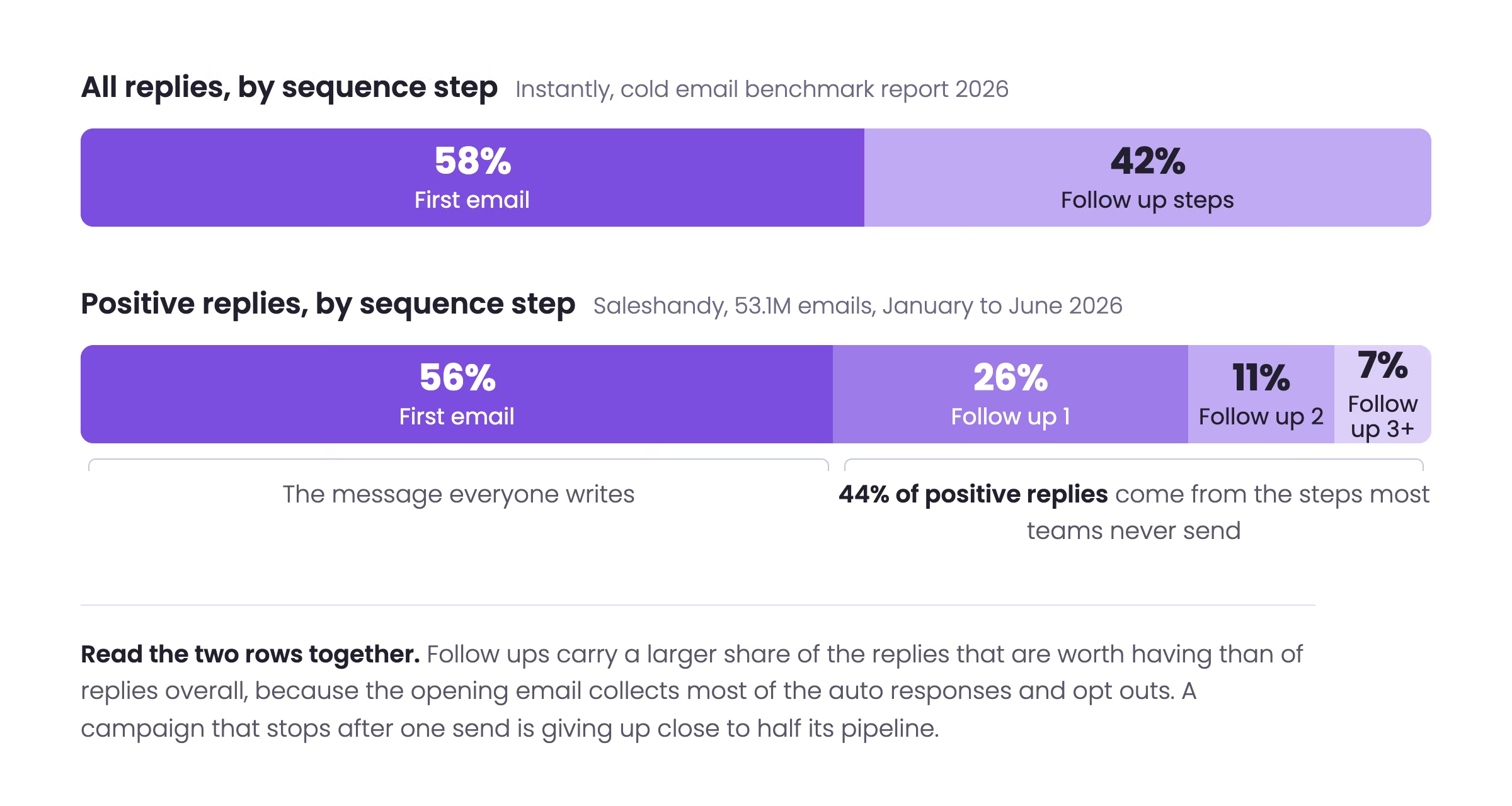
- Follow ups carry 44% of positive replies, so a campaign that sends once gives up close to half its pipeline.
- Reachly builds and runs the campaigns for you. See our cold email agency page.
Cold email response rates in 2026 average 3.4% to 3.7% of emails delivered, based on the public datasets that disclose a sample size, together covering more than 920 million cold emails. The median sender does far worse. Smartlead puts the middle of its 850 million email sample at 0.74% of contacts, about one reply per 135 people emailed. Both numbers are correct, and the gap between them is the reason so many teams believe their campaign is broken when it is merely average.
TL;DR: Summary
- Across five 2026 datasets, the reported average cold email response rate lands between 3.4% and 3.7% per email delivered. Woodpecker reports 3.43% on 20 million emails, Saleshandy 3.7% on 53.1 million.
- The median sender is nowhere near that. Smartlead's 850 million email sample puts the middle at 0.74% of contacts, so half of all senders sit below one reply per 135 people.
- Aim for 5% or better. The top 10% of senders clear 10.7% on Instantly's data, and the top 5% of campaigns run 11% to 15% on Saleshandy's.
- Benchmarks disagree because denominators disagree. Replies per email delivered, replies per contact and replies including auto responders are three different numbers from the same campaign.
- Follow ups carry 44% of positive replies and 42% of all replies. A campaign that sends once gives up close to half its pipeline.
- The largest measured levers are personalization (17% to 18% against 7% to 9%), segment size (5.8% under 50 contacts against 2.1% above 1,000) and length (50 to 80 words).
- Reachly runs this motion as a managed service. Primal reached an 8% positive reply rate, 85 sales qualified leads in six months and 4.57x return on spend. See our cold email agency page.
What counts as a cold email response, and what should you measure?
A response is any reply that comes back to a cold email. Sending platforms count it that way by default, which bundles genuine interest, hard nos, opt out requests and out of office notices into one figure. That figure is useful for judging whether mail is reaching human beings at all, and close to useless for judging whether a campaign will produce revenue.
Positive reply rate is the number that tracks pipeline. It counts only replies showing real interest: a question about pricing, a request for a time, a note saying to come back next quarter. A campaign can post 7% responses and produce almost nothing once the auto responders and the opt outs are stripped out, and that pattern points at targeting rather than infrastructure.
One rule governs the arithmetic. Bounces never count, so always divide by emails delivered rather than emails sent. A 5% response rate on 1,000 delivered emails describes a healthier campaign than 5% on 1,000 sent when 200 of them never arrived.
What is a good cold email response rate in 2026?
A good cold email response rate in 2026 is 5% or better, and 8% or above puts a campaign in the top decile. Below is every public 2026 benchmark dataset that discloses what it measured, side by side with its sample size, its period and the denominator it used. The denominators are the reason the headline numbers look so different.
| Source | Sample | Period | Denominator | Average | Top tier |
|---|---|---|---|---|---|
| Smartlead | 850M+ emails | Jan to Jun 2026 | Replies per contact | 0.74% median sender | 2.63% top 10% |
| Saleshandy | 53.1M emails, 60,000 sequences | Jan to Jun 2026 | Replies per email | 3.7% | 11% to 15% top 5% |
| Woodpecker | 20M+ emails | Updated Jun 2026 | Replies per email | 3.43% | 10%+ excellent |
| Instantly | Multi-billion interactions | Jan to Dec 2025 | Replies per email | 3.43% | 10.7%+ top 10% |
| Lavender | 231,818 emails | To Feb 2026 | Replies per email | Segmented only | 5.2% to 5.4% A-graded |
| Apollo | Not disclosed | 2026 | Replies per email | 3% to 6% healthy | 8%+ exceptional |
| GMass | Thousands of campaigns | Updated Jan 2026 | Replies per email | 1% to 5% | 9%+ personalized |
Two figures in that table are doing most of the work. The 3.4% to 3.7% band is what four independent platforms converge on when they divide replies by emails delivered. The 0.74% is what happens when you ask for the middle of the distribution rather than the mean, and it is measured per contact rather than per email, which makes it stricter still.
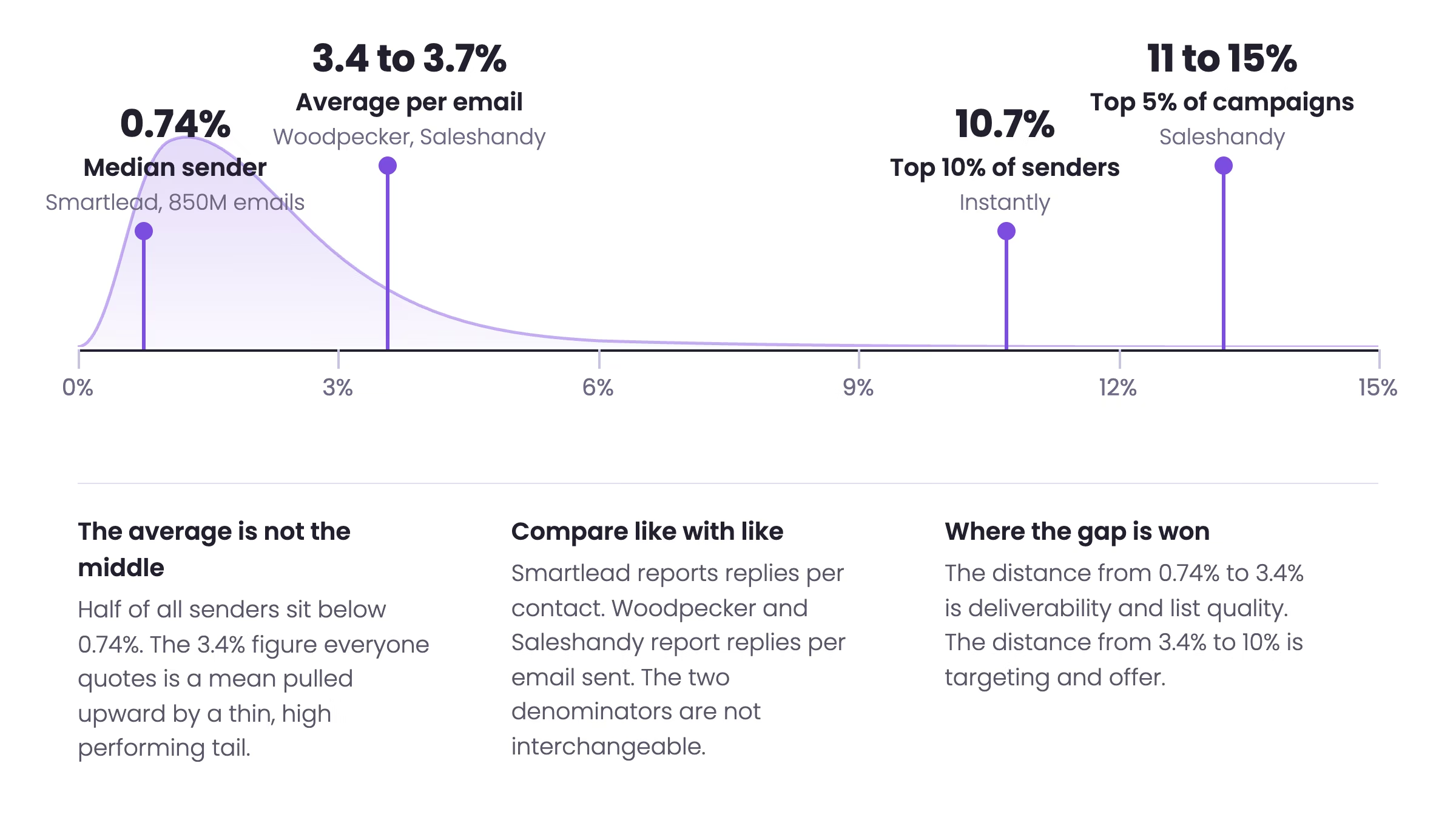
Read the shape rather than any single point on it. The distribution is heavily skewed to the right, so the mean sits well above the middle and a small group of well run campaigns pulls it there. A team at 1.5% is below average and above the median at the same time, and knowing which comparison they are making changes what they do next.
Why do published cold email response rate benchmarks disagree?
Four choices sit behind every published benchmark, and each one moves the number without any change in actual performance. Checking them takes a minute and it is the difference between a useful comparison and a misleading one.
| Choice | Option A | Option B | Effect on the number |
|---|---|---|---|
| Denominator | Emails delivered | Contacts reached | A five step sequence to one contact has five chances to reply on option A and one on option B |
| Reply definition | Every reply | Interested replies only | Auto responders and opt outs can be a third of the total, so option A runs materially higher |
| Statistic | Mean across all emails | Median across senders | The distribution is right-skewed, so the mean sits roughly four times above the median |
| Sample | One platform's own customers | A cross-platform panel | A tool used by high volume senders reports a different picture than one used by small teams |
The mean against median distinction is the one that misleads most often. A team comparing itself to the 3.4% average is comparing itself to an average of emails, weighted toward the highest volume senders on the platform. Comparing against the 0.74% median sender is a comparison against other teams. Both are legitimate, and they support opposite conclusions about whether a campaign needs rebuilding.
How much of your cold email response rate comes from follow ups?
Close to half, and a larger share of the replies worth having. Instantly attributes 42% of all replies to steps after the first email. Saleshandy, looking specifically at positive replies, attributes 44% to follow ups, with the first follow up alone carrying 26%.
| Measure | Figure | Source |
|---|---|---|
| Sequences with three to five follow up steps | 8.3% reply rate | Woodpecker, 20M+ emails |
| Single email, no follow up | 4.1% reply rate | Woodpecker, 20M+ emails |
| Lift from adding one follow up | 65.8% more total replies | Woodpecker, 20M+ emails |
| Share of all replies from steps 2 and later | 42% | Instantly, 2025 dataset |
| Share of positive replies from follow ups | 44% | Saleshandy, 53.1M emails |
| Share of positive replies from follow up 1 alone | 26% | Saleshandy, 53.1M emails |
The practical read is that a campaign stopping after one or two sends is capped at roughly half its achievable response rate before anyone looks at the copy. Four to six follow ups across about three weeks is the shape the datasets converge on, and the cadence and stop conditions are covered in our guide to automated email follow ups.
Reachly takes a different route: one follow up five to six days after the first email, then LinkedIn. The cold email follow up guide explains that trade-off.
Which changes move a cold email response rate the most?
Ranked by the size of the measured effect rather than by how often the tactic gets written about. Every figure below carries the dataset it came from.
| Lever | Measured effect | Source |
|---|---|---|
| Advanced personalization | 17% to 18% replies against 7% to 9% without | Woodpecker, 20M+ emails |
| Segment size under 200 prospects | 15% to 20% replies | Saleshandy, 53.1M emails |
| List under 50 contacts | 5.8% against 2.1% at 1,000+ contacts | Woodpecker, 20M+ emails |
| Three to five follow up steps | 8.3% against 4.1% for a single send | Woodpecker, 20M+ emails |
| Email length of 50 to 80 words | Highest replies, about 65% above longer emails | Lavender, 300,000+ emails |
| Verified contacts only | 1.53% bounce against 2.55% unverified | Saleshandy, 53.1M emails |
Personalization and segment size are the same lever seen from two angles. A segment of 3,000 job titles cannot be written to specifically, so the message flattens into something nobody needs to answer. A segment of 150 companies that all just posted the same role can carry a first line that could only have been written to them. That is the mechanic behind signal-based outbound, and the subject line and opener tests worth running are in our cold email best practices breakdown.
Layering channels lifts the same list again. A LinkedIn view or connection landing two days before an email step raises the chance the name is recognized, and a call after two prior touches is a different conversation than a cold dial. The LinkedIn side is covered in our B2B LinkedIn lead generation playbook.
How do you calculate your cold email response rate?
Response rate equals total replies received divided by emails delivered, multiplied by 100. Worked example: you send 1,000 emails, 30 bounce, 970 are delivered and 50 people reply. That is 50 divided by 970, which is 5.15%.
Three errors show up in almost every campaign audit:
- Dividing by emails sent rather than delivered, which understates the rate and hides a bounce problem behind it.
- Counting out of office notices and opt out requests as replies, which overstates the rate and hides a targeting problem behind it.
- Blending segments into one figure, so a strong small business campaign and a weak enterprise campaign average into a number that describes neither.
For positive reply rate, keep the same denominator and change the numerator to replies showing real interest. Track both, because the ratio between them tells you more than either number alone.
What does your cold email response rate tell you to fix first?
Response rate growth is sequential. Infrastructure, then list, then targeting and copy, then sequencing. Tuning subject lines while mail is landing in spam changes nothing, because the same number of people read both versions. Find your band below and start there.
| Your response rate | What it means | Fix first |
|---|---|---|
| Under 1% | Deliverability. The mail is not reaching inboxes. | Set SPF, DKIM and DMARC on every sending domain. Verify warm up. Move off the primary domain. |
| 1% to 3% | List quality. You are emailing the wrong people, or people who do not exist. | Verify every address, cut unverified contacts, tighten the ICP definition. |
| 3% to 5% | Targeting and message. Right people, nothing specific to answer. | Add a buying signal, cut the segment below 200, rewrite the first line around a real event. |
| 5% to 8% | Sequencing. The opener works and the later steps do not. | Run four to six follow ups, change the angle each time, add a LinkedIn touch. |
| 8% to 12% | Scale. The playbook works, volume is the constraint. | Add sending domains and mailboxes, split by signal, widen the ICP carefully. |
| Above 12% | Reply handling is now the bottleneck. | Cut response time, tighten qualification, make sure nothing sits unanswered overnight. |
The infrastructure layer is worth getting right once rather than repeatedly. Authentication records, warm up schedules and the case for dedicated secondary domains are covered in our email deliverability guide.
What does a cold email response rate turn into in pipeline?
Response rate matters only as the first step of a chain. The table below runs 10,000 delivered emails through that chain at three levels of performance, using the published conversion pattern where positive replies are roughly a third of total replies and meetings are roughly half of positive replies.
| Performance level | Response rate | Replies | Positive replies | Meetings booked |
|---|---|---|---|---|
| Median sender | 0.74% | 74 | 25 | 12 |
| Published average | 3.5% | 350 | 117 | 58 |
| Good campaign | 5.0% | 500 | 167 | 83 |
| Top decile | 10.7% | 1,070 | 357 | 178 |
The distance between the first row and the last is not a rounding difference. It is 12 meetings against 178 from identical send volume, which is why response rate is worth treating as an operating metric rather than a vanity one.
Reachly holds client campaigns to the upper end of that table. Primal, a marketing services firm, ran evergreen campaigns to CMOs and CEOs alongside signal-based campaigns triggered on hiring, funding and search ranking drops, and reached an 8% positive reply rate, 85 sales qualified leads in six months, a 35% reduction in cost of acquisition and 4.57x return on spend, breaking even by month three. The full numbers are in the Primal case study. The Great Room, a premium co-working operator, went from roughly two meetings a quarter to two a month and closed more than $250,000 in contract value about nine months in.
Get a response rate that books meetings, without the six month learning curve
Reachly maps your total addressable market, attaches buying signals, runs the campaigns across cold email, LinkedIn and cold calling on dedicated infrastructure, and handles every reply until a meeting is booked. Flat monthly retainer from $3,500, first meetings 2 to 6 weeks after launch.
See how it works
Cold email response rate FAQ
What is a good cold email response rate in 2026?
A good cold email response rate in 2026 is 5% or better, and anything above 8% puts you in the top decile of senders. The published averages sit between 3.4% and 3.7% per email delivered, so 5% means you are clearly ahead of the field. Apollo describes 3% to 6% as the healthy band for broad B2B outbound, 6% to 8% as strong execution, and 8% and above as exceptional and usually tied to tight segmentation or a real buying signal.
What is the average cold email response rate?
The average cold email response rate is 3.4% to 3.7% of emails delivered. Woodpecker reports 3.43% across more than 20 million emails, and Saleshandy reports 3.7% across 53.1 million emails sent between January and June 2026. Those two figures, drawn from separate platforms and separate customer bases, are the closest thing to a consensus number the industry currently has.
What is the median cold email response rate?
The median is far lower than the average. Smartlead, analyzing more than 850 million emails sent between January and June 2026, reports that the median sender earns a reply from about 0.74% of the contacts they email, roughly one reply per 135 people. The top 10% of senders convert 2.63% of contacts or better, about one reply every 38 contacts. Half of all senders sit below 0.74%, which is why the widely quoted 3.4% average feels unreachable to so many teams.
How do you calculate a cold email response rate?
Divide total replies received by emails delivered, then multiply by 100. If you send 1,000 emails, 30 bounce and 50 people reply, the calculation is 50 divided by 970, which is 5.15%. Always use delivered rather than sent as the denominator, and strip out auto responders before you count the replies. Calculate it per segment as well, because a single blended rate across small business and enterprise targets hides both.
What is the difference between response rate and positive reply rate?
Response rate counts every reply, including out of office notices, hard nos and opt out requests. Positive reply rate counts only the replies that show real interest, such as a question, a request for a time, or a note asking you to come back next quarter. Positive reply rate is the number that tracks pipeline, and a campaign can post a healthy 7% response rate while producing almost no positive replies once the auto responders are removed.
Do out of office replies count as responses?
No. An automatic reply is a mail server acknowledging receipt, not a person engaging with the message. Most sending platforms flag auto responses so they can be filtered, and they should be removed before you calculate your real response rate. Treating them as replies inflates the number and hides a targeting problem underneath it.
Why do published cold email benchmarks disagree so much?
Because they measure different things. Some platforms divide replies by emails delivered, others divide by contacts reached, which changes the number even on identical performance. Some count auto responses as replies and some do not. Each dataset also reflects one platform's own customers, so a tool used mainly by high volume senders reports a different picture than one used by small teams. Check the denominator, the reply definition and the sample before comparing any benchmark to your own number.
Why is my cold email response rate below 1%?
A response rate below 1% is almost always deliverability rather than copy. Check that SPF, DKIM and DMARC are set on every sending domain, that mailboxes finished a four week warm up, that bounce rate is under 3%, and that you are sending from secondary domains rather than your primary one. Rewriting the message while mail is landing in spam changes nothing, because nobody is reading either version.
How many follow ups raise a cold email response rate?
Four to six follow ups after the opener. Woodpecker records 8.3% replies from sequences with three to five follow up steps against 4.1% for a single email with nothing behind it, and reports that adding one follow up lifts total replies by 65.8%. Saleshandy attributes 44% of all positive replies to follow ups rather than the opening email, with the first follow up alone accounting for 26%.
Does personalization raise cold email response rates?
Yes, and it is the single largest measured lever. Woodpecker reports roughly 17% to 18% reply rates on emails carrying advanced personalization against 7% to 9% on emails with basic or no personalization. The effect comes from specificity rather than merge fields, so a line referencing a funding round, a new hire or a market a company just entered outperforms a first name and a company name.
How long should a cold email be to get a response?
Between 50 and 80 words for the opening email. Lavender's analysis of more than 300,000 cold emails found that emails in that range produce the highest reply rates, outperforming longer emails by about 65%, and Saleshandy reports the same ceiling of 80 words on first sends. State one problem, make one ask and sign off.
Does list size affect cold email response rates?
Substantially. Woodpecker reports 5.8% reply rates on campaigns sent to fewer than 50 contacts against 2.1% on campaigns of 1,000 contacts or more, and Saleshandy reports 15% to 20% replies on segments under 200 prospects. Smaller segments let the message say something specific enough to be worth answering, which is why splitting one large campaign into several tight ones usually raises the blended rate.
Is 35% a good email open rate?
For cold email, 35% is above the reported average but it is not a number worth acting on. Saleshandy puts the average cold email open rate at 21%, so 35% looks strong, and Apple Mail Privacy Protection plus image preloading inflate reported opens by a wide margin. Track reply rate and positive reply rate instead, because those require a human decision that no privacy feature can fake.
Is cold email still effective in 2026?
Yes, with a wider gap between good and bad execution than in previous years. The top 10% of senders reply rates sit above 10%, while the median sender is under 1%, so the channel works but tolerates far less than it used to. Verified lists, authenticated secondary domains, tight segments and a real buying signal are now the entry requirements rather than the differentiators.
How long does it take to improve a cold email response rate?
Thirty to sixty days for most teams starting below 3%, because the fixes are sequential. Deliverability repairs show up within one to two weeks of a warm up cycle, list and segment changes show up on the next campaign, and copy and offer changes need a full sequence to read. Reachly typically has a client sending on rebuilt infrastructure by week four and holding a predictable volume by month three.
Recommended service
Cold Email Agency
Reachly runs cold email end to end: dedicated infrastructure, signal-led copy, and replies handled until a meeting is booked.