It services lead generation works best when MSPs target real buying signals like hiring, growth, compliance, and tech changes.
Lead generation for IT services works when you target timing, not generic need. Canalys via ConnectWise projects $595 billion in channel partner managed services spend for 2025, with IT managed services revenue up 13% and managed security services up 15%. That sounds like a big market, but broad demand does not book meetings. IT services firms and MSPs get replies when the account has a live reason to change something now.
That matters even more when your TAM is huge. The SBA said there were 36,207,130 small businesses in the United States in February 2026, and 99.9% of U.S. businesses are small. If you sell “managed IT” to all of them, you do not have a market. You have a list.
Why does lead generation for IT services need a different playbook?
Most IT services outreach fails for one simple reason. The message sounds like every other MSP in the inbox.
Buyers have seen the same claims for years.
- 24/7 support
- proactive monitoring
None of that tells the buyer why they should reply this week.
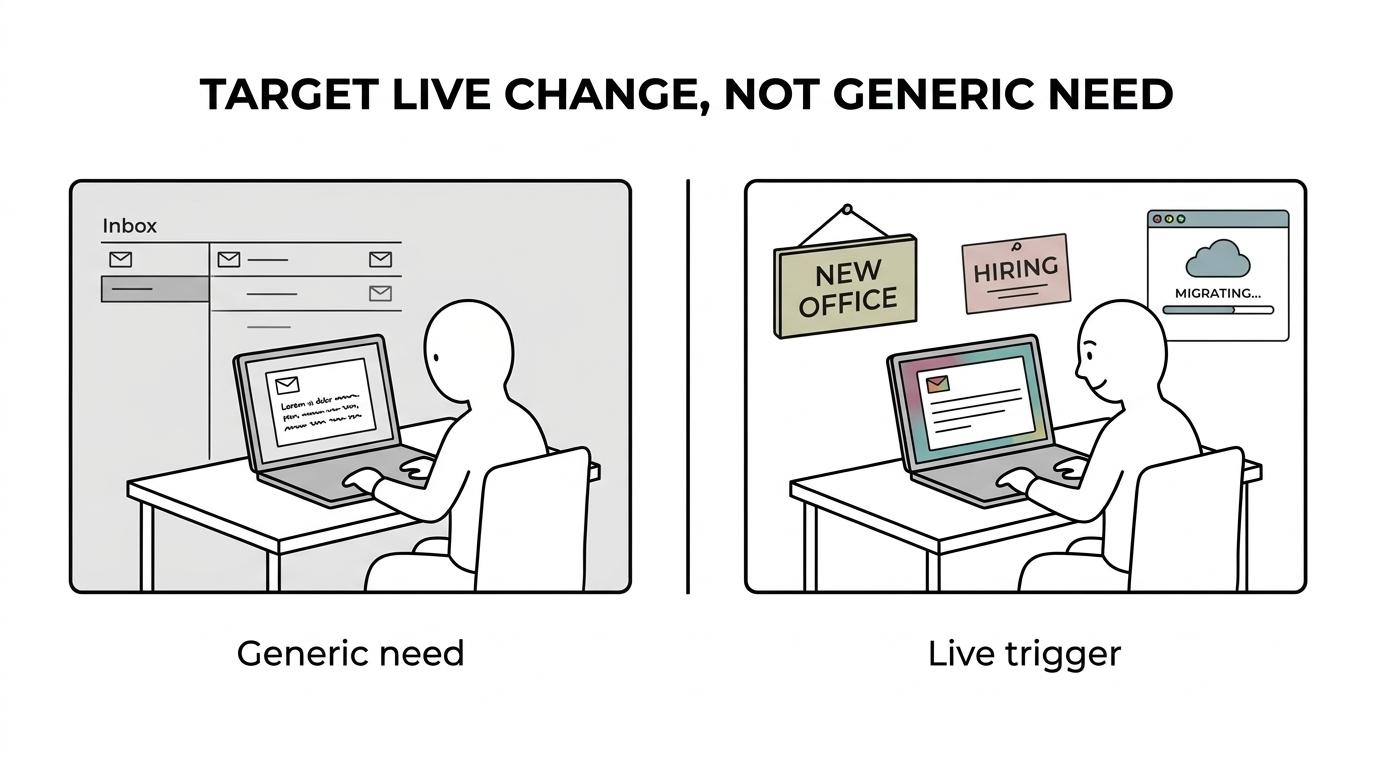
The better play is to build outbound around pressure, change, and exposure. That is why lead generation for IT services looks different from general B2B prospecting. The trigger is not “this company uses computers.” The trigger is “this company just added 40 staff, opened a second office, moved to Azure, hired a security lead, or got hit with vendor-risk questionnaires.”
The demand side supports that view.
[markdown] | Source | 2025 to 2026 data | What it means for outreach | | --- | --- | --- | | Canalys via ConnectWise | $595 billion in channel partner managed services spend for 2025. IT managed services revenue up 13%. Managed security services up 15%. | Budget exists, but it is clustering around security and cloud complexity. | | CISA, 2025 | 44% of small businesses reported a cyber attack. Average cost was about $9,000. Nearly 59% lacked a contingency plan. | Security, backup, and response offers have a real reason to exist. | | SBA Office of Advocacy, 2026 | 36,207,130 small businesses in the U.S. 99.9% of U.S. firms are small. | Your market is large enough. Your ICP still needs tighter filters. | | ConnectWise / Service Leadership, 2025 | MSP revenue growth was 7.1% in 2024. Adjusted EBITDA growth was 13.0%. | The category is healthy. Relevance and timing decide who wins. | [/markdown]If you already run outbound, the takeaway is simple. Do not start with industries. Start with situations.
Which demand signals show that IT buyers are ready now?
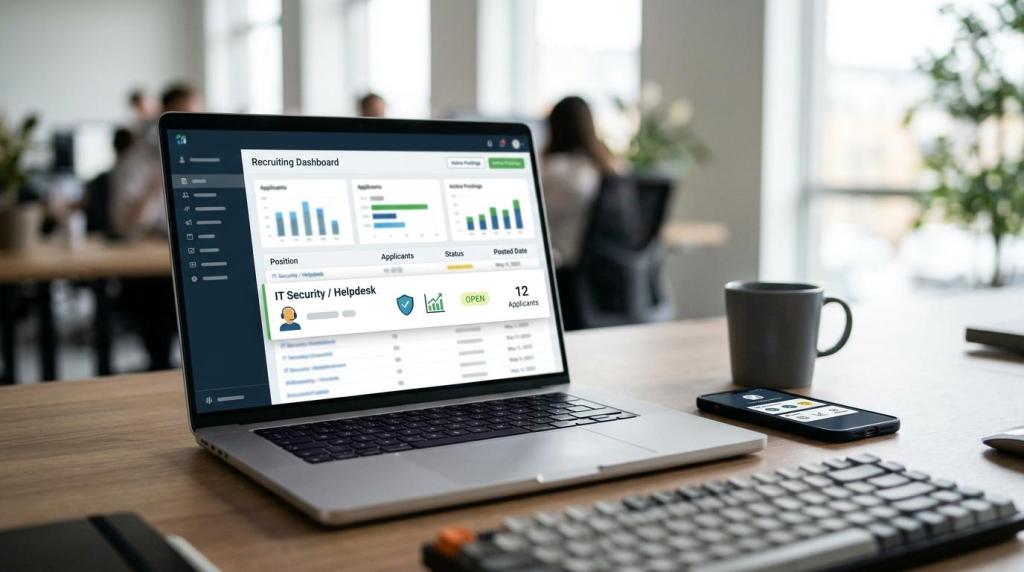
For lead generation for IT services, the best signals are usually visible signs of operational strain. They show up before the buyer fills out a form, and they tend to stay fresh for only 2 to 4 weeks.
Here is the signal stack we would track for IT services firms and MSPs.
[markdown] | Signal | Why it matters | Likely buyer | Shelf life | | --- | --- | --- | --- | | Hiring for IT, security, cloud, helpdesk, or compliance roles | The team is stretched or building a new function | COO, IT manager, ops lead, founder | 2 to 4 weeks | | 30%+ headcount growth in 12 months | Support load, device count, onboarding, and access sprawl all rise fast | COO, HR ops, finance, IT lead | 2 to 4 weeks | | New locations, M&A, or multi-site expansion | Networks, identity, endpoint coverage, and vendor sprawl get messy | COO, operations, finance | 2 to 6 weeks | | Tech stack change, like Microsoft 365, Azure, Google Workspace, backup, EDR, or VoIP | Tool changes create migration risk and support demand | IT lead, ops, finance | 2 to 4 weeks | | Leadership change, especially CFO, COO, VP Ops, or Head of IT | New leaders review vendors and costs early | CFO, COO, IT leader | 2 to 6 weeks | | Compliance pressure, like SOC 2, HIPAA, ISO 27001, or vendor-risk reviews | Security controls and documentation become urgent | COO, security lead, founder | 2 to 4 weeks | [/markdown]Thibault Garcia, founder of Reachly, puts it plainly: “Hiring is the signal I trust most. A company spending money on headcount is a company that is growing, and growth is what creates the problem we solve.”
That line holds up well for MSP outreach. Hiring creates tickets, onboarding, asset sprawl, MFA gaps, and new approval bottlenecks. A generic “can we support your IT?” email feels random. A note tied to a new office manager hire or a sudden burst of security recruiting feels timely.
A few signals look attractive but are weaker than people think. Funding is one. It can be useful for scoring, but it is overused as copy. A public breach is another. You do not want your opener to read like a scare tactic.
How should you map the market for IT services and MSPs?
Start with the offer, then build the market backward from it. If your offer is a Microsoft 365 security review, your list should not include companies that run Google Workspace. If your offer is helpdesk overflow, avoid firms with a large internal IT team and round-the-clock support already in place.
This is where a lot of MSP outbound goes wrong. The list gets built first, and the offer gets stretched to fit it.
At Reachly, the outbound system starts with TAM mapping across 10+ sources, then enrichment and scoring in tools like Clay, Apollo, LinkedIn Sales Navigator, RB2B, and Trigify. The point is not to collect more records. The point is to rank accounts so the freshest signals rise to the top.
A clean IT services market map usually has three layers:
- Firmographic layer: employee count, region, industry, office count, and whether the account is small enough to outsource IT but large enough to pay for it
- Signal layer: hiring, headcount growth, leadership change, tech stack change, compliance activity, and site visits to relevant pages
Then route the account to the right buyer. A security offer belongs with operations or security leadership. A cloud cost review may sit better with finance or IT. A backup and continuity offer often lands with the COO in smaller firms and the IT lead in larger ones.
One more point matters here. MSPs should not force one ICP. You will usually have at least two.
- Core ICP: 50 to 500 employee companies with real support load and no deep internal IT bench
- Special situation ICP: firms in change, like a PE-backed roll-up, a multi-site operator, or a compliance-heavy company adding headcount fast
That is how you stop treating the whole small-business market as one audience.
What offer gets replies from IT buyers?
The offer is everything. If the prospect reads your email and sees only “managed IT services,” your reply rate will reflect that.
Garcia says it better than anyone: “Every client gets the same question before we write a single email. If you had thirty seconds with your dream client, what would you offer them? If the answer takes longer than thirty seconds, we do not have an offer yet.”
For IT services and MSPs, the offers that tend to earn replies are concrete, narrow, and cheap for the buyer to say yes to.
- Security gap review: a short review of MFA, endpoint coverage, backup status, and admin access exposure
- Cloud cost check: a fast look at Microsoft 365, Azure, or AWS waste before renewal or budget review
The point is not to pitch your whole service catalog. The point is to get the first reply.
A good first ask sounds like permission, not pressure. “Would it be useful if I sent over a 2-minute breakdown?” works better than asking a stranger to book the meeting cold. The goal of a cold email is a reply, not a meeting. No reply, no meeting.
This is where many IT firms can borrow from stronger outbound systems. Primal hit 85+ SQLs in 6 months with 4.57x ROI, and The Great Room closed a $250K contract with zero added headcount. Different category, same rule. Tight targeting plus a reason to respond beats generic volume.
What outbound sequence works for IT services in 2026?
For IT services, we would keep the sequence lean. Two emails, 6 to 7 days apart, then a call touch if the account quality is high. LinkedIn supports the sequence, but it should not carry the whole thing.
A practical multichannel pattern looks like this:
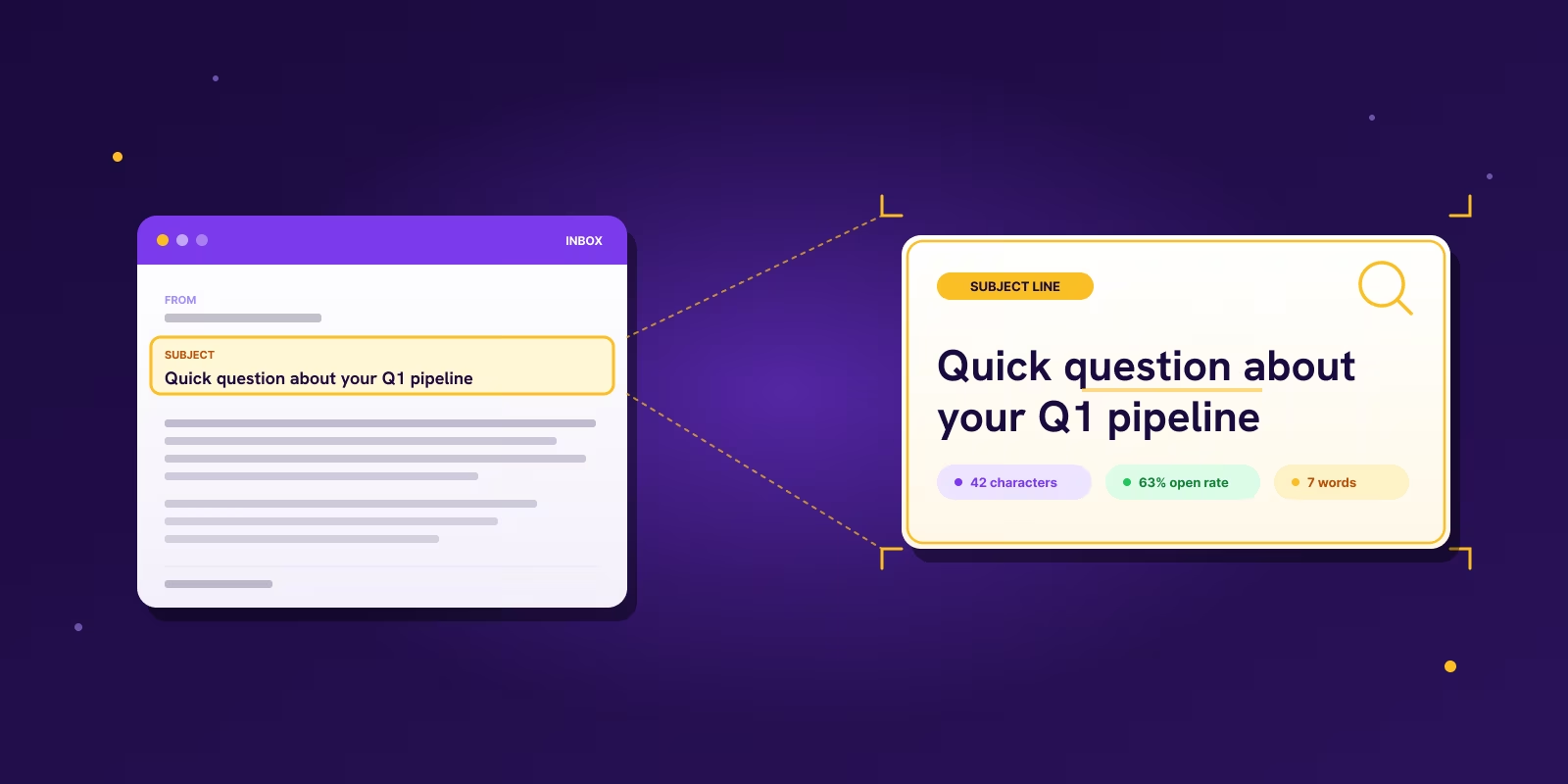
[markdown] | Day | Channel | What happens | | --- | --- | --- | | 1 | LinkedIn and cold email | Visit profile, send connection request, send Email 1 with the signal and one clear offer | | 7 | Cold email | Email 2 with a new angle, usually a different risk or cost point | | 10 to 12 | Cold calling | One focused call, then stop unless there is engagement | | 45 to 75 | Re-engagement | Revisit the same list with a fresh angle and updated signals | [/markdown]Cold email copy should stay around 70 to 80 words. No links in the first email. No giant paragraph about your company. Just the trigger, the problem, the offer, and a soft CTA.
The infrastructure cost is time and restraint. Mailboxes need 14 to 30 days of warmup, and 30 is the safer number. Google sits around 15 emails per mailbox per day in 2026, Outlook around 10 to 12. Match sender ESP to recipient ESP, authenticate everything with SPF, DKIM, DMARC, and a custom tracking domain, and re-validate any list older than 3 months.
If you want a fuller picture of how that stack is built, look at Reachly’s outbound lead generation services and LinkedIn outreach agency pages. The channel mix is cold email, LinkedIn, cold calling, in that order.
When does lead generation for IT services fail?
It usually fails in one of two places. Either the infrastructure is bad, or the offer is not good enough to interrupt the buyer.
A useful diagnosis order looks like this:
- 0% replies after real volume: check infrastructure, subject line, length, tone, then the offer
- Replies but no positive interest: the copy is doing its job, and the offer needs to change
Reachly has run 400+ campaigns for 50+ B2B clients, and the same pattern keeps showing up. Teams rewrite copy too early. They should look at list quality and sending health first.
There is also a fit problem that should be said out loud. If your average contract value is under $5,000, founder-led outreach is usually the better move. If your market is tiny and local, automation burns through the list too fast. If you have no proof that the service sells, outbound will not save that.
What should you do next if you need lead generation for IT services?
If you sell IT services or run an MSP, the next step is not “send more emails.” It is to define the offer, map the TAM around that offer, score the market with real signals, and then run cold email, LinkedIn, cold calling in a sequence that respects timing and deliverability.
If you want Reachly to build that system for you, start with the outbound lead generation services page or the appointment setting services page, then book the meeting from there.
The short version is this. Lead generation for IT services works when you target change, risk, and operational pressure, not vague “IT support” demand. The strongest signals are hiring, headcount growth, leadership change, compliance activity, and tech stack change, and the message only works when the offer is specific enough to earn the first reply.